
Hundreds of Trillions of Rupiah from Himbara Banks Shifting Towards Green Economy
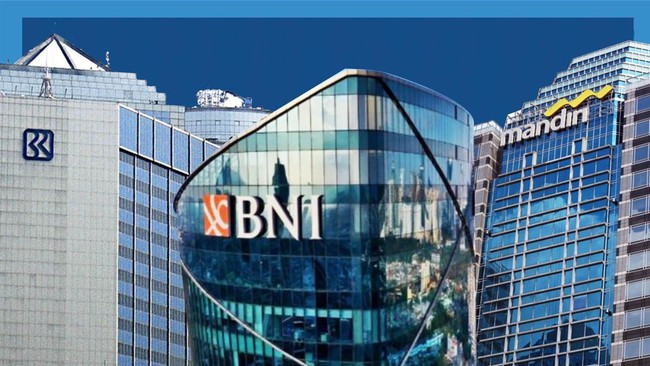
Climate change is no longer merely an environmental issue, but also an economic and financial risk. For the banking industry, changes in weather patterns, emission regulations, and technological shifts can affect a debtor’s ability to meet their obligations. Consequently, sustainable finance is increasingly becoming a core part of bank business strategies.
Through the distribution of green financing and social financing, banks act not only as capital providers but also as directors of fund allocation towards a low-carbon economy. In Indonesia, the four banks belonging to the State-Owned Banks Association (Himbara)—namely Bank Mandiri, Bank Rakyat Indonesia (BRI), Bank Negara Indonesia (BNI), and Bank Syariah Indonesia (BSI)—have built sustainable financing portfolios amounting to hundreds of trillions of rupiah. However, sustainable financing does not always equate to green financing; these portfolios also encompass social aspects such as MSME financing, financial inclusion, and affordable housing.
In simple terms, green financing refers to funding that directly supports activities with environmental benefits, such as renewable energy, energy efficiency, electric vehicles, or waste management. Meanwhile, sustainable financing has a broader scope, covering both environmental and social aspects. In Indonesia, this approach refers to the Financial Services Authority (OJK) framework for sustainable finance, while globally, banks also utilise standards such as the Green Bond Principles from the International Capital Market Association (ICMA), the Task Force on Climate-related Financial Disclosures (TCFD), and the Partnership for Carbon Accounting Financials (PCAF). These frameworks help banks classify green activities, disclose climate risks, and measure emissions arising from financing activities (financed emissions).
The implementation of sustainable finance varies across Himbara banks, following their respective business models and focus sectors.
BRI: Driving Social Financing through MSMEs
As a bank focused on the micro and MSME segments, BRI’s sustainability strategy places a large emphasis on social financing. In 2025, BRI’s sustainable financing portfolio reached IDR 811.9 trillion, consisting of IDR 718.7 trillion in social financing (KUBS) and IDR 93.2 trillion in environmental financing (KUBL). This is supported by MSME ecosystem strengthening programmes such as Desa BRILiaN, Klasterku Hidupku, and LinkUMKM, which have reached over 14.95 million MSMEs. BRI also provided KUR relaxation worth IDR 43.95 trillion to over 1 million debtors affected by disasters. Additionally, BRI recorded ESG-based investments of IDR 5.26 trillion through instruments such as green bonds, social bonds, and sustainability bonds.
Bank Mandiri: Expanding Green Financing
Bank Mandiri is one of the Himbara banks with the largest portion of green financing. Mandiri’s sustainable financing portfolio reached IDR 315.8 trillion, with green financing accounting for approximately IDR 166.2 trillion. This funding is directed towards various sectors, ranging from renewable energy and low-carbon transport to sustainable natural resource management. In the green transport sector, financing includes the development of electric vehicle ecosystems, such as electric buses and electric rail trains, as well as drinking water supply system projects. Beyond loans, Mandiri also utilises capital market instruments like green bonds and sustainability bonds to support sustainable projects.
BNI: Financing Green Transport to Waste-to-Energy
BNI is one of the banks actively developing green financing through instruments such as green bonds. In 2022, BNI issued a Green Bond worth IDR 5 trillion, allocated to projects within the company’s green category according to its Green Bond Framework. These funds flowed into several sectors, including sustainable transport, renewable energy, waste-to-energy, waste management, and green buildings. In the Green Bond Series A worth IDR 4 trillion, the sustainable transport sector was the largest recipient with an allocation of IDR 3.03 trillion (75.7%), including projects for the Jabodebek LRT. Furthermore, BNI also finances renewable energy projects such as hydropower, solar, mini-hydro, and wind power, as well as sustainable natural resource and land use projects.
BSI: Developing Sharia-Based Green Financing
As Indonesia’s largest Sharia bank, BSI develops sustainable financing by combining environmental and social aspects. In 2025, BSI’s financing in the category of sustainable business activities (KKUB) reached IDR 73.92 trillion, with the largest portion coming from social financing at IDlar 58.26 trillion. From an environmental perspective, BSI allocated IDR 15.66 trillion in green financing to priority sectors such as renewable energy, sustainable agriculture, and affordable housing financing. On the social side, BSI strengthened community empowerment through programmes such as Desa BSI, Sentra UMKM BSI, MSME portals, and Salam Digital to expand access to financing for micro-entrepreneurs.
Sustainable Finance as Part of Risk Management
The increase in sustainable financing is driven not only by environmental agendas but also by changes in how the financial sector perceives business risks. For banks, ESG risks can affect asset quality through various channels. Physical risks, such as floods, droughts, or extreme weather, can disrupt debtor operations. Transition risks arise when changes in regulation, technology, and market preferences affect corporate business models. These conditions have prompted banks to begin incorporating these factors into their risk management.
Source: jawawa.id (https://jawawa.id/newsitem/hundreds-of-trillions-of-rupiah-from-himbara-banks-shifting-towards-green-economy-1790070883)
Originally published by CNBC Indonesia (https://www.cnbcindonesia.com/research/20260810114632-128-757913/uang-ratusan-triliun-bank-himbara-mulai-berbelok-ke-ekonomi-hijau), translated from Indonesian