
Hundreds of Mangrove Seedlings Planted on Pari Island to Protect Coastal Areas
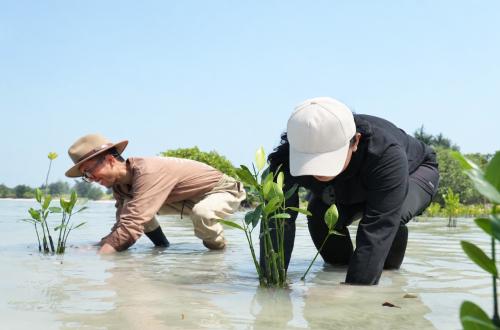
Coastal ecosystems are facing increasing pressure from abrasion and changing environmental conditions, which can impact flora and fauna habitats. One of the efforts being undertaken to preserve coastal areas is the planting of mangroves, which serve as natural coastal protection while supporting the surrounding ecosystem.
A total of 525 mangrove seedlings were planted on Pari Island, Thousand Islands, Jakarta, in late August 2026, through a collaboration between PT Niaga Nusa Abadi (NNA) and Dus Duk Duk.
Rhizophora-type mangroves are widely found in tropical and subtropical coastal areas. This vegetation serves several ecological functions, including helping to reduce the impact of abrasion and providing habitats for various organisms living in coastal regions.
The planting activity is also linked to paper waste management through the ‘Kertas Tanpa Batas’ (Limitless Paper) campaign initiated by NNA since 2025. This programme processes paper waste into various creative products, which are then utilised in environmental activities involving partners.
CEO of Dus Duk Duk, Arief Susanto, stated that the mangrove planting activity is a form of corporate involvement in environmental activities within coastal areas. “This planting activity is a collective step towards providing benefits to the environment. We are very pleased to be part of this sustainable effort and to play a role in preserving the earth for future generations,” Arief said in a press release on Thursday (10/9/2026).
Representing the management of PT Niaga Nusa Abadi, Arief Rachmansyah noted that the activity also provides lessons regarding the function of mangroves for coastal ecosystems.
“Through this activity, we have gained much insight into the benefits of mangroves for coastal ecosystems. Moving forward, NNA continues to strive to strengthen its commitment to presenting various initiatives that provide positive and sustainable contributions to both society and the environment,” said Arief.
Mangrove planting in coastal areas is not only about the number of seedlings planted, but also about the sustainability of maintenance and the survival rate of the plants after planting. Therefore, the effectiveness of coastal rehabilitation activities will ultimately depend on care, site suitability, and long-term monitoring of mangrove growth.