
Humpback Whale Carcass on Perancak Beach, Jembrana, Reburied
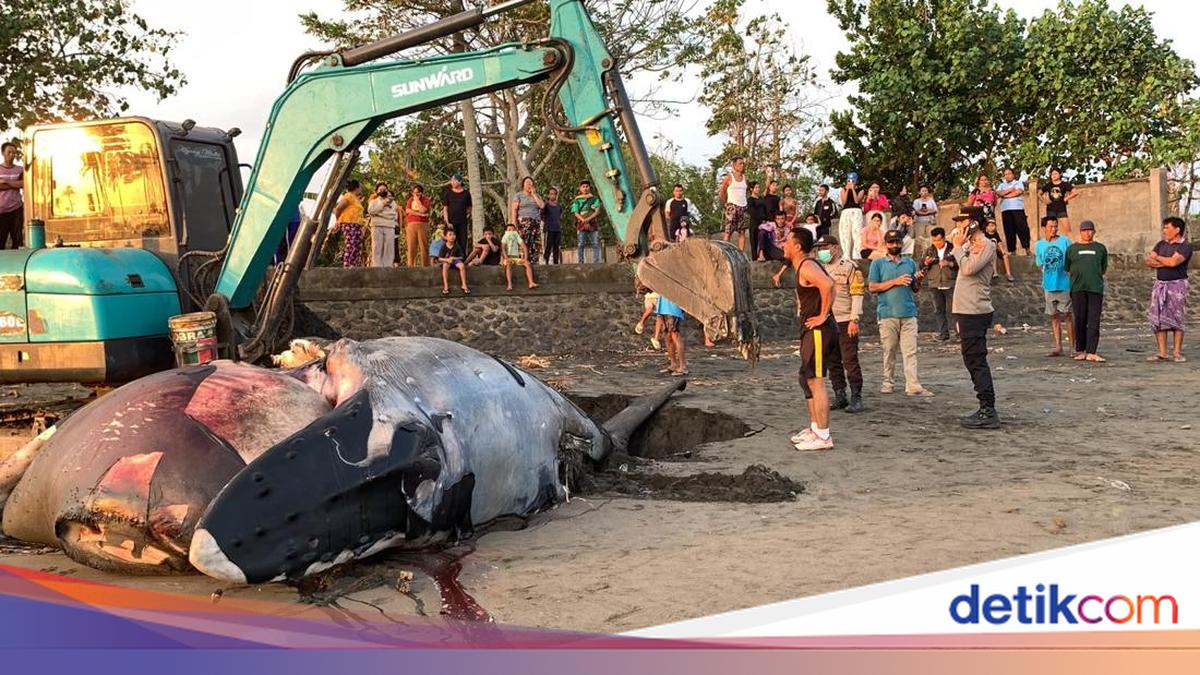
A humpback whale carcass that had been buried on the coast of Perancak Village Beach in Jembrana Regency, Bali, has had to be reburied. The move was carried out after the original grave was eroded by seawater, causing the carcass to resurface.
The reburial process took place on Thursday (16 July 2026), starting at 16.00 WITA and continuing into the evening until around 20.17 WITA. To prevent a recurrence, the new burial site was moved approximately 200 metres west of the original location.
“The burial was completed last night. It was buried at a site designated by the Village Head so that it will not be eroded by seawater again,” said the Chief of the Jembrana Kota Police, Ipda I Ngurah Agus Dwi Widiatmika, when contacted by detikBali on Friday (17 July 2026).
In addition to being assisted by police, the relocation and burial of the whale carcass was also aided by village authorities and local residents who worked shoulder to shoulder at the site. After several hours, the reburial of the humpback whale carcass was finally completed in the evening.
“The burial activity ended at 20.17 WITA safely, in an orderly manner and smoothly,” Widiatmika concluded.
As previously reported, the humpback whale carcass, which had been buried after stranding on the Perancak Beach coast, resurfaced on Thursday. The marine mammal was believed to have risen to the surface after its burial site was eroded by tidal seawater.
According to detikBali’s observations at the site before the evacuation, the whale’s burial position was located just to the east of the original stranding spot. At the time, only the tail section of the carcass remained embedded in the sand.
The rest of the body had protruded above the surface and was emitting a pungent stench. The Perancak Village Head, I Nyoman Wijana, confirmed that his office had received a report from residents about the whale carcass reappearing on the beach surface before it was finally relocated.
“The report from residents stated that the whale carcass had resurfaced on the beach because its burial site had been eroded by the tidal seawater,” Wijana said.