
Humans Are Already Being Replaced: Evidence Emerges in China and Japan
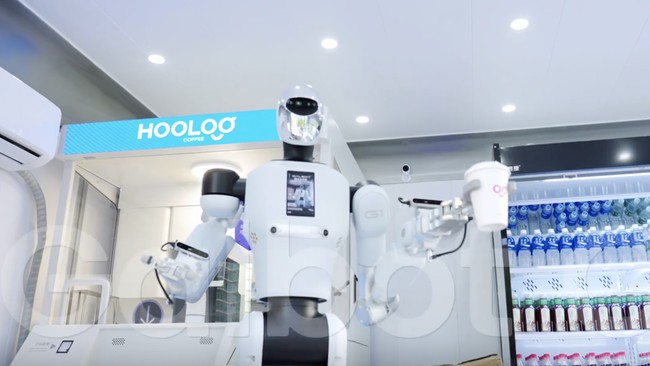
Jakarta, CNBC Indonesia - Developments in robots resembling human capabilities are beginning to appear in countries like Japan and China. Both nations have showcased their respective humanoid creations.
In Japan, the ping-pong robot named Ace is said to be able to defeat human players. The project leader from Sony’s AI research division, the developer of Ace, stated that the robot is the first with competitive physical sports capabilities.
Reuters notes that ping-pong playing robots have actually existed since 1983. However, this is the first time one has been able to beat human players.
“Unlike computer games, where previous AI systems have surpassed human experts, physical sports and real-time activities like table tennis remain a major unsolved challenge due to the requirements for fast, precise, and competitive interaction that approach human reaction limits and barriers,” said Peter Durr, director of Sony AI Zurich and project leader, quoted from Reuters, Thursday (23/4/2026).
Durr said this project is not just for competing in table tennis games. It also aims to develop insights into robots that can sense, plan, and act with the speed and precision of humans.
Ace has also undergone table tennis trials against humans. In a match in April 2025, the robot won three out of five games against an elite player.
Ace’s two losses were against professional players, who have the highest level of expertise in table tennis.
Ace successfully defeated a professional player in December 2025 and last month.
Running Robot in China
Meanwhile, China has created a running robot. Hundreds of these robots participated in a half-marathon race in Beijing in April.
The result was that the robots outperformed human runners by more than 10 minutes. The winner, a robot made by Honor, recorded a time of 50 minutes and 26 seconds.
The Honor robot was developed over a year. Team engineer Du Xiaodi explained that the robot is equipped with 90-95 cm long legs and liquid cooling technology similar to that used in smartphones.
“Running faster may not seem significant at first, but it enables technology transfer, for example, into structural reliability and cooling, and ultimately industrial applications,” said Du.
The development of these robots is also remarkable, considering that last year’s race was marred by various accidents and most robots could not finish the race. The robots that did finish recorded a time of 2 hours 40 minutes, or twice the time of the human winner in a conventional race.