
Humanoid Robot Study Tours Spark Enthusiasm for AI
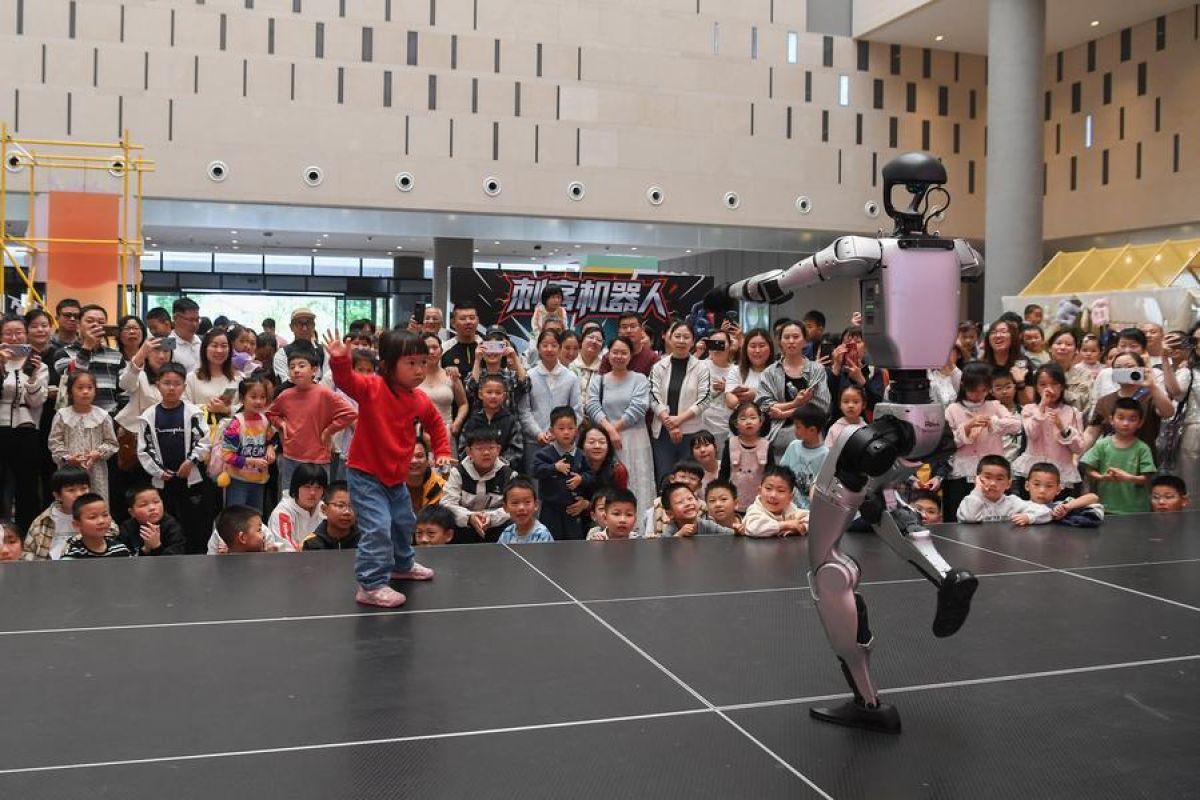
The rapidly growing humanoid robot industry in China is not only a significant outcome of the government’s innovation-based development strategy but is also triggering a new trend among China’s youth: humanoid robot study tours. For young students across the country, such programmes are quickly becoming an attractive new option for out-of-classroom learning, transforming education from passive classroom settings into direct interaction with real-world industrial technology.
Beijing is at the forefront of this trend. On 16 May, the Shijingshan District launched a technology study tour programme at the local Humanoid Robot Data Training Centre, which integrates elements of culture, tourism, technology, industry, and creativity to provide an immersive educational experience. The training centre, the largest of its kind in China, spanning over 10,000 square metres and producing more than 6 million data samples annually, invites students to act as ‘intern trainers’ by participating in data collection and direct robot control.
Beyond the capital, other technology hubs offer unique experiences. In Hangzhou, the home of Unitree Robotics, students explore technology in creative environments. An embodied robot exploration centre at a local marine park combines marine-themed exhibitions with over 300 advanced robots, allowing students to operate robot dogs, compete in robot football, and interact with AI-based companions.
In Shenzhen, a national innovation hub and base for EngineAI Robotics, study tours reach a deeper level. The ‘Children’s Eyes on Smart Manufacturing’ initiative features 80 cutting-edge industrial tourism sites covering AI, robotics, and semiconductors. A pioneering partnership between STEMHUB, a local platform focused on advanced STEM education, and EngineAI Robotics has introduced the SA01 humanoid robot into K-12 classrooms, alongside the development of STEM courses that allow students to programme and interact directly with the robots.
This surge in educational activities is a direct result of China’s maturing humanoid robotics sector. According to China’s National Development and Reform Commission (NDRC), the embodied intelligence sector, exemplified by humanoid robots, is growing at an annual rate of over 50 per cent and is projected to reach a market value of over 1 trillion yuan (approximately $146.66 billion) by 2035. Official data shows that by the end of 2025, China will host over 150 humanoid robot companies. The Chinese government has elevated embodied intelligence to a national strategic priority, with policies aimed at accelerating breakthroughs in core technologies and establishing industry standards.
However, an industry driven by cutting-edge innovation cannot thrive without a future-ready workforce, which has pushed science and technology (S&T) education to the top of the national policy agenda. In November 2025, China’s Ministry of Education, alongside six other government departments, issued a notice on strengthening S&T education in primary and secondary schools, marking the first official policy document to introduce the concept of S&T education into China’s basic education system. The document explicitly states that strengthening S&T education is a vital path to supporting the innovation-driven national development strategy and nurturing future S&T innovation talent. It sets clear targets: by 2030, China aims to build a comprehensive S&T education system, and by 2035, a complete S&T education ecosystem will be established, with enhanced social resource support and the widespread adoption of project-based, inquiry-based, and interdisciplinary learning.
With the government encouraging social resources to support project-based learning and the private sector investing heavily in robotics, humanoid robot study tours are well-positioned to become flagship programmes in China’s youth education landscape. In Shanghai, local S&T interest groups visited the city’s humanoid robot innovation incubator in early May, where they shook hands with humanoid robots, played ‘rock-paper-scissors’ against robotic hands, completed visual tracking challenges, and witnessed intelligent robot dogs running and responding to commands outdoors.