
Human Rights Violations Behind China's Investment in Indonesia's Mineral Industry
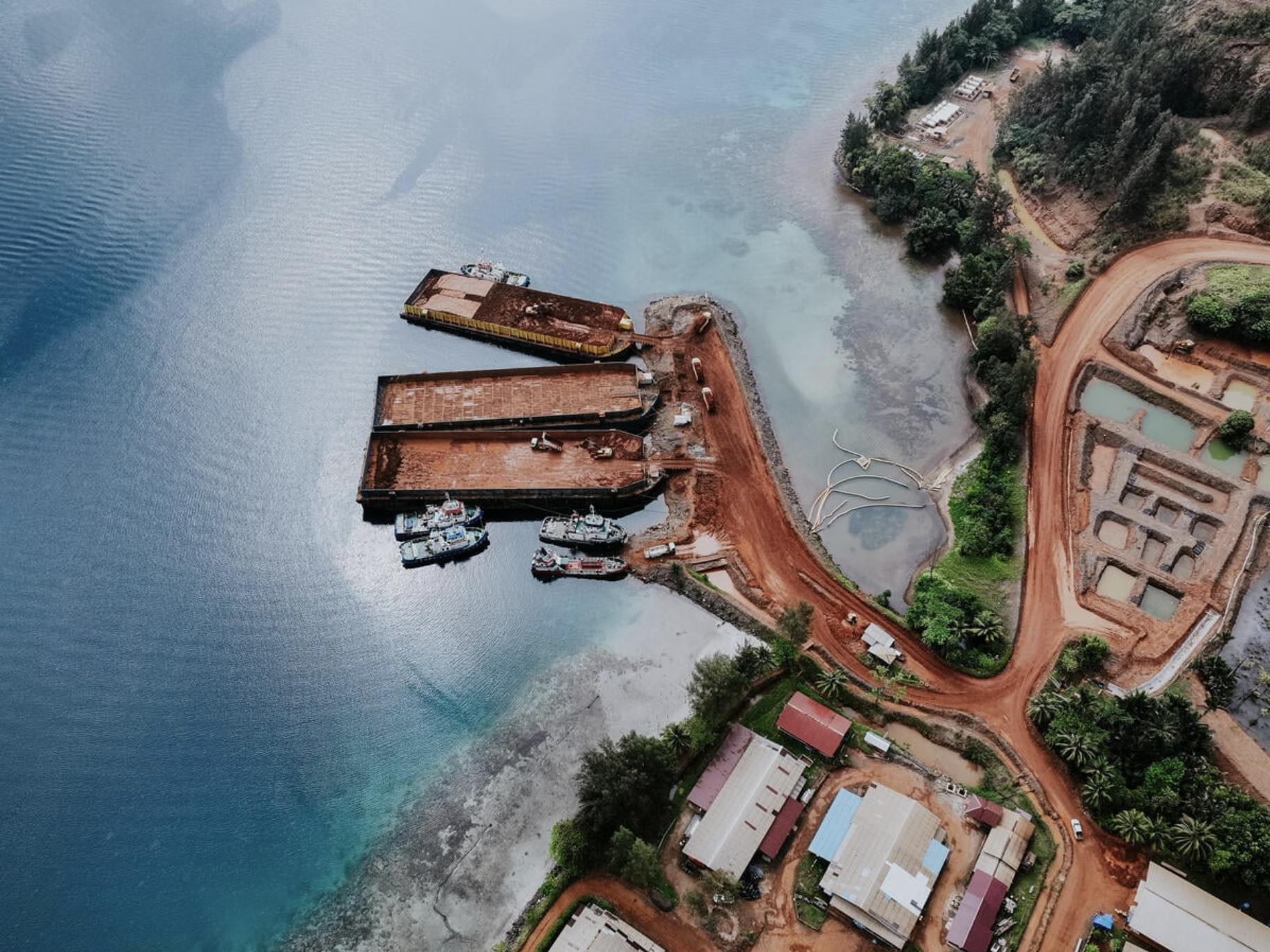
Like a magnet amid the global rush towards energy transition, Indonesia’s mineral potential has drawn Chinese investment. China is racing to build a global electric vehicle and battery industry chain, and many Chinese companies entering Indonesia are not entirely acting as ordinary private corporations; behind a number of their projects lies financing support from Chinese policy banks.
Notably, China has been quick to enter new sectors whose regulations are still developing, in contrast to Japan, which tends to be extremely cautious in its investment decisions. Japan typically demands legal certainty, detailed feasibility studies and mature project contracts before entering a project, making its process slower.
Behind these energy projects lies another story not always visible in the investment figures. According to the Business & Human Rights Resource Centre (BHRRC) report, Shifting Ground: Human Rights, Chinese Investment and the Rush for Transition Minerals, 326 alleged human rights and environmental violations linked to Chinese companies in the mineral sector were recorded between 2023 and 2025.
Layered Labour Violations
Of that figure, alleged violations in Indonesia reached 96 cases, 73 of which related to mineral processing, smelting and refining. The scale is largely tied to the expansion of the nickel industry: 75% of Indonesia’s nickel refining capacity is connected to Chinese companies, while the Indonesia Morowali Industrial Park (IMIP), Indonesia Weda Bay Industrial Park (IWIP) and nickel projects on Obi Island are linked to 59 alleged violations.
Of the 96 alleged violations, 90 relate to the nickel industry: 71 concern processing activities, 17 relate to extraction operations and two to projects still in development. Globally, 25 alleged violations involved worker injuries, 17 of them linked to nickel processing facilities. Of 47 alleged worker deaths, 27 relate to nickel processing activities in Indonesia. The BHRRC also recorded six alleged cases each of forced labour and violations of freedom of association.
There were 37 alleged violations affecting migrant workers, 30 of whom worked on smelter projects, with the majority of affected workers coming from China. Among all these alleged violations against migrant workers, there were 14 work-related deaths, 12 injuries, 16 wage complaints and eight cases of intimidation.
Chinese migrant workers, particularly at IMIP and IWIP, are alleged to face restrictions on movement, passport confiscation and work in high-risk environments with severe accidents. They are also restricted from participating in trade unions or collective organisations, shrinking their bargaining power to voice problematic working conditions. In 2023, three Chinese migrant workers reported poor working conditions to Indonesia’s National Human Rights Commission (Komnas HAM).
Seizing Living Space, Damaging the Environment
Nickel processing activities are also linked to 22 alleged cases of water pollution, 14 of air pollution and nine of soil pollution. There are even eight alleged breaches of the principle of free, prior and informed consent (FPIC) concerning indigenous peoples’ rights, with the O’Hongana Manyawa and Bajau communities affected through alleged land grabbing, environmental damage and the loss of traditional livelihoods. In Halmahera, North Maluku, the forests that form the living space of the O’Hongana Manyawa people continue to be eaten away by the nickel industry. The condition of the rivers has changed too: the water is no longer clear, turning yellow when heavy rains carry material down from mined hills.
These changes have also affected food patterns. The O’Hongana Manyawa, who previously obtained tubers, sago, breadfruit, bananas and game from the forest, now partly consume rice and frequently travel down to villages to obtain food. In some places, communities have joined resettlement programmes, although some still choose to remain in the forest.
On Kabaena Island, Southeast Sulawesi, around 73% of the island’s 891 square kilometres — roughly 650 square kilometres — has been granted mining business permits, according to a 2025 report by Satya Bumi. Nickel mining on Kabaena has stripped forests and polluted the sea and rivers, ultimately damaging the environment in which the Bajau people pursue their livelihoods.
Intimidation of Environmental Defenders
Problems in the nickel industry have also brought pressure on those fighting for justice over these projects. There were 18 recorded attacks against human rights defenders, including intimidation, violence and judicial harassment.
In Indonesia, one case involved Christina Rumahlatu, an environmental activist from Maluku. On 27 August 2024, Christina received a summons from the Cyber Crime Directorate of the National Police’s Criminal Investigation Division on suspicion of violating the Electronic Information and Transactions Law (UU ITE), after she and Thomas Madilis joined a demonstration in front of the PT IWIP office, protesting the impacts of nickel mining and industrial activity. The legal process against Christina is seen as silencing or criminalisation.
A similar case befell the Maba Sangaji indigenous community, who were prosecuted after refusing mining activity. Eleven people became suspects after 27 residents performed a traditional ritual and voiced objections to the alleged seizure of land, forest and rivers by PT Position, a nickel ore mining company.
Not Merely an Energy Transition Partnership
The Indonesian government needs to demonstrate its authority to set boundaries in critical mineral industry cooperation, including with China. Transparency in monitoring and complaint mechanisms must be strengthened so communities can be involved from planning through implementation to evaluation.
Audits and remediation also need reinforcement. Without these, the mineral industry risks merely shifting the burden of injustice onto the energy transition chain. Managing critical minerals, including through downstream processing, requires a carefully designed strategy so the energy transition proceeds justly.
Chinese investment must remain under scrutiny so its governance can be monitored. The Indonesian government needs to tighten oversight so incoming investment genuinely delivers long-term benefits to the national industry, since accelerated investment often leaves oversight quality lagging behind — from technology transfer and local workforce quality to environmental issues in smelter industrial zones.
Therefore, the government must place human rights and environmental protection as core requirements of investment and mineral downstream processing, not as an afterthought once projects are under way.
If necessary, these commitments should be formalised specifically through an Indonesia–China bilateral agreement, given the close ties between the two countries in this sector. After all, the energy transition should not merely replace the energy source with so-called clean technology. We must also ensure that the minerals underpinning that technology and lifting the economy are not obtained at the expense of communities and the environment.
Source: jawawa.id (https://jawawa.id/newsitem/human-rights-violations-behind-chinas-investment-in-indonesias-mineral-industry-1788799871)
Originally published by transisienergiberkeadilan.id (https://transisienergiberkeadilan.id/id/special-reports/detail/pelanggaran-ham-di-balik-investasi-cina-dalam-industri-mineral-indonesia), translated from Indonesian