
Human Rights Ministry Refutes Komnas HAM: Free Nutritious Meal Programme Is Rights Fulfilment, Not Violation
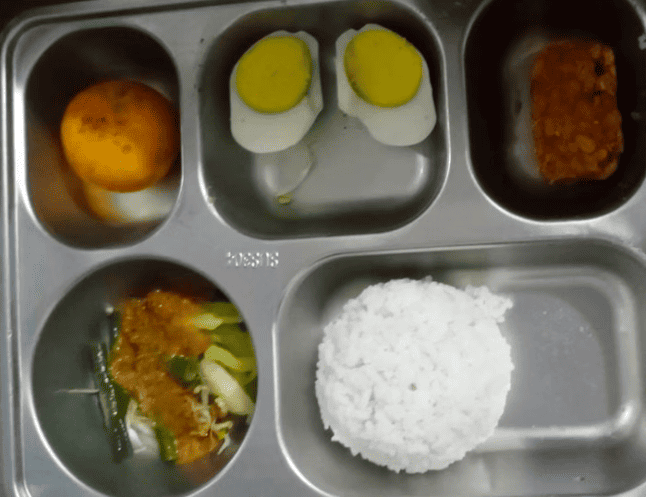
The Ministry of Human Rights (HAM) has refuted a statement by the National Human Rights Commission (Komnas HAM) which claimed there were strong indications of human rights violations in the implementation of the Free Nutritious Meal Programme (MBG). The ministry stressed that the programme represents a tangible fulfilment of the people’s basic rights, especially the right to food and an improved quality of life.
Director General of Human Rights Services and Compliance at the Ministry of Human Rights, Munafrizal Manan, assessed that Komnas HAM’s conclusion regarding alleged human rights violations in the MBG programme is inaccurate when viewed from a human rights perspective. “The MBG programme is a concrete manifestation of fulfilling human rights, encompassing the right to adequate food, the right to be free from hunger, the right to improve one’s standard of living, the right to fulfilment of basic needs, the right to grow and develop properly, and the right to an improved quality of life,” he said in Jakarta on Wednesday (17/6).
According to him, MBG is a strategic government policy aimed at reducing stunting and malnutrition in future generations. Therefore, the programme actually reflects the state’s active role in fulfilling the economic and social rights of the community. “Hence, it is not appropriate to conclude that human rights violations have occurred in the MBG Programme, because the MBG Programme precisely carries a mission of human rights fulfilment,” Munafrizal stated.
The Ministry of Human Rights acknowledged that the implementation of MBG still has a number of shortcomings in terms of governance and oversight. However, these conditions cannot automatically be categorised as human rights violations. “Komnas HAM was correct in conveying the need for a comprehensive evaluation of the MBG Programme, but mistaken in concluding that human rights violations have occurred within it,” he said.
Munafrizal also noted a contradiction in Komnas HAM’s statement, which on one hand cited indications of human rights violations, yet on the other hand still recommended the programme be continued with a thorough evaluation. “The statement that there are strong indications of human rights violations and the request for a comprehensive evaluation of the MBG Programme are actually contradictory when examined from a human rights perspective,” he remarked.
Furthermore, the Ministry of Human Rights highlighted the assessment method used by Komnas HAM. According to the ministry, the institution conflated its study and research function with its monitoring function in concluding that human rights violations had occurred. “In the study and research function, it is inappropriate to include a conclusion that human rights violations have taken place. The assessment of human rights violations is more appropriately conducted through the monitoring function in the form of investigation and examination of an event,” Munafrizal explained.
The Ministry of Human Rights also emphasised that the MBG programme has received appreciation from various international parties. One instance was during a side event titled ‘Indonesia’s Free Nutritious Meal Program: A Right-Based Investment in Human Dignity’ at the 61st Session of the United Nations Human Rights Council in Geneva on 12 March 2026. In that forum, the MBG programme garnered positive responses from several international organisations, including the Food and Agriculture Organization (FAO) and the World Food Programme (WFP), as well as representatives from a number of countries. “Programmes like MBG in various countries represent the state’s obligation to strive for the fulfilment of the right to food for its citizens, and certainly do not constitute human rights violations,” he asserted.