
Human Rights Ministry prepares public complaints data while protecting privacy
Jakarta (ANTARA) - The Ministry of Human Rights is preparing to publish data on human rights complaint services submitted by the public, while protecting victims’ identities and privacy. The initiative is part of efforts to increase transparency and strengthen data-based policymaking.
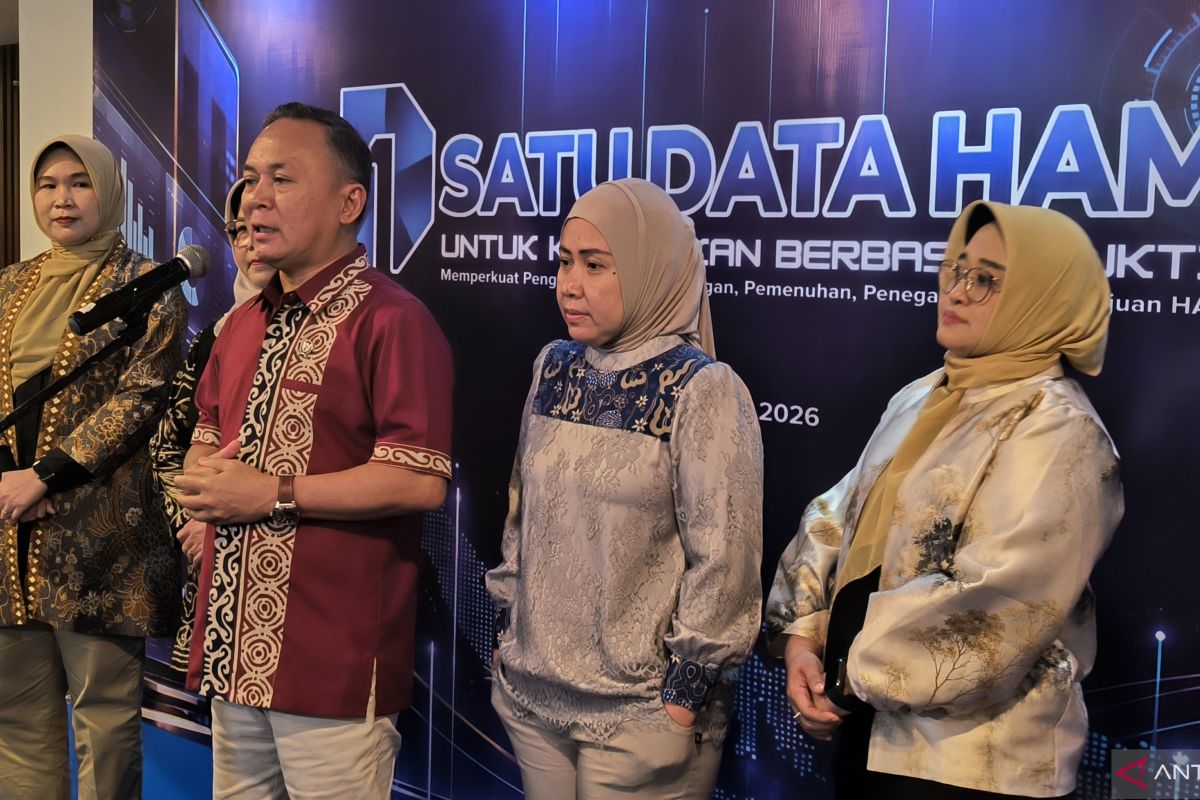
Deputy Human Rights Minister Mugiyanto said the publication is one of three groups of data being prepared through One Data for Human Rights Indonesia. The other groups cover Human Rights-Aware Villages and assessments of whether draft legislation at national and regional levels conforms to human rights principles.
“Human rights data, especially complaints involving victims, cannot simply be shared with the public. We must protect citizens’ privacy and individual privacy,” Mugiyanto said at the launch of the One Data for Human Rights Indonesia publication in Jakarta on Tuesday.
He stressed that data transparency must go hand in hand with information security, particularly when dealing with individuals who have suffered violence or submitted complaints to the ministry.
Mugiyanto said accurate, integrated data is needed to identify communities affected by human rights issues, locate the problems and determine appropriate interventions based on their needs.
“If the data is wrong, the policy will inevitably be wrong. In the end, it will not reach the community,” he said.
He cited the risk that inaccurate data could cause government programmes to miss their intended recipients. For example, a community health post could be built in a village that already has one, while a village in greater need goes without the service.
The ministry is therefore seeking to integrate human rights data into Indonesia’s One Data system, so that data across ministries, agencies and local governments follows common standards and can be exchanged to support policymaking.
Mugiyanto acknowledged that data-sharing still faces obstacles, including institutional silos and administrative requirements such as memorandums of understanding and co-operation agreements, which can deter agencies from sharing information.
He said he hoped a stronger legal framework for Indonesia’s One Data system would simplify data-sharing and encourage collaboration between institutions.
The Ministry of Human Rights, he added, is ready to work with the managers of Indonesia’s One Data system and data stewards at ministries and agencies.
Through these measures, the government is expected to use accurate data to identify public needs, improve programme delivery and make efforts to respect, protect, fulfil, uphold and advance human rights more effective.