
Human Rights Ministry Evaluates TNI and Polri Laws to Ensure Rights-Based Policies
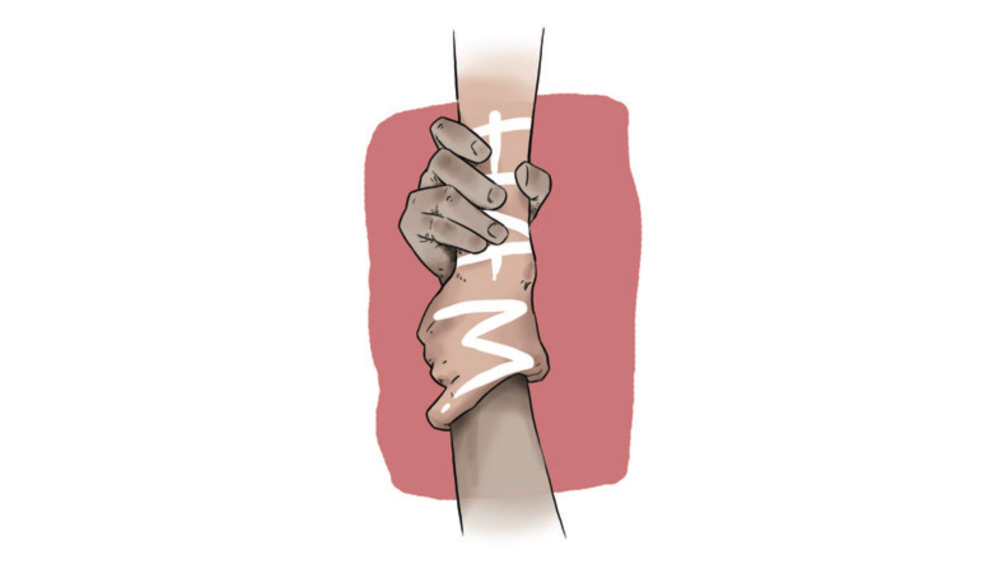
The Ministry of Human Rights has begun evaluating a number of strategic regulations, including the TNI Law and the Polri Law, to ensure that every state policy is in line with the principles of respect, protection, fulfilment, enforcement, and advancement of human rights (P5 HAM).
Acting Director General of Instruments and Human Rights Strengthening at the Ministry of Human Rights, Sofia Alatas, stated that the evaluation also covers the interrelation with regulations concerning military justice to prevent human rights issues or discriminatory treatment in their application.
“From the Ministry of Human Rights, we first look at the duties and functions mandated by the President, one of which is formulating policies with a human rights perspective. Then we conduct analysis and evaluation of existing policies, as well as provide assistance in drafting legislation so that everything is based on and has a human rights perspective,” Sofia said in Jakarta on Tuesday.
She explained that in 2026 the Ministry of Human Rights is analysing ten priority policies, one of which relates to the defence and security sector. “It happens that of the ten policies we are analysing in 2026, one relates to the Polri and TNI. The hope is not only for the Polri and TNI, but also for all ministries, institutions, and local governments to not only look at the drafting pattern, but also pay attention to the substance of human rights,” she said.
According to Sofia, this step aims to ensure the state’s obligation to fulfil the P5 HAM principles can run optimally through the policies that favour citizens’ rights.
Regarding the implementation of various existing laws, including the Polri and TNI laws which have been judicially reviewed several times at the Constitutional Court, Sofia said the Ministry of Human Rights uses human rights mainstreaming guidelines as the basis for analysis.
“We have the Minister of Law and Human Rights Regulation Number 16 of 2024 concerning human rights mainstreaming in the drafting of legislation. Within these guidelines, we look at aspects of civil and political rights as well as economic, social, and cultural rights. It is from this analytical tool that we assess policies which, in our view, are still perceived by the public as not paying attention to human rights aspects,” she explained.
Sofia mentioned that the results of the analysis will later become recommendations to the relevant ministries or institutions. If fundamental issues are found, the Ministry of Human Rights will push for regulatory changes.
“If, for example, the input from the analysis results is quite substantial, we recommend that it be changed. But if there are only a few articles, we will recommend a revision. So, we will see how extensive the recommendations from the Ministry of Human Rights are,” she said.
According to her, the evolving security situation, including the emergence of various forms of digital crime, requires the state to continuously adjust regulations without neglecting the protection of human rights.
“With the development of society and the changing types of crime, from physical to now largely digital, there must certainly be adjustments. And the state’s duty is to carry out respect, protection, fulfilment, enforcement, and advancement of human rights through policy,” she said.
In addition to the TNI and Polri laws, the Ministry of Human Rights is also reviewing provisions concerning military justice. Sofia assessed that these rules need to be seen in relation to the new TNI Law so that the legal system remains aligned.
“We are also analysing military justice. Because the TNI Law has been passed, automatically we must look at its relation to the Military Justice Law. That certainly must be adjusted, including incorporating human rights aspects so there is a balance between the TNI Law and military justice,” she said.
However, she emphasised that her ministry’s main focus is currently still on analysis from a human rights perspective, not on institutional design or judicial mechanisms.
“On that matter, we are still looking at it from the human rights aspect first. Just like the Human Rights Law which is being revised, automatically the Human Rights Court Law will also have to be adjusted later. Because these regulations cannot operate independently, but are interrelated,” Sofia said.
She also added that besides the defence and security sector, the Ministry of Human Rights is also evaluating a number of other regulations, such as the Job Creation Law, health, education, and cyber laws.
“We hope that in the future ministries and institutions can also coordinate with the Ministry of Human Rights. So, they do not only formulate policies, but also pay attention to the substance of human rights. Because if a policy does not have a human rights perspective, the impact will be felt by the wider community,” she said.
Responding to questions regarding the potential for discriminatory treatment in the regulation of the Polri Law, the TNI Law, and military court provisions, Sofia affirmed that all Ministry of Human Rights studies are directed at ensuring every regulation fulfils human rights principles, including aspects of accountability, access to justice, and equality of citizens before the law. “The results of this evaluation will later serve as the basis for submitting recommendations for improvement to the government and lawmakers,” she concluded.