
Human Rights Ministry deploys 150,000 workers to map poverty and basic needs in villages
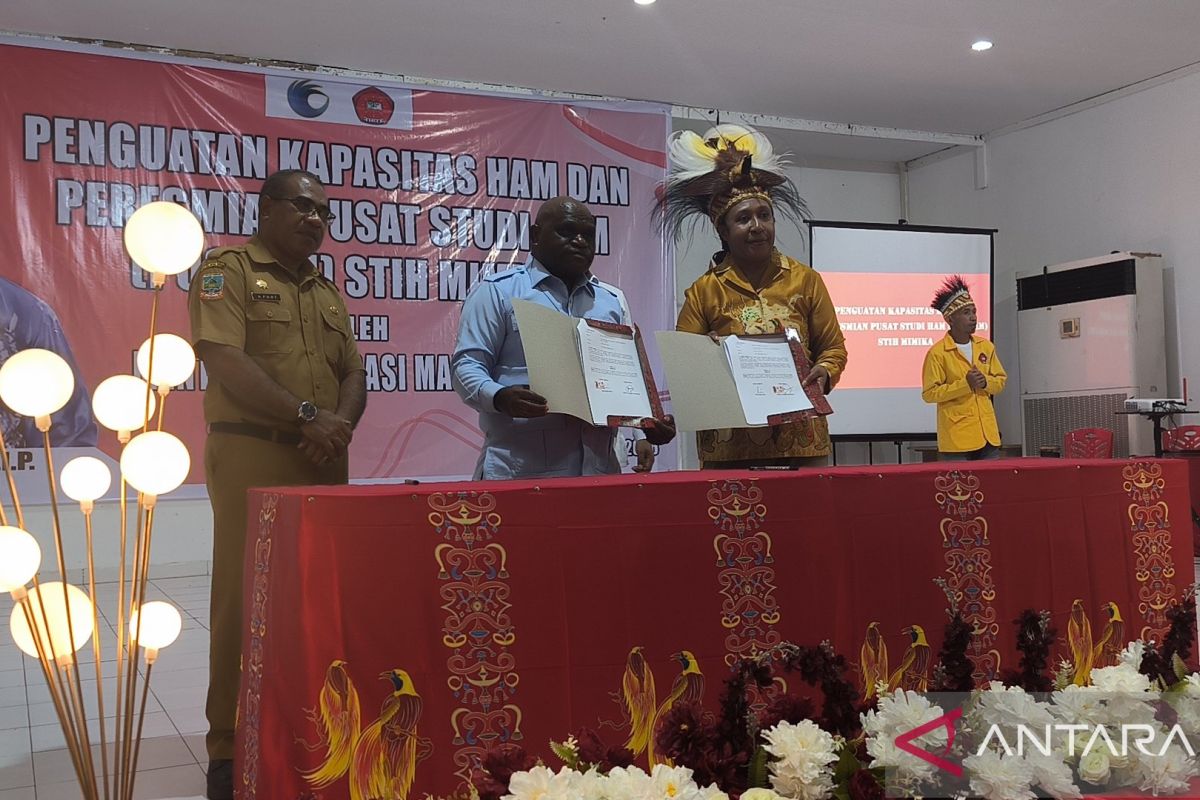
The Ministry of Human Rights has deployed 150,000 workers in the first phase to map poverty, unemployment and the fulfilment of basic needs in villages across Indonesia.
Human Rights Minister Natalius Pigai said the workers have been assigned as ministry officers under the Human Rights Aware Villages programme to collect direct data on community conditions and human rights issues at the village level.
“I recruited 150,000 human rights workers yesterday, recruited them for the first phase. They have been placed as Ministry of Human Rights officers in the Human Rights Aware Villages,” Pigai said while inaugurating the Human Rights Study Centre at the Mimika College of Law in Timika, Mimika Regency, Central Papua, on Tuesday.
He said the officers not only record human rights issues in general, but also map social conditions and residents’ basic needs, including poverty levels, unemployment, social assistance requirements, and the availability of clean water and sanitation.
In addition, the officers are tasked with recording the condition of basic infrastructure such as damaged roads and bridges. The data will then serve as material for the Ministry of Human Rights to coordinate handling with relevant technical ministries or agencies.
Pigai said this approach is necessary so that problems faced by communities can be identified based on conditions and data in the field, allowing interventions to be directed towards the right needs.
“If there are 10 unemployed people in a small village, those 10 people will also be assisted by the Ministry of Human Rights to be channelled to companies or into work. If there is poverty, if there are people who need social assistance, the officers will record it,” he said.
According to him, officers can also report issues such as the lack of access to clean water or environmental damage, which will then be coordinated with the ministry that has the authority to handle those matters.
He added that assistance will continue as long as the village remains in the Ministry of Human Rights’ development phase. Once various development issues have been addressed, the results will be handed over to the regional government to be continued.
“Until all development problems are completed and fully handed over to the regions,” Pigai said.