
Human Rights Minister Urges Security Forces to Avoid Involving Civilians in Papua Operational Zones
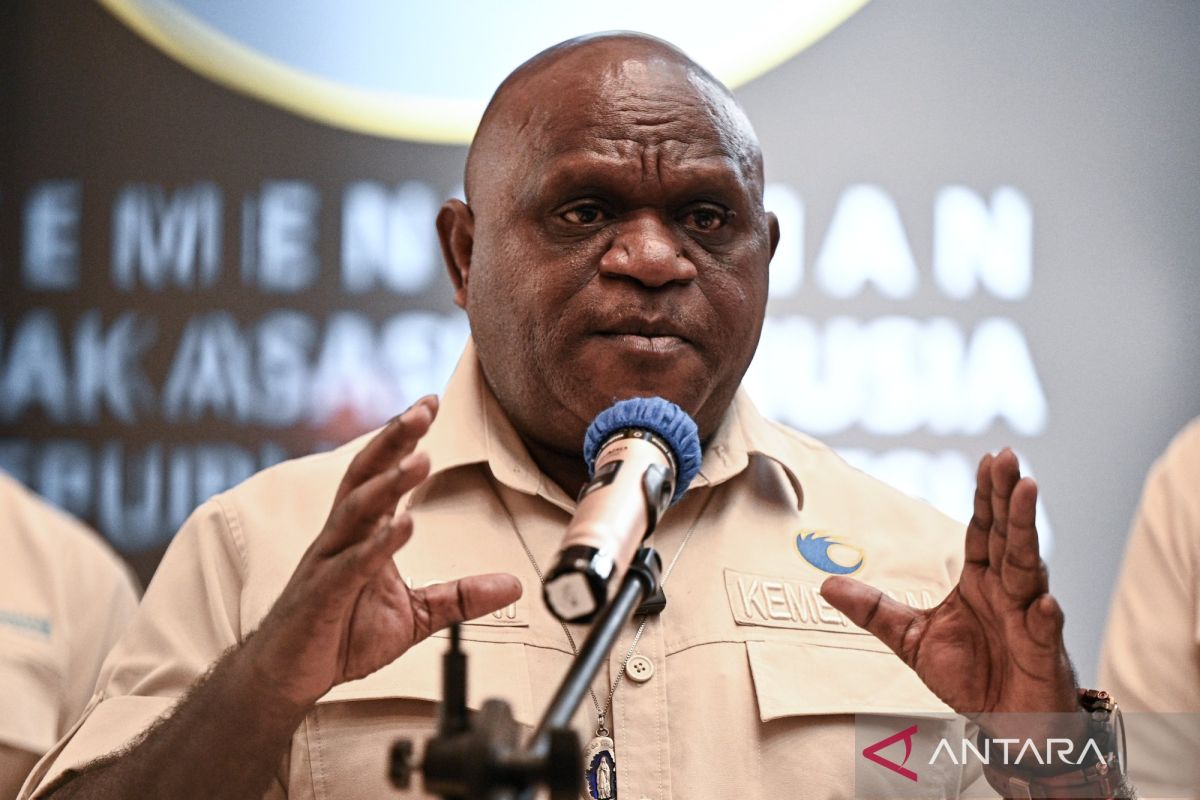
Jakarta (ANTARA) - The Minister of Human Rights, Natalius Pigai, has requested that security forces avoid involving civilians within operational zones in Papua as part of an effort to strengthen the protection of civilians amidst armed conflict.
Pigai stated that such protection applies to all residents, both Papuan and non-Papuan, and therefore the involvement of civilians in operations must be avoided to prevent them from becoming victims.
“The core point is that the Ministry of Human Rights prohibits security forces from involving civilians, and we also do not want the TPN-OPM (National Liberation Army-Free Papua Movement) to kill civilians,” Pigai said in Jakarta on Tuesday.
He noted that while he can instruct government security forces to avoid involving civilians as they fall within the government’s scope, regarding the TPN-OPM, he can only call upon them to refrain from attacking civilians.
“Therefore, as Minister, I can only request for our part, namely our security forces, to ensure they do not involve civilians within operational zones,” he said.
According to Pigai, protecting civilians is crucial because, in conflict situations, it becomes difficult to distinguish between civilians and those involved in operations if civilians are performing functions related to the operations.
He cited examples such as civilians working as drivers within operational zones, as well as the possibility of security personnel being in the field without wearing official insignia.
“Therefore, to protect both the security forces and innocent civilians, efforts must be made not to involve them in operational zones,” said Pigai.
Under international humanitarian law, the principle of distinction requires parties involved in a conflict to distinguish between civilians and those taking part in hostilities.
In principle, civilians are protected from direct attacks unless they take a direct part in hostilities.
Pigai stated that protection efforts should not merely consist of condemnations after an incident has occurred, but must be directed towards prevention to ensure similar incidents do not recur.
“If I condemn something today, and an incident happens tomorrow, and we condemn it again the day after, mere condemnation achieves nothing. Therefore, we must implement brakes so that such things do not happen again in the future,” he said.
He also emphasised the need for clear boundaries to protect civil society from the impacts of operations.
“There must be a demarcation line ensuring that the civilian aspect is not disturbed,” he added.
Pigai reaffirmed that such protection must be provided regardless of the residents’ backgrounds.
“Therefore, the protection of all civilians, whether they are Papuan or non-Papuan, is equally important,” he concluded.