
Human Rights Minister Urges Security Forces and OPM to Adhere to Humanitarian Law
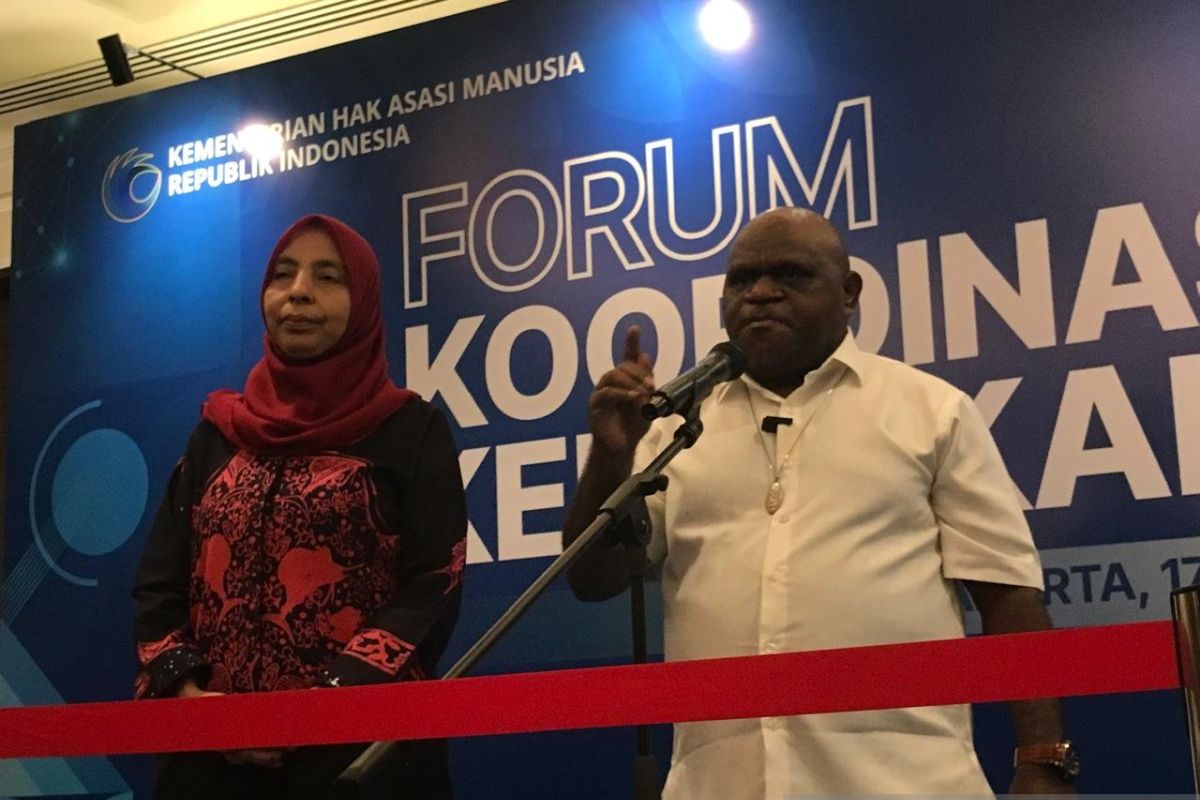
Jakarta (ANTARA) - The Minister of Human Rights, Natalius Pigai, has reminded all parties involved in the conflict in Papua, including security forces and armed groups, that they are obliged to comply with the laws of war and international humanitarian law by not involving or targeting civilians.
Pigai highlighted the vulnerability of civilian populations amidst the shifting patterns of conflict in Papua. According to him, the involvement of civilians in military operations constitutes a violation of international instruments, specifically the Geneva Conventions.
“In the laws of war and humanitarian law, never involve civilians in military operations. It is strictly prohibited,” Pigai stated during a press conference in Jakarta on Thursday.
Pigai acknowledged the demographic and sociological challenges, noting that racial homogeneity in Papua often makes it difficult for security forces to recruit local personnel. However, he asserted that such conditions must not serve as a justification for authorities to involve civilians in operations, as this places them on the front lines of the conflict.
The Ministry of Human Rights also warned the National Liberation Army-Free Papua Movement (TPN-OPM) against targeting civilians for execution under the pretext that the victims are espionage or intelligence agents.
According to Pigai, such accusations cannot justify the unilateral execution of civilians. He demanded that armed groups prove such allegations through identification or evidence of military training.
“The TPN-OPM must not kill civilians. It is not allowed. The problem is that their advisers direct that a civilian’s identity be recorded before the person is executed. But this is forbidden. Do not kill; human life must not be taken; we do not want this,” said Pigai.
As a long-term effort, the Ministry of Human Rights is encouraging security forces to maximise transparent and measurable law enforcement strategies. Pigai also urged that conflict resolution should not be handled reactively or on a case-by-case basis, but through a holistic approach and affirmative policies to achieve peace in Papua.