
Human Rights Minister includes neurorights in Human Rights Bill draft
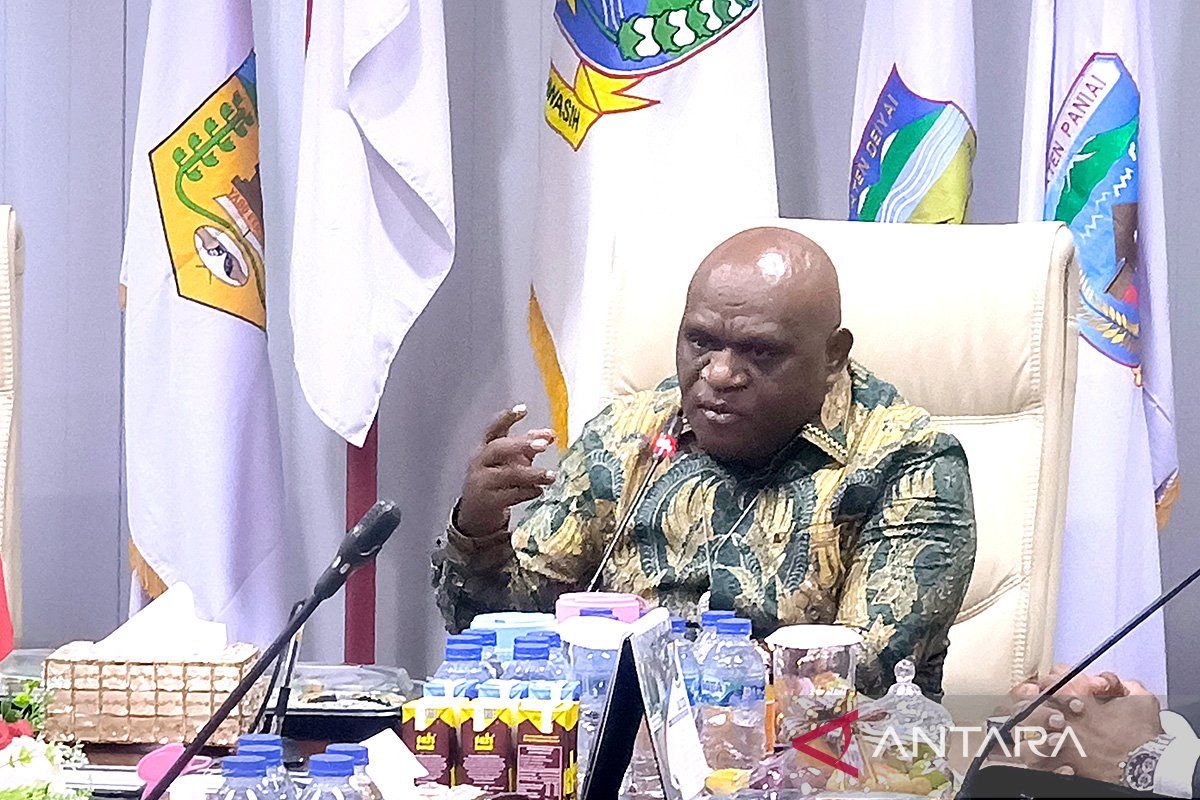
Jakarta (ANTARA) - The Minister of Human Rights, Natalius Pigai, stated that the Ministry of Human Rights is incorporating provisions regarding ‘neurorights’—or rights pertaining to neurotechnology—into the draft update of the Human Rights Law to anticipate challenges in protecting human rights caused by technological advancements.
“I have included one article regarding neurorights in the Human Rights Law,” said Pigai during his opening remarks at the Human Rights Policy Forum in Jakarta on Thursday.
He explained that neurorights are necessary to protect human mental activity and thoughts from the potential misuse of technology capable of reading bodily and brain signals.
“With neurorights, if I am sitting here and a friend is next to me using neurotechnology, they might use my blood or temperature to steal what I am thinking,” he remarked.
According to Pigai, the development of neurotechnology could potentially allow individuals to discern mental activities, including thoughts, emotional states, and even personal plans, through specific signals. He noted that such technology highlights the need for human rights regulations capable of anticipating new forms of threats to privacy and human freedom.
In addition to technological developments, Pigai assessed that ministries and agencies must also anticipate human rights challenges related to the limitations of living space and natural resources. He questioned Indonesia’s capacity to meet the needs of its population in the years 2050, 2100, and 2500, including requirements for housing, industry, public facilities, as well as the production of food, clothing, and shelter.
“Have we ever calculated whether the milieu in which we live—the cartographic territory of the Republic of Indonesia, consisting of land and sea—will be able to accommodate our population in 2050, 2100, or 2500? How many can it hold? 200 million? 500 million? 1 billion?”
Pigai stated that such calculations must account for the area required for houses, residential plots, industrial zones, real estate, recreational areas, public and special facilities, as well as the remaining space for producing food, water, and energy.
Currently, he noted, there are approximately 16 million hectares of agricultural land, with eight million hectares located on Java and eight million hectares outside of Java. He cited Majalengka and Indramayu, which supply around 800,000 tonnes of rice per year, Sragen and its surroundings at 600,000–700,000 tonnes, and Bojonegoro at approximately 800,000 tonnes.
According to Pigai, infrastructure development and industrialisation in these regions have the potential to reduce food production sources. He warned that the shrinkage of agricultural land could increase Indonesia’s dependence on food imports due to limited production areas.
He also reminded that rice-producing nations in the region, such as Vietnam, Cambodia, and Thailand, face similar pressures due to industrialisation. “Indonesia could face a high dependency ratio because we are among the largest rice consumers while our production areas are limited; therefore, we will inevitably have to import from other countries,” he said.
In the context of human rights policy, Pigai urged ministries and agencies to begin calculating spatial carrying capacity, the availability of food, water, and energy, and to anticipate technological developments that could trigger new human rights issues. He emphasised that such planning is essential to ensure that the fulfilment of basic rights can be guaranteed as the population and technological advancements continue to rise.