
Human Rights Law Revision Targeted for Completion by 2026, Papuan Community Aspirations in Focus
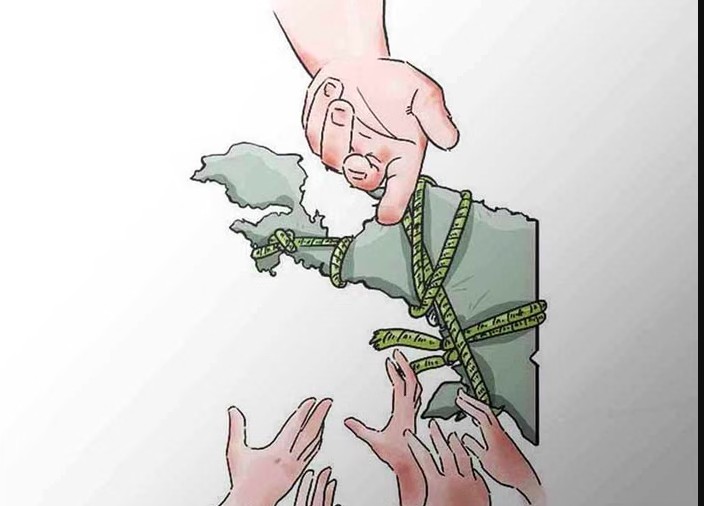
Deputy Minister for Human Rights (HAM) Mugiyanto stated that input from Papuan communities would be crucial in drafting the revision of the 1999 Human Rights Law (UU HAM). He made the remarks during a public test of the UU HAM revision in Jayapura on Saturday (30 May). He explained that the revision is necessary to address evolving human rights challenges, including digital rights and privacy protection in the technological era.
‘We aim to complete the discussion and enactment of this law by 2026 as the UU HAM revision has already been included in the National Legislative Programme (Prolegnas),’ Mugiyanto said in a statement in Jakarta on Sunday (31 May).
He noted that the current UU HAM was enacted during the democratic transition period and mainly regulates human rights institutions. Therefore, the government aims to strengthen the law as the overarching legal framework for protecting citizens’ rights nationally.
‘This law cannot exceed those boundaries and does not cover technical matters. Details will be regulated through subordinate regulations, such as government regulations (PP),’ he added.
Mugiyanto affirmed that the aspirations voiced by Papuan communities during the public forum would inform the final draft of the UU HAM revision, though not all technical issues could be included in the law itself.
‘This spirit aligns closely with the outcomes of the recently held Strategic Papua Analysis (APS) conference, where the proposals from that forum will be invaluable inputs for the UU HAM revision,’ he said.
During the forum, Papuan representatives highlighted issues such as customary land rights, indigenous political participation, welfare disparities, protection of women and children, and the impact of illegal mining activities.
A community leader from the Elseng tribe stated that the success of human rights protection is not merely measured by the number of regulations created, but by how much justice the community actually experiences.
Participants also proposed strengthening the National Human Rights Commission (Komnas HAM), increasing representation for Eastern Indonesian communities in national commissions, establishing Regional Technical Implementation Units (UPTD) in new provinces, and ensuring transparency in the use of Special Autonomy (Otsus) funds for women and family empowerment.
Meanwhile, Deputy Minister for Human Rights on Bureaucratic Reform and Legislation Rumadi Ahmad stressed that the UU HAM revision must be comprehensive to address modern human rights challenges.
‘Of course, these norms cannot function in isolation; there must be institutions to implement them. The National Human Rights Commission cannot operate at its best without executive support,’ Rumadi said.
He mentioned contemporary human rights issues under discussion in the revision, including personal data protection, the impact of artificial intelligence (AI), strengthening Komnas HAM’s independence, and plans to establish an endowment fund for human rights and democracy to support humanitarian programmes and civil society strengthening.
Mugiyanto stressed that Papua is not a blank slate to be developed with a uniform approach from the centre.
Various productive assistance programmes implemented by the government in Papua continue to benefit the local population.