
Human development must be a goal of AI utilisation in business
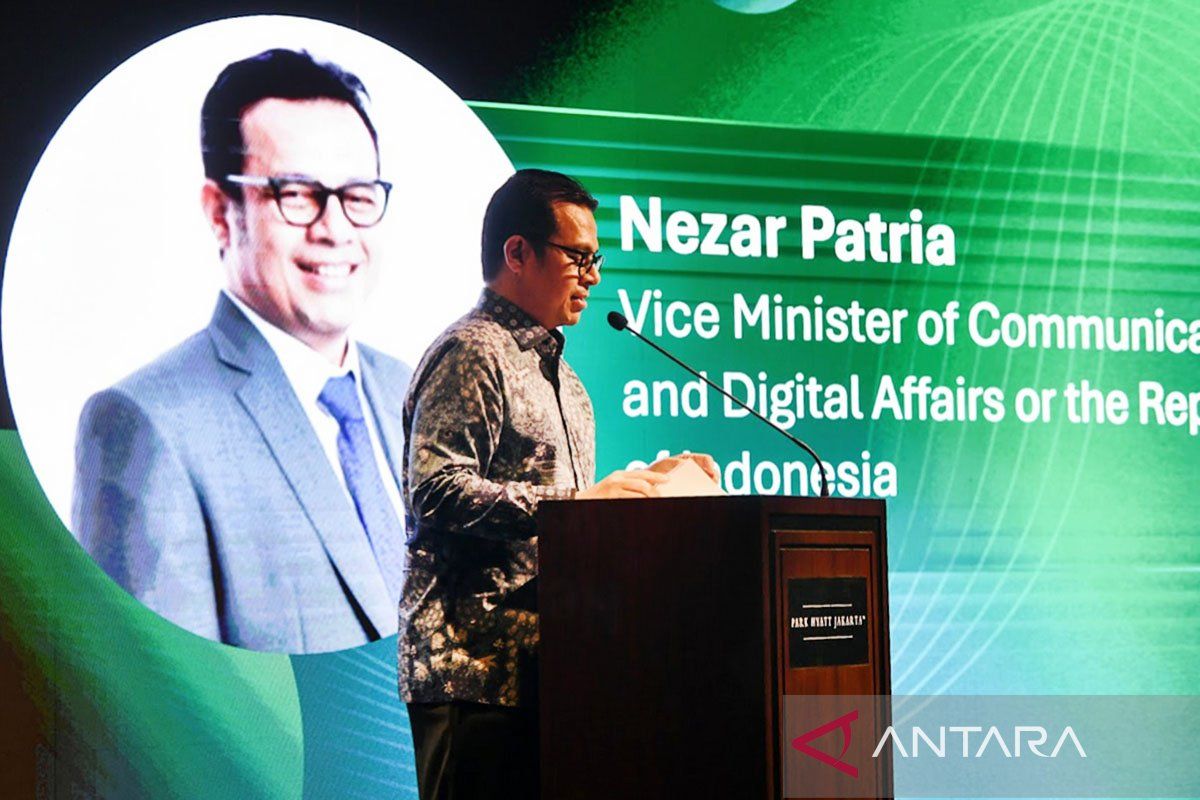
Jakarta (ANTARA) - Deputy Minister of Communication and Digitalisation (Wamenkomdigi) Nezar Patria stated that human development must be one of the goals of utilising artificial intelligence (AI) when implemented in business to respond to the market in the digital era.
According to Nezar, the true value of AI emerges when the technology runs alongside improvements in human capacity.
“This is the most important point, I think, namely building humans, not just systems. The World Economic Forum notes that true productivity from AI is only created when human capabilities also develop alongside it, so do not sideline humans in the process of systems supported by AI,” said Nezar in a press statement received and confirmed in Jakarta on Wednesday.
Nezar said that the utilisation of AI is now unavoidable in the business world, and its function is no longer limited to supporting automation but has already impacted business decision-making.
This has also been proven by various studies on companies that ultimately experienced significant productivity growth in business after using AI, especially in accounts receivable and transaction management processes.
Nezar revealed some of the studies in question, such as the Stanford AI Index 2025 report. Based on that report, AI adoption in the global business world has increased significantly, with 78 percent of organisations utilising AI compared to only 55 percent the previous year.
In addition, he gave an example from another study of 500 companies that adopted AI in their receivables processes, where the impact of AI was tangible with productivity increases of up to 82 percent and operational efficiency reaching 60 percent.
Through this data, the benefits of AI cannot be denied and are necessary to be applied in business.
Nevertheless, for AI utilisation to be effective, especially in the financial and business sectors, appropriate leadership and culture are needed when adopting AI within a company’s organisation.
“The biggest obstacle is not technology, but leadership and organisational culture. Many AI initiatives stop at the trial stage without delivering real impact,” said Nezar.
Nezar then outlined three strategic challenges that financial leaders need to address when implementing AI in their businesses.
The first is the pilot project trap. This condition refers to many organisations getting stuck in AI pilot projects.
Not a few businesses that do not develop but are still forced to implement AI on a full scale and ultimately do not produce significant added value.
The second challenge concerns data quality and governance. According to Nezar, AI is highly dependent on clean, integrated, and secure data, so companies must have a well-organised set of data for optimal utilisation of the technology.
Without a strong data foundation, AI initiatives risk failure or producing misleading analyses.
“AI will fail in any case if not supported by good data quality. Let us pay attention to clean, integrated, and secure data architecture as the foundation for all AI project initiatives,” he said.
As a strategic step to support healthy and productive AI utilisation, the Indonesian Government through the Ministry of Communication and Digitalisation is preparing specific regulations.
These regulations relate to the national roadmap for AI development, which will serve as the basis for policies to ensure that AI utilisation runs ethically, safely, and inclusively.
“Komdigi has completed the National AI Roadmap for AI development and it will be enacted as a presidential regulation later along with another document on AI ethics. Hopefully, within the next 1-2 months, the president can sign the National Artificial Intelligence Development Roadmap document,” said Nezar.