
Human Carries Leopard on Back, Then Rides It
At the ancient site of Karahan Tepe, believed to be among the oldest settlements in the world, archaeologists have made an unprecedented discovery. A statue approximately 11,000 years old depicts a human figure sitting on the back of a leopard. The carving style is said to have never been found at any other archaeological site.
The discovery was announced directly by Turkey’s Minister of Culture and Tourism, Mehmet Nuri Ersoy. The 70 cm tall statue was found intact inside a building with a diameter of 3 metres, whose floor was paved with flat stones. It is estimated to be 11,000 years old.
Göbekli Tepe has long been more famous as the world’s oldest sacred structure, with an age reaching 11,600 years. However, about 45 kilometres to the east lies a similarly remarkable site called Karahan Tepe. Its age is estimated to be the same or even a few centuries older than Göbekli Tepe, and both were built by hunter-gatherer societies, long before humans began farming.
Although contemporary and located close together, the two sites were apparently built using different methods and styles. Göbekli Tepe was constructed by arranging large stones into pillars and walls, whereas Karahan Tepe was carved directly into the hillside rather than assembled. Göbekli Tepe features many animals such as wild boars, vultures, and scorpions, while Karahan Tepe displays more human figures, with snake carvings predominating.
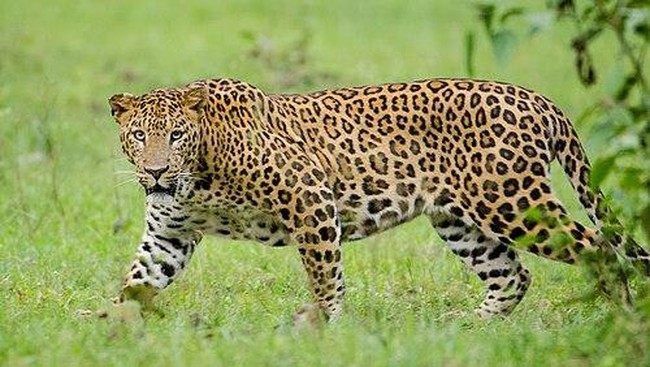
One of the most unique recent finds is a statue combining a human figure and a leopard. A human is depicted sitting on the leopard’s back. This combination raises many new questions for scientists about the beliefs of people who lived 11,000 years ago.
Previously, Karahan Tepe has also yielded other extraordinary discoveries, including a human face carved on a stone pillar, described as the oldest self-portrait ever found, and a 2.3 metre tall statue of a man with clearly carved physical features, seated with both hands embracing downwards. There is also a figure of a human with a leopard on its back, the reverse version of the latest discovery.
The archaeologist leading the excavation, Necmi Karul, explained that the increasing number of human statues at the site indicates a major shift in how our ancestors viewed the world. As societies began to settle and live permanently in one place, humans gradually placed themselves at the centre of the universe, rather than merely being part of nature.
“By settling, humans slowly distanced themselves from nature and placed human experience at the centre of everything,” said Karul.
This means that 11,000 years ago, long before the pyramids were built, there was already a society capable of constructing monumental buildings, carving extraordinary works of art, and creating stories about the relationship between humans and wild animals.