
Huma Betang and the Values of Togetherness in Teras Narang’s Book
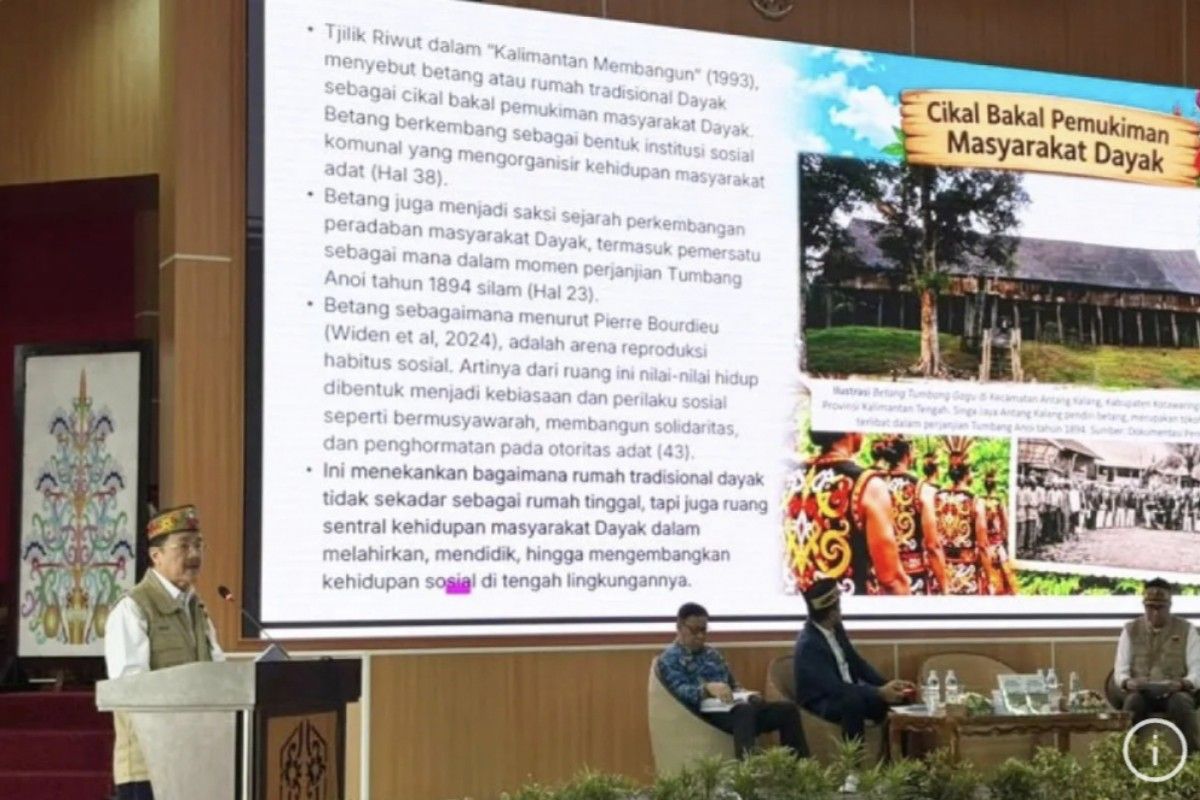
Palangka Raya (ANTARA) – Agustin Teras Narang, a member of the Regional Representative Council (DPD) from Central Kalimantan, has published a book on the philosophy of Huma Betang to strengthen historical literacy and preserve Dayak culture.
“The study in the book is based on research into several betang in Kalimantan. It not only traces the history of betang as traditional buildings, but also examines their role as centres of Dayak social life,” Teras said in Palangka Raya on Thursday.
The book, titled The Philosophy of Huma Betang: A Symbol of Pluralism, Togetherness and Dayak Life within the Framework of the Unitary State of the Republic of Indonesia, was discussed at a book review event at the University of Palangka Raya (UPR).
Teras said the book was a joint initiative involving several public figures, academics, researchers and members of the Central Kalimantan diaspora who are committed to preserving the cultural heritage of the Dayak people.
As well as history and architecture, the book addresses the challenges of preserving betang, both physically as communal homes and philosophically as expressions of Dayak values.
Teras said the discussion was important to ensure that cultural heritage remained more than a historical record and continued to be practised by current and future generations.
He said that although betang may no longer be central to modern housing patterns, the values embodied in the philosophy of Huma Betang should be upheld as a guide to living together.
“Our history and culture, especially the values of the Huma Betang philosophy, must continue to be nurtured and preserved,” he said.
Teras said Huma Betang values were connected to Pancasila and the spirit of nationhood within the framework of the Unitary State of the Republic of Indonesia (NKRI).
The values of Hapahari, Handep, Belom Bahadat and Hapakat Kula are local wisdom that can enrich and strengthen the foundations of national and civic life.
The book was compiled with contributions from academics in various disciplines. Teras hopes it will serve as a reference for the public and academic community, particularly young people, seeking to learn more about Dayak history and culture.
Source: jawawa.id (https://jawawa.id/newsitem/huma-betang-and-the-values-of-togetherness-in-teras-narangs-book-1795686792)
Originally published by Antara (Indonesian) (https://www.antaranews.com/berita/5880207/huma-betang-dan-nilai-kebersamaan-dalam-buku-teras-narang), translated from Indonesian