
HUAWEI WATCH D3 Debuts at ISH-ECS 2026 with Blood Pressure Monitoring for Everyday Use
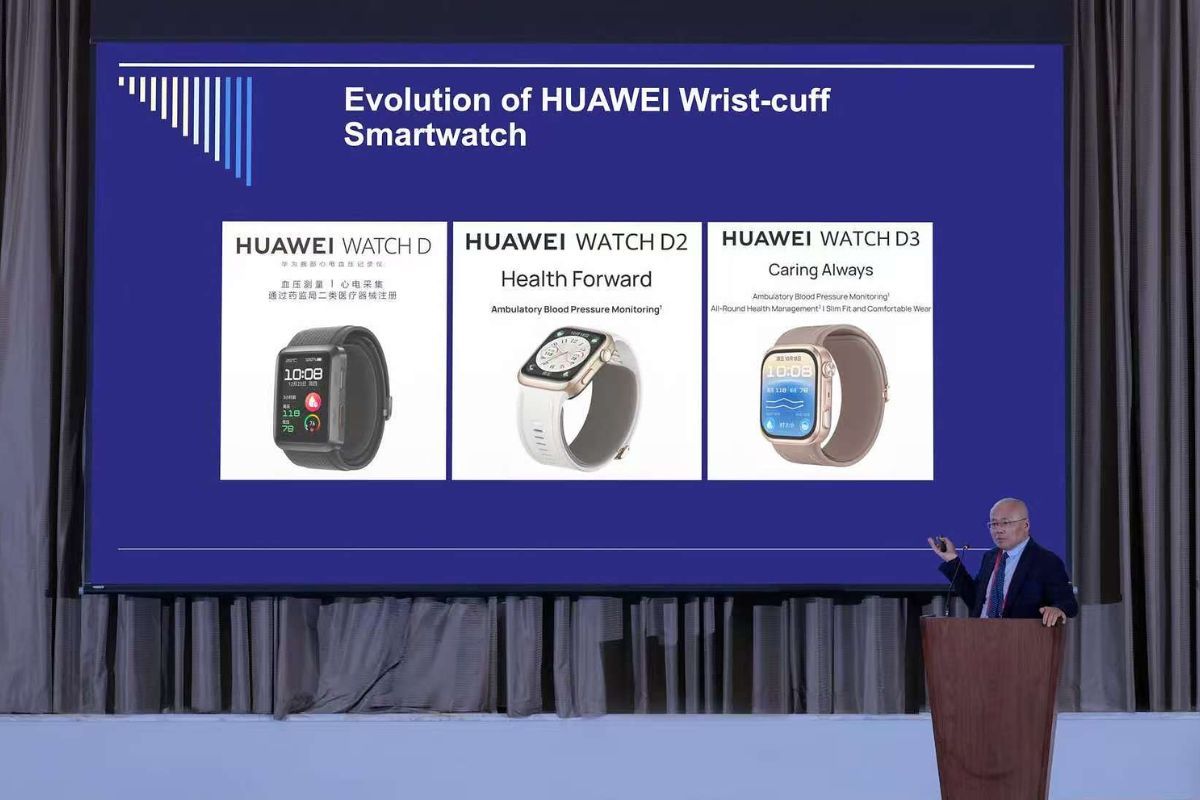
Dubai, United Arab Emirates — The 31st International Society of Hypertension Scientific Meeting and 17th Emirates Cardiac Society Annual Conference (ISH-ECS 2026) took place in Dubai from 22 to 25 October 2026. The international conference on hypertension brought together leading organisations and experts from around the world to discuss research findings and the latest developments in preventing and treating the condition.
Several international experts presented findings from research using HUAWEI WATCH D Series blood pressure monitoring devices. Their work highlighted the potential of wearable technology to support blood pressure monitoring and management. As a member of the International Society of Hypertension (ISH), Huawei also introduced its latest device, the HUAWEI WATCH D3. Visitors to Huawei’s exhibition stand could try its medically standard blood pressure measurement capabilities in different settings. The demonstration showed how wearable technology could make blood pressure monitoring more practical and accessible in everyday life.
Huawei launches innovation fund to strengthen research into wearable blood pressure monitoring
Hypertension is one of the world’s most common chronic conditions and a major risk factor for cardiovascular disease. Although prevention efforts and treatments continue to advance, global blood pressure control rates remain low. This underlines the need for more effective methods of monitoring and management.
To encourage research in this field, Huawei and ISH established the Wearable Blood Pressure Technology Innovation Fund. It focuses on two areas: measuring blood pressure with wearable devices and managing blood pressure through wearable technology. The initiative aims to promote innovation, explore new applications and support progress in the prevention and treatment of hypertension worldwide.
Researchers leading the first three projects to receive funding presented their work at the conference. Selected from more than 80 proposals, the projects involve researchers from the University of Colombo in Sri Lanka, the University of Edinburgh in the UK, Peking University People’s Hospital in China and the University of Cambridge in the UK. The funding will support further research into blood pressure management using HUAWEI WATCH D Series devices.
Wearable blood pressure monitors with air bladders gain recognition in hypertension guidelines
As wearable health technology develops, wrist-worn blood pressure monitors using inflatable cuffs and the oscillometric measurement method are gaining recognition among the international medical community.
The technology has been discussed in several international guidelines and expert consensus statements, including the European Society of Hypertension’s “Wearable Wrist-Watch Type Cuff Oscillometric Blood Pressure Monitors: Consensus Statement”, the “2026 ISH Global Hypertension Practice Guidelines” and the “HOPE Asia Network Asian Hypertension Guidelines”. These publications recognise the potential of validated wrist-worn oscillometric devices to help people monitor their blood pressure independently. Experts at the conference also discussed the significance of this progress and its potential future use in clinical practice.
In China, the “Chinese Guidelines for the Prevention and Management of Hypertension (2024 Edition)” for the first time included wrist-worn oscillometric blood pressure monitoring. Meanwhile, the “Expert Recommendations for Ambulatory Blood Pressure Measurement Using Wearable Devices” recommend internationally validated smart wearable devices for ambulatory blood pressure monitoring. These developments reflect growing international recognition of wearable technology’s role in managing hypertension.
During the “HUAWEI Wearable Technology” innovation session and HUAWEI WATCH D3 product demonstration, Huawei experts explained the technology and applications behind the company’s approach to holistic health management. International hypertension specialists also shared their views on the HUAWEI WATCH D3 and its potential to widen access to blood pressure monitoring.
Professor Wang Jiguang, president of the Chinese Hypertension Association, said: “Innovations such as minimally disruptive ambulatory blood pressure monitoring (ABPM), as well as features that remind users to monitor environmental conditions on the Huawei Watch D3, can inspire new approaches to blood pressure management. In the future, wearable devices could automate blood pressure monitoring and integrate it more naturally into daily activities.”
Professor George Stergiou, president of the International Society of Hypertension (ISH), described the Huawei Watch D3 as a new wearable device that could reliably provide an overview of blood pressure profiles and patterns. He said the European Society of Hypertension (ESH) and ISH support the use of validated wrist-cuff blood pressure monitors for clinical purposes. However, he stressed that more research is needed to determine the best way to use these devices in clinical practice.
Professor Maryam Al Saeed of Mohammed Bin Rashid University of Medicine and Health Sciences said: “Dubai Health and Huawei are collaborating on clinical research to evaluate non-invasive wearable technology that can detect diabetes risk at an early stage. By using real-world health data, this research supports more personalised prevention, encourages proactive healthcare and improves long-term health outcomes for different groups in society.”
HUAWEI WATCH D3 combines health monitoring technology and convenience for everyday use
Gong Yuansong, vice-president of Huawei’s Smart Wearable and Sports Health Product Line (Solutions and Ecosystem), delivered a presentation at the conference. He discussed changing public attitudes to personal health: attention is shifting beyond treatment towards proactive monitoring and early prevention. Blood pressure management, he said, is moving from occasional measurement in hospital to monitoring as part of everyday routines.
He added: “Smart wearable devices with comprehensive health monitoring features, such as health summaries, health trends and readiness scores, can help users understand their bodies and gradually adopt measures to extend their healthy lifespan.”
The HUAWEI WATCH D3 is the latest in Huawei’s health-focused wearable range. The third generation of the company’s wrist-worn blood pressure monitors, it combines professional-standard blood pressure measurement with a lightweight design and features intended to support daily blood pressure management.
The device uses oscillometric measurement technology with an ultra-thin air bladder. The HUAWEI WATCH D3 also offers blood pressure measurement modes before and after exercise. By tracking changes in blood pressure in response to physical activity, the feature helps users identify potentially abnormal responses and provides information and recommendations to support safer, better-informed exercise. Huawei says the mode is the first in the industry to receive EU CE certification under the Medical Device Regulation (MDR) and to be registered as a Class II medical device in China.
Huawei is also working with Ruijin Hospital, affiliated with Shanghai Jiao Tong University School of Medicine, on the “Minimally Disruptive ABPM Study”. The research will be expanded to several countries, including Saudi Arabia and Malaysia, in collaboration with local research institutions.
The study examines a hybrid measurement method combining all-day photoplethysmography (PPG) monitoring with air-bladder-based oscillometric measurements for calibration. The approach aims to reduce the number of cuff-based blood pressure readings from 27 to seven, causing less disruption to users during ambulatory monitoring.
The method also provides a detailed picture of users’ blood pressure patterns, including average readings over 24 hours, during the day and at night, as well as a graph of changes throughout the day. This information helps users understand blood pressure trends and supports long-term management.
ISH-ECS 2026 highlighted the potential of wearable technology to change how blood pressure is monitored and managed, from academic knowledge-sharing to technological innovation. Through products such as the HUAWEI WATCH D3, Huawei aims to bring advanced health-monitoring technology out of clinical settings and into everyday life, enabling people to take a more active role in looking after their health.
Source: jawawa.id (https://jawawa.id/newsitem/huawei-watch-d3-debuts-at-ish-ecs-2026-with-blood-pressure-monitoring-for-everyday-use-1793192006)
Originally published by Antara (Indonesian) (https://www.antaranews.com/berita/5817591/huawei-watch-d3-debut-di-ajang-ish-ecs-2026-hadirkan-teknologi-pemantauan-tekanan-darah-untuk-aktivitas-sehari-hari), translated from Indonesian