
Huawei Unveils Next-Generation OTN for AIDC-Based Optical Networks
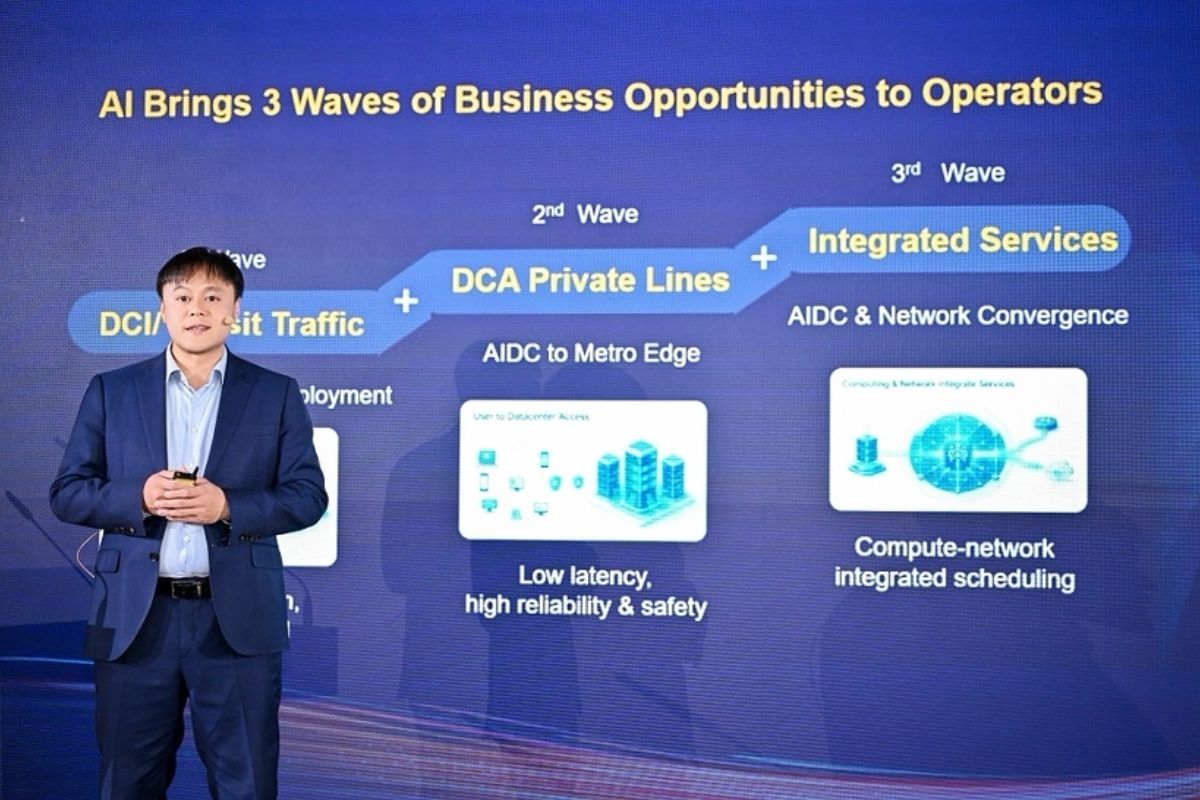
Vienna (ANTARA/PRNewswire) – Huawei presented its vision for building an integrated optical network, called “LIGHTS”, at the Optical Transport Innovation Summit, part of NetworkX 2026. The company identified three waves of AI-driven business opportunities for telecoms operators and explained how next-generation OTN solutions can strengthen optical networks centred on AI data centres (AIDCs) and support business growth.
AI creates three growth opportunities for telecoms operators
The rapid development of AI is creating three significant opportunities for telecoms operators: data centre interconnection for hyperscalers, private links to meet businesses’ computing-power needs, and integrated computing and network services. These changes are also reshaping requirements for optical transport networks. Networks once focused on consumers and households (ToC and ToH) must now serve businesses (ToB) and AI. Network planning is changing too, shifting from an approach based on administrative regions to one centred on AIDCs.
Next-generation OTN strengthens AIDC-based optical networks
To seize these opportunities, operators need integrated optical networks centred on AIDCs. Huawei has proposed its LIGHTS target network as a priority for operators in the AI era. It is built around six key capabilities: low latency, intelligent operations, a green foundation, high reliability, terabit-per-second (Tbps) capacity and security assurance.
Gavin Gu, President of Huawei’s Optical Transmission Network Domain, presented next-generation OTN solutions to support the development of LIGHTS networks, both for data centre interconnection (DCI) and connectivity within AI data centres (DCA).
For DCI, the solutions offer very high speeds, from 800G to 2T, as well as pools of OTN capacity that can be pre-provisioned in multiple directions while using minimal resources. These capabilities can help operators accelerate time to market (TTM), maximise optical fibre capacity, meet bandwidth requirements of up to Tbps levels and rapidly deliver services for DCI traffic.
For DCA, Huawei offers an end-to-end (E2E) integrated OTN OXC with a mesh architecture and direct one-hop connections. Other solutions include WSON with millisecond response times to ensure high availability, fgOTN with flexible bandwidth from 10 Mbps to 1 Gbps, and an integrated QKD solution for quantum encryption. Huawei has also upgraded next-generation OTN hardware and software to deliver a zero-outage integrated network.
LIGHTS optical networks drive business growth
With LIGHTS optical networks in place, operators are beginning to move from business models based solely on bandwidth sales towards providing core capabilities and value-added services. Private links for computing-power needs are also expanding. Whereas these services previously focused only on bandwidth, they now encompass latency, reliability and security. This gives operators scope to offer services tailored to the needs of individual industries while strengthening their pricing power.
The integration of computing and network services is also growing. In Hubei province, China, for example, an operator is combining its network and computing capabilities to provide integrated services to sectors including education, healthcare and finance.
Designed for the AI era, LIGHTS optical networks can help operators capture AI-driven business opportunities, optimise network monetisation and drive growth. Huawei said it would work with industry partners to develop technological innovations, expand business opportunities and accelerate the transformation of the optical transport industry in the AI era.