
Huawei Unveils Latest Stellar AI Fabric Solution to Build Efficient AI Computing Production Networks
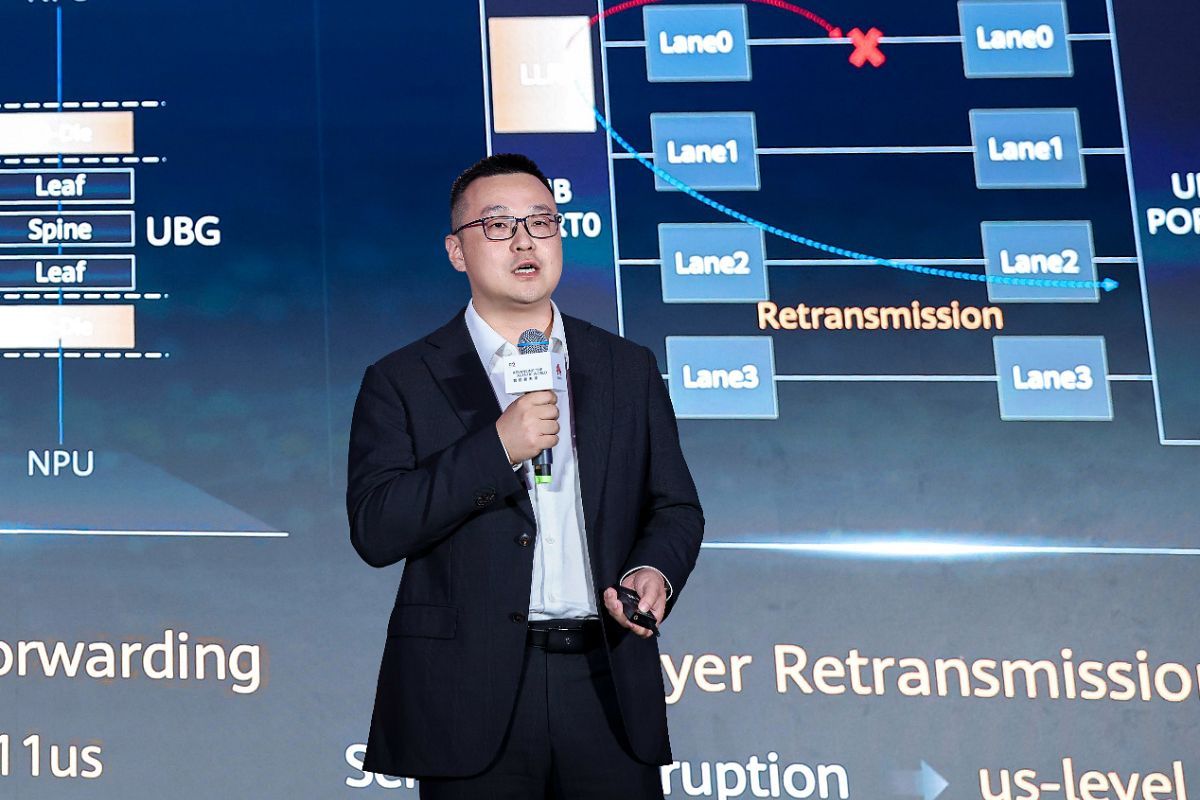
Shanghai, (ANTARA/PRNewswire) - Huawei has introduced the latest version of its Stellar AI Fabric solution at the HUAWEI CONNECT 2026 event. This solution enhances operational availability and the utilisation of computing capacity within AI production clusters. The innovation was launched by Huawei during the AI DC Innovation Summit, themed “Leading AI DC Innovation, Shaping the Agentic World”, which brought together over 600 industry leaders and researchers.
Presentation Session: Designing Networks for the Agentic AI Era
According to Erick Zhang, President of the Data Center Network Domain at Huawei’s Data Communication Product Line, the development of AI is transforming conventional data centres into “computing factories”. As we enter the era of agentic AI, the networks supporting this infrastructure become a critical factor that directly determines token throughput and the efficiency of computing capacity utilisation.
To meet these requirements, the latest version of Stellar AI Fabric integrates Rock-Solid Architecture 2.0, StarryWing Digital Map 2.0, Hyper-Converged Fabric (HCF), and Network Packet Load Balancing (NPLB). Huawei has also enhanced the NetMaster network AI agent to automate root cause analysis for 95% of network disturbances within minutes, ensuring that production cluster operations remain consistent.
High-Throughput Hardware Platform
Huawei launched two lines of switch products designed for high-density computing needs:
CloudEngine SF9300 (UBG switch): Utilises a two-layer multi-plane architecture that reduces construction costs by up to 30%. The simplification of UB forwarding reduces end-to-end latency by up to 40%. To enhance connection reliability, Link-Layer Retransmission (LLR) performs recovery within microseconds, thereby eliminating packet loss during connection fluctuations.
CloudEngine XH9300 (NPO switch): Offers proprietary capacities of 100T and 51.2T. A centralised light source and proprietary 3.2T Optical Engine (OE) reduce interconnection power consumption by up to 40%. By eliminating the optical DSP (oDSP) stage, this architecture cuts forwarding latency by 26%. Meanwhile, the optical engine snap-in pluggable feature accelerates the maintenance process by up to 10 times.
Financial Industry Standards and Research Implementation
The Beijing FinTech Industry Alliance, Huawei, and 17 partners launched the Technical Specification for Network High Availability of Financial Data Centres. This standard establishes technical benchmarks and testing methods for two categories and five types of networks, both within intra-data centre and cross-data centre environments. The evaluation covers architectural redundancy, fault recovery, and proactive prevention efforts.
In scientific research, Qi Fazhi, Computing Center Director at the Institute of High Energy Physics (IHEP), Chinese Academy of Sciences, stated that the implementation of Stellar AI Fabric increases computing efficiency by more than 10%. Load balancing across the network addresses traffic imbalances during the training process, allowing large volumes of telemetry data to flow without hindrance and accelerating the analysis of signals from outer space.
Moving forward, Huawei will continue to invest in the development of intelligent data centre networks alongside global partners to drive the advancement of next-generation computing infrastructure.