
Huawei Supports Global Telecom Operators in Maximising Token Monetisation through Service, Network, and Computing Integration
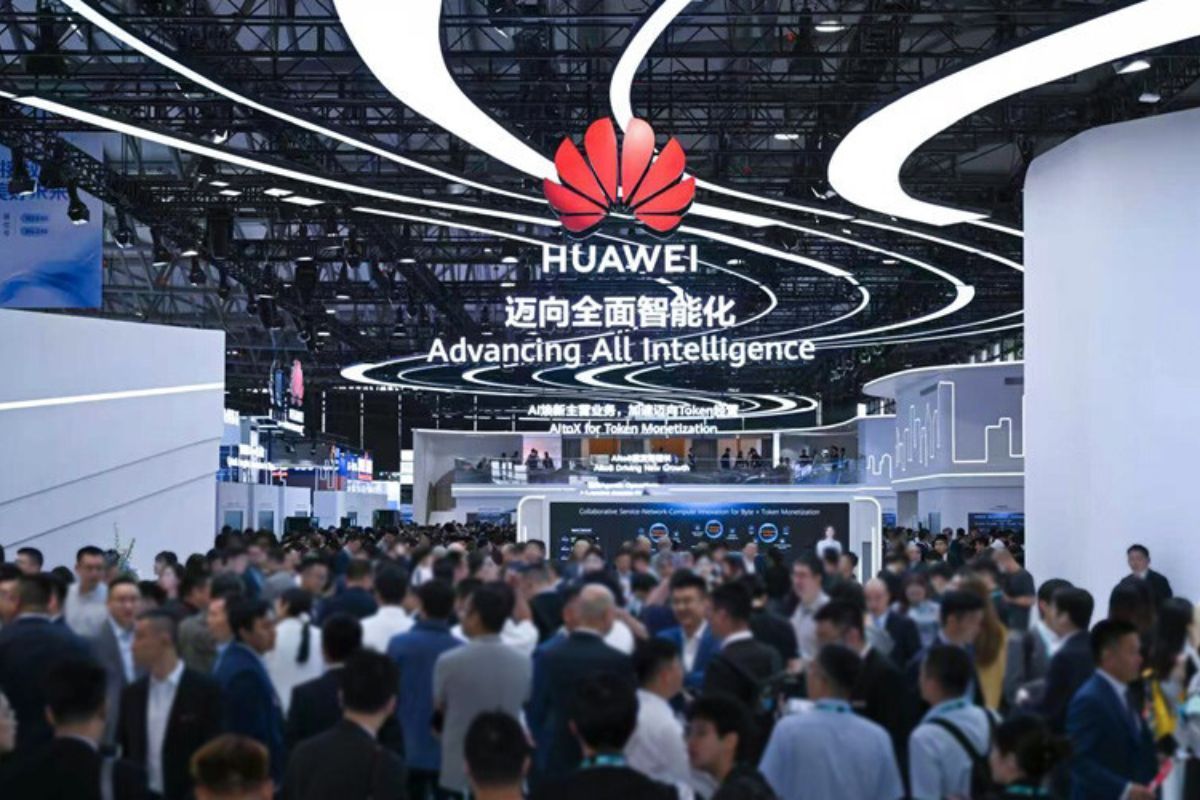
At MWC Shanghai 2026, Huawei showcased its latest innovations integrating services, networks, and computing to enable telecom operators to enhance monetisation based on data traffic (bytes) and tokens. Through this approach, Huawei is supporting the telecommunications industry in capturing opportunities arising from the rapid development of AI models and agents. Under the theme ‘Advancing All Intelligence’, Huawei invited global telecom operators, industry partners, and key figures to discuss new opportunities, from enhancing connectivity and computing, monetising 5G-Advanced (5G-A) services with high uplink capabilities, to AI-driven business transformation. David Wang, Deputy Chairman of the Board and Rotating Chairman of Huawei, delivered a presentation on AI-driven mobile network transformation and industry growth opportunities for the next decade. Wang stated that each generation of mobile technology innovation over the past four decades has been a key foundation for the telecom industry’s development. ‘In every technology generation, we have continuously pushed the boundaries of spectrum efficiency and network performance. Network architecture has also become increasingly simplified, while new services and application scenarios continue to emerge. All these developments have expanded the boundaries of communication capabilities while helping operators convert network capabilities into business value,’ he said. Wang outlined six key factors that will determine the direction of the mobile communications industry’s growth over the next ten years: developing new services and capabilities for future mobile communication systems; integrating AI with mobile communications to build three layers of intelligence; constructing a network architecture that integrates satellite and terrestrial communications; promoting sustainable and forward-looking spectrum planning and allocation; establishing clear specifications for AI-native core networks; and exploring new business models and application scenarios for mobile communication services. At the event, Huawei also launched various innovations. In the services domain, Huawei and China’s three largest telecom operators introduced technological and business model innovations for monetising 5G-A services based on high uplink and customer experience, AI-driven business transformation, and token monetisation. On the infrastructure side, Huawei launched the AI-centric Target Network, a network architecture that helps operators enhance their competitiveness in data traffic and token-based monetisation. For basic communication networks, Huawei is shifting its approach from traffic-oriented networks to networks that support real-time interaction, thereby delivering guaranteed connectivity quality. This network leverages high uplink and high downlink capabilities, along with various technologies that ensure network quality, to provide a better connectivity experience for users. Meanwhile, computing networks are transitioning from traffic-centric functions to scheduling and provisioning computing resources across the entire network. With this approach, networks are built for computing needs, so that when users connect to the network, they also gain access to computing resources. AI computing infrastructure is also designed to deliver high performance and efficiency, while supporting open-source technologies and an open ecosystem. To date, the number of 5G-A users worldwide has surpassed 100 million. Huawei is collaborating with global telecom operators to accelerate the monetisation of 5G-A experience-based services and make 5G-A part of existing customer operational strategies. Through these efforts, operators can retain their mid- and high-end customer base, increase average revenue per user (ARPU), and create sustainable revenue growth. Huawei believes that high uplink capability is a crucial foundation for operator network infrastructure in the era of token monetisation. The uplink requirements for mobile AI applications continue to rise. For example, AI glasses can now be used to translate conversations and guide exhibition visitors through real-time multimodal interactions, requiring uplink speeds of up to 20 Mbps. This year, several leading telecom operators in various countries have begun developing commercial services based on high uplink by guaranteeing peak speeds, latency, and consistent uplink speeds. Huawei also predicts that the rapid development of AI agents will drive the growth of token-based services. This situation requires ultra-high-capacity broadband networks that support high uplink, high reliability, and low latency. In this context, the Upper-6 GHz (U6 GHz) frequency band is considered the key next-generation spectrum to support such networks, and the industry ecosystem is ready to adopt it. More than 20 countries and regions have designated U6 GHz as spectrum for International Mobile Telecommunications (IMT), covering nearly 80% of the world’s population. In 2026, the initial year of U6 GHz commercial implementation, the Middle East region is expected to operate the world’s first commercial 5G-A network using this frequency band. Several operators in Hong Kong and Macau will also begin commercial implementation of U6 GHz. Throughout 2026, Huawei will continue to cooperate with telecom operators in Guangdong, Shanghai, Hebei, and other regions to transform B2C and B2H services based on AI.