
Huawei Proposes Development of an AI-Centric All-Optical Target Network to Improve Service Experience
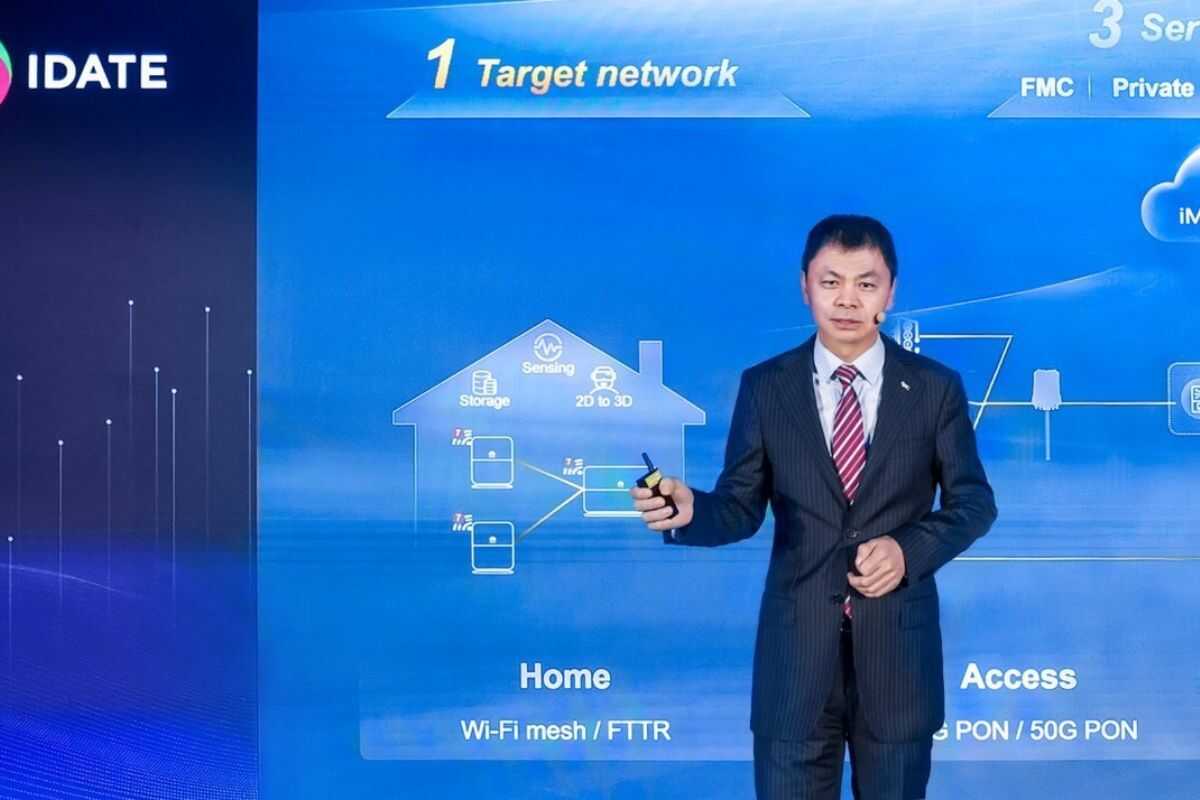
Barcelona, Spain — At MWC Barcelona 2026, Huawei outlined a vision to build an AI-centric all-optical target network in the ‘Green All-Optical Network Forum’ hosted by IDATE. Huawei proposed four initiatives to enhance network capabilities in terms of bandwidth, reliability, reach, and latency so that operators can maximise the value added by the network while delivering the best possible experience for AI-based services.
More than 200 industry leaders and experts from European telecom regulators, the FTTH Council, telecom operators, and telecom equipment manufacturers gathered at the event to discuss opportunities and challenges of optical networks in the AI era. Global operators such as Bouygues Telecom and China Unicom also shared success experiences, including the development of smart home services, efficient computing for AI innovation, and improved intelligent network operations.
Kim Jin, Vice President of Huawei Optical Business Product Line, outlined the vision for AI-centric all-optical network development, as well as Huawei’s next-generation Optical Network products and solutions. By increasing bandwidth, reliability, reach, and latency, Huawei helps operators to build Agentic UBB networks and deliver a premium service experience:
Wider Wi‑Fi coverage for home networks, delivering a better user experience: Huawei’s tri-band Wi‑Fi 7 FTTR solution provides stable speeds up to 4 Gbps in every room, and smooth roaming throughout the home in under 10 ms. The latest AI-interference-resistant mesh Wi‑Fi solution supports signals penetrating one additional wall and increases speed by up to 20% in congested conditions.
New generation PON with lower latency and higher bandwidth: Innovative technologies such as PON slicing at the OLT application level and Wi‑Fi air interface scheduling support the creation of dedicated service paths for VIP applications, delivering a more stable and guaranteed network experience.
Integrated metro OXC network to enhance AI experience: The latest OXC solutions extend all-optical switching to the metro network, reducing overall network latency and building a mesh architecture that supports ultra-low-latency compute access for AI services.
Evolution towards 400G/800G to address bandwidth constraints: A 3D-mesh backbone architecture combined with newer 400G/800G technologies, Super C+L frequency bands, and multi-format submarine cable transmissions help overcome bandwidth limitations in high-traffic areas and efficiently support DCI traffic and cross-border traffic.
An all-disto unmoved optical network ensuring AI services are always active: Integrated upgrades to hardware, software, algorithms, and eOTDR technologies help operators identify and address network risks precisely. Innovative liquid crystal materials also facilitate switching in WSON optical networks within 50 ms, providing extremely high reliability.
In operations and maintenance (O&M) activities, FANSpirit agents in the optical access domain help reduce home broadband customer complaints. Meanwhile, OTNSpirit agents in the optical transmission domain recommend different network paths based on bandwidth, latency, and reliability requirements, supporting smarter O&M for operators.
Kim Jin said, “The AI era offers new opportunities for operators that may only appear once in a decade. Huawei is committed to working with industry partners to build an AI-centric all-optical network. In doing so, user experience will continue to improve, network value can be maximised, and mutually beneficial growth can be achieved in the AI era.”