
Huawei Mate 90 Pro Debuts with Kirin 9035 Chip and 6,600 mAh Battery
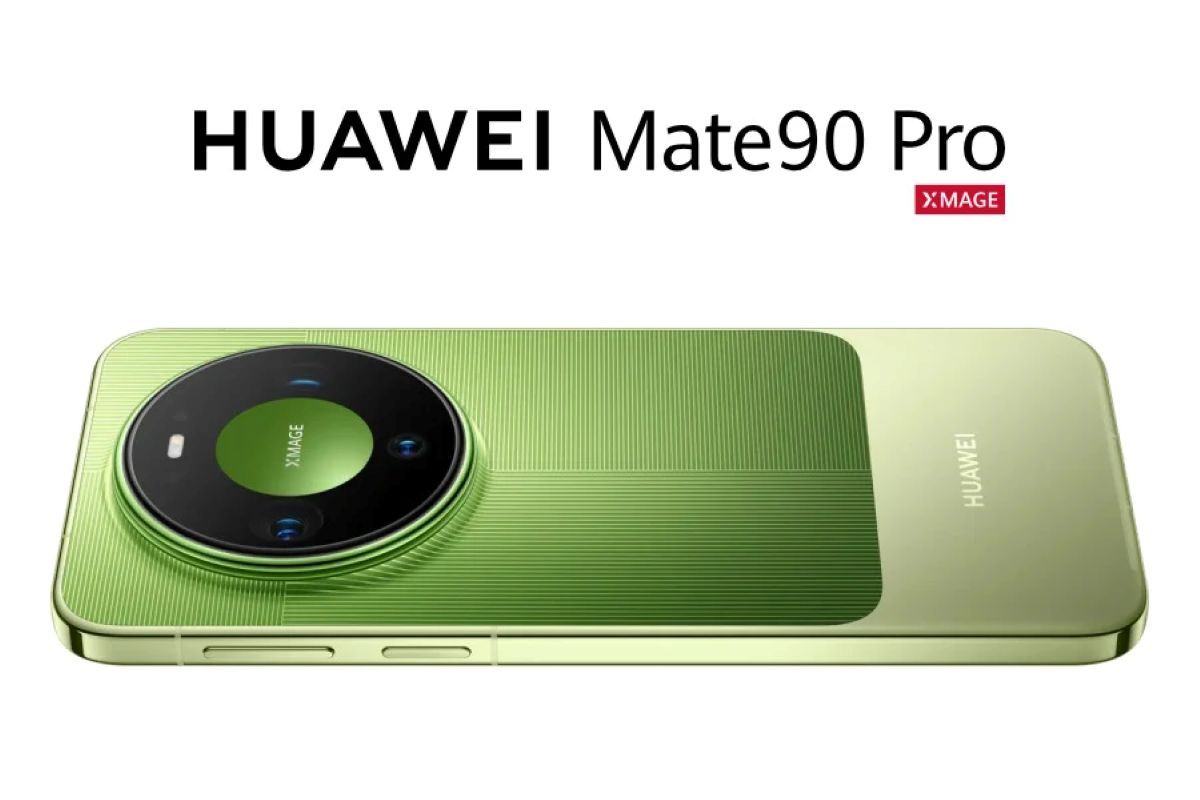
Huawei has officially launched the Mate 90 Pro in China as part of the Mate 90 series, powered by the Kirin 9035 chipset and supported by a 6,600 mAh battery.
Compared to the Kirin 9030 chipset found in the Mate 80 Pro, Huawei claims the Kirin 9035 offers a performance increase of 11 per cent in CPU, 10 per cent in GPU, and 51 per cent in NPU. According to a report by Gizmochina on Thursday (1/10) local time, based on application testing conducted by Huawei on HarmonyOS 7 and HarmonyOS 6, the Kirin 9035 recorded an overall performance improvement of approximately 10 per cent.
When used for gaming, the chipset also supports hardware ray tracing, with the capability to process up to 31 million rays per second to produce more realistic lighting visuals.
The Mate 90 Pro retains the central axis design used in several previous Mate generations. The back of the phone features a grid pattern with a star-shaped camera ring that appears to float.
Huawei also utilises the Kunlun Xuanwu protection system for the screen, body, and camera lenses. The screen uses third-generation Kunlun glass, which is claimed to have over 50 per cent more impact resistance compared to the Mate 80 series. Meanwhile, the camera lenses are protected by Kunlun optical glass, which is claimed to have drop resistance up to 20 times better than the Mate 80 Pro. Huawei also incorporates nylon fibre material within the body to provide additional protection.
The Mate 90 Pro holds an IP68 certification for protection when submerged in water up to a depth of 6 metres, as well as IP69 for high-pressure and high-temperature water jets.
Regarding the display, the phone features a 6.75-inch panel with a peak brightness of 12,000 nits. For comparison, the Mate 80 Pro had a claimed peak brightness of 8,000 nits. The panel utilises a dual-layer OLED structure combined with the Zhuque display chip and AI-based pixel-level brightness adjustment. With this technology, the Mate 90 Pro can enhance several aspects of the screen, such as peak brightness, screen lifespan, high brightness duration, and display uniformity.
In the photography sector, the Huawei Mate 90 Pro features three rear cameras consisting of a 50 MP main camera with an RYYB sensor, OIS, and a variable aperture of F1.4 to F4.0. The telephoto camera uses a 50 MP RYYB sensor with 4x optical zoom and up to 8x optical-quality zoom. This camera can also be used for macro photography with a minimum focus distance of 5 centimetres. Meanwhile, the ultrawide camera uses a 40 MP RYYB sensor.
Huawei has also included the third-generation Red Maple primary colour camera, which is claimed to improve colour accuracy by up to 37 per cent. The variable aperture on the main camera allows the phone to produce a more blurred background at F1.4, while F4.0 can keep more objects in focus, such as when photographing a group of people. Huawei also stated that the aperture can help maintain consistent video brightness levels when users move from bright to dark areas.
The Mate 90 Pro is equipped with several XMAGE-based photography features, providing recommendations for 13 group photo poses and 14 composition layouts within a zoom range of up to 4x. Huawei also provides food photography recommendations and a live broadcast mode that can maintain focus on products while helping to keep the user’s voice clear in noisy environments.
The 50W wireless charging speed requires a Huawei wireless charger and a 66W or higher power adapter. The phone also features an outdoor exploration mode that can extend battery life up to 15 days for messaging and satellite tracking. Additionally, navigation via Petal Maps with a dark screen can last up to 36 hours.
For connectivity, the Mate 90 Pro uses a combined antenna design for Wi-Fi and cellular networks that can switch automatically according to connection conditions. A network sharing feature allows up to four HarmonyOS 7 devices to use the connection simultaneously. The Mate 90 Pro also supports BeiDou-based satellite communication services. In areas without cellular signal, users can send not only text messages but also images. This feature is currently limited to the China region.
The Mate 90 Pro runs on HarmonyOS 7 from the start. Several artificial intelligence (AI) features will be available through subsequent HOTA updates. Huawei offers the device in four colours: Emerald Green, Amber Orange, Crystal White, and Obsidian Black.
In China, the Huawei Mate 90 Pro is priced at 6,999 yuan (approximately Rp18.7 million) for the 12GB/256GB configuration, 7,999 yuan (approximately Rp21.3 million) for the 12GB/512GB variant, 8,499 yuan (approximately Rp22.7 million) for the 16GB/512GB variant, and 9,999 yuan (approximately Rp26.7 million) for the highest 16GB/1TB variant.