
Huawei Launches 'Grid-Interactive AIDC' Strategy to Build the Industry's Future
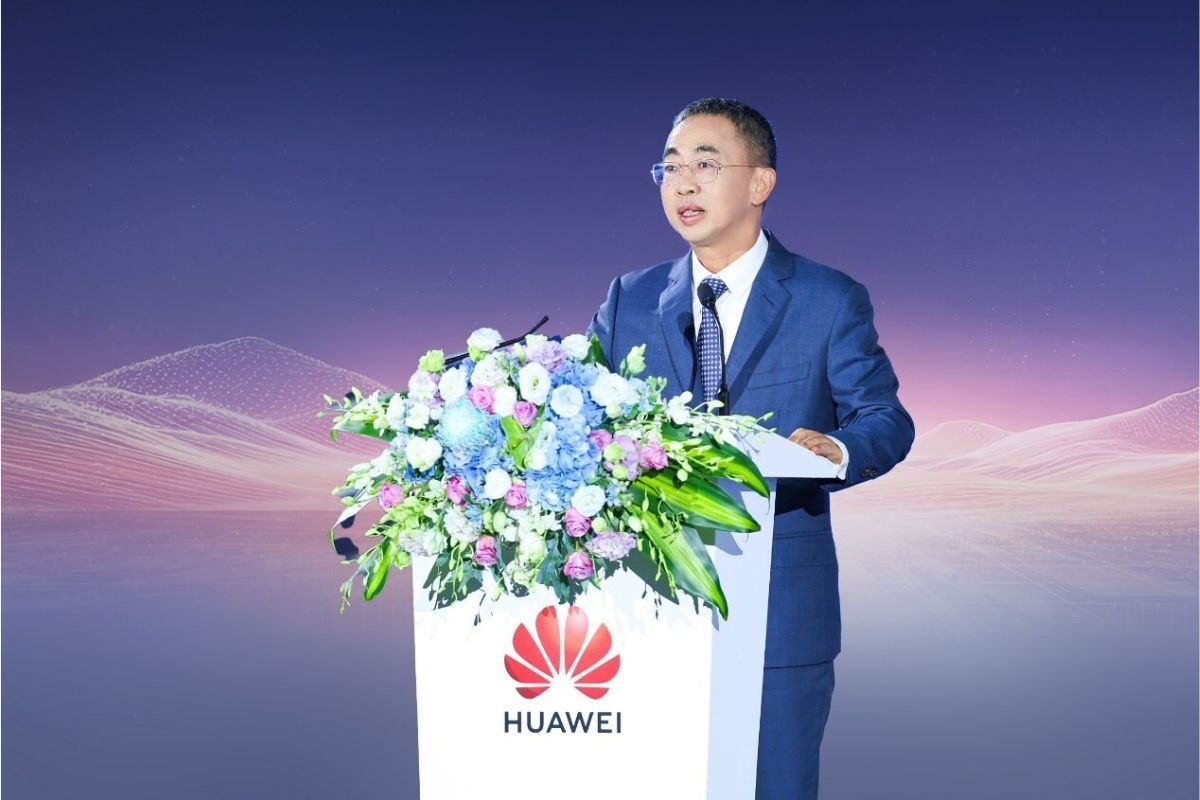
Huawei hosted the ‘Global AIDC Industry Summit 2026 & Huawei AIDC Strategy and Product Launch’ in Dongguan, China, on 15 May 2026 under the theme ‘Power the AI Era Forward’. The event was attended by nearly 1,000 global industry leaders, technology experts, and key ecosystem partners from the energy, intelligent computing, and telecommunications sectors. Here, participants discussed developments in next-generation AI Data Centre (AIDC) architecture and the latest technological innovations, while witnessing the launch of Huawei’s ‘Grid-Interactive AIDC’ strategy.
Hou Jinlong, Director of the Board of Huawei, and President of Huawei Digital Power, spoke at the event. He noted that the rapid growth of the AI industry, the use of large language models, and the widespread deployment of AI agents have driven a surge in global energy demand, with world-wide AIDC capacity expected to rise further. He argued that electricity will be the foundational element underpinning AI development in the long term. Computing and energy will increasingly be integrated to form a holistic system combining AI infrastructure with new power and grid systems. He emphasised that reliable power supply is a critical factor for sustainable, high-quality AIDC development, and that grid-friendly compatibility is essential for long-term operational stability. He added that high-voltage, DC, and power electronics architectures play a crucial role in supporting computing densities, while liquid cooling has become a key requirement for next-generation computing systems. In addition, Huawei highlighted that reliable thermal management, coupled with intelligent AI-driven O&M throughout the lifecycle, is central to AIDC operation. In essence, AIDC is a system that produces computing power, so speed is closely linked to business performance and investment returns.
Huawei Digital Power integrates technologies across four domains—bits, watts, heat, and battery (the 4T framework)—and is developing new electrical power systems and AIDC. To this end, Huawei Digital Power is building capabilities in renewable generation, grid-forming, high-density computing power supply, liquid cooling, and the synergy between computing and electricity. Huawei Digital Power aims to become a leading innovator in AIDC and a trusted long-term strategic partner for the global industry. Through collaborations with customers and partners worldwide, Huawei Digital Power aims to develop a greener, more efficient, and more sustainable AIDC industry.
Bob He, Vice President of Huawei Digital Power, delivered a presentation titled ‘Building Grid-Interactive AIDC, Maximizing Tokens Per Watt.’ He noted that global AI industry growth has driven a surge in token demand, bringing the AIDC industry into a ‘token era’. The high computing density and diverse system requirements pose major challenges to power, scale, and load stability of AIDC. On the other hand, widespread use of renewables also increases grid fluctuations, while dynamic AI workloads add to the challenges faced by AIDC systems.
To meet these challenges, Huawei launched the ‘Grid-Interactive AIDC’ strategy based on the ‘3+1’ innovation framework to deliver an AIDC solution that is reliable, energy-efficient, quickly deployable, and grid-friendly.
Watt Innovation: Rethinking Power Supply, Shifting from Grid to Chip. Huawei will develop a multiple-input multiple-output (MIMO) power supply architecture, integrating grid-friendly UPS and grid-forming energy storage (ESS) to meet high-density computing needs in AIDC. In the future, this architecture will evolve into an integrated energy router based on solid-state transformer (SST) technology to provide more flexible and efficient power.
Heat Innovation: Rethinking Long-Cycle Thermal Management Reliability, from Chip to External Environment. Huawei regards the main benefit of liquid cooling technology as not only cooling devices, but building an end-to-end thermal management system across the operational lifecycle. Huawei is developing a megawatt-scale AI-based liquid cooling system capable of delivering heat dissipation efficiently and reliably. The technology supports large-scale deployment of liquid cooling, not only in terms of availability but also long-term reliability.
Bit Innovation: Rethinking Operations Across the Lifecycle with AI in the Data Center. Digital and AI technologies are applied across the data center lifecycle, from design and delivery to operation. This approach provides comprehensive visibility, reliability and more efficient O&M throughout the lifecycle.
Construction Innovation: Rethinking Construction Methods through Productization, Prefabrication, and Modularity. All processes—from design, production, testing, and verification—can be performed in factories, with installation taking place at the project site. This approach significantly speeds up deployment, improves implementation quality, and supports rapid product replication.
According to Bob He, the maximum computable AI power is ultimately determined by energy supply capacity, or what he called the ‘Energy as Token’. He explained that the energy-efficiency metric based on PUE, used historically, can no longer measure AIDC value in the AI era. The industry must move from merely an ‘energy-efficiency metric’ to a ‘value metric’. To this end, Huawei introduced the TokEnergy Index or the Energy-to-Token ratio to measure the efficiency of converting energy into computing power.