
Huawei Introduces Latest Xinghe Intelligent Network with 'Secure and Intelligent Connectivity' Philosophy to Drive Smart Technology
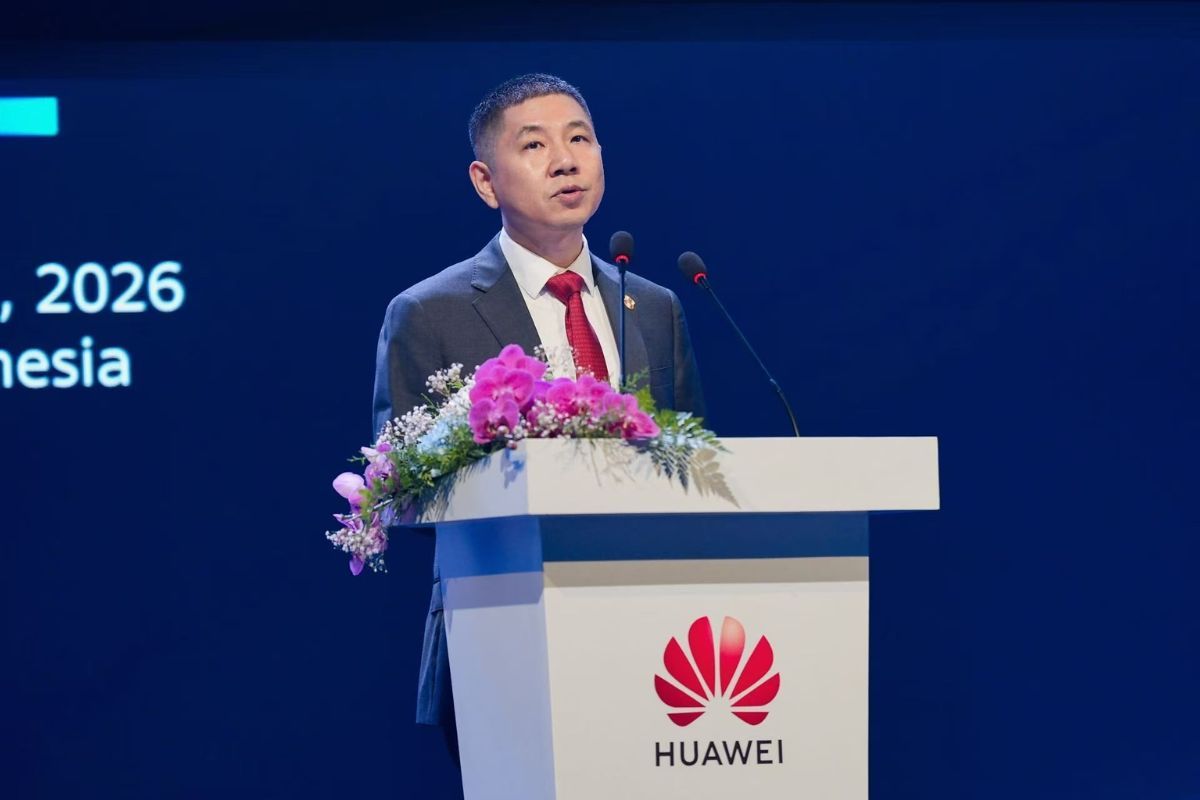
The Huawei Network Summit 2026 Asia Pacific, held in Bali, brought together more than 500 industry leaders, technology experts, and ecosystem partners to discuss network transformation trends amid the widespread adoption of AI agents. At the event, Huawei introduced its latest Xinghe Intelligent Network Solution for the Asia Pacific region, championing a new philosophy of ‘Secure and Intelligent Connectivity’. The move underscores Huawei’s commitment to driving the adoption of intelligent technology across various industries together with customers and partners.
The use of AI agents is now increasingly prevalent in countries such as Malaysia, Vietnam, and Thailand. The technology is being applied to a range of needs, including smart healthcare services, financial risk management, and urban governance to improve cost efficiency. However, the large-scale deployment of AI also brings new challenges for networks. Firstly, when AI agents begin to be used in core business processes, the impact of network disruptions can increase significantly. Secondly, AI-based cyber attacks have surged by 327%, putting conventional network security systems under increasing strain.
Leon Wang, President of Huawei’s Data Communication Product Line, said, ‘The global AI wave is reshaping various industries. This development is driving networks towards an AI-centric paradigm with four main pillars: lossless computing to maximise token efficiency; the integration of sensing and communication to accelerate AI adoption in the physical world; comprehensive security to counter new AI-based threats; and high-level network autonomy to ensure services are always available.’
Zac Chow, Vice President of Huawei Asia Pacific Enterprise Sales Department, said, ‘As AI models compete with one another, token usage increases and AI agents become increasingly capable of acting autonomously. As a result, applications will become smarter and run on unified platforms. Networks will also evolve to become AI-native and serve as the backbone for AI agents. Huawei is building an AI-centric converged network and working with partners to provide a network foundation for customers in the government, financial, internet, and other sectors. The network delivers high-speed, lossless transmission and ultra-fast application experiences. This will accelerate the adoption of intelligent technology across industries and build an increasingly connected and intelligent future for Asia Pacific.’
The growing use of AI agents also poses new challenges to network stability and security. Addressing these challenges, John Cai, Vice President of Huawei’s Data Communication Product Line, said, ‘Huawei has enhanced the Xinghe Intelligent Network Solution with the new paradigm of Secure and Intelligent Connectivity. Firstly, we have enhanced intelligent technology capabilities by expanding the application of AI. Previously, AI focused on operations and maintenance activities. Now, the role of AI has expanded to encompass the entire network. Secondly, we have strengthened the security system by shifting from point-based defence to comprehensive protection that integrates network and security. Through this architectural upgrade, we are committed to building a solid connectivity foundation for every enterprise in the era of Agentic AI and helping industries continue to thrive amid the AI wave.’
The latest version of Huawei’s Xinghe Intelligent Network Solution includes Xinghe AI Fabric 2.0, Xinghe Intelligent WAN, Xinghe AI Campus, and Xinghe AI Network Security.
Xinghe AI Fabric 2.0
To address service stability challenges on networks using equipment from multiple vendors, Huawei has enhanced the StarryWing Digital Map and Rock-Solid Architecture with various AI technologies. One of these is xFlow. With xFlow, all data flows are intelligently analysed to identify the source of network disruptions in less than one minute. Meanwhile, the AI Eagle-Eye Engine provides real-time visibility into the quality of 200,000 service flows and can assess root causes within minutes. This capability further strengthens data centre network resilience.
Designed specifically for AI computing needs, Huawei’s Hyper-Converged Fabric (HCF) can achieve network throughput of more than 98% and increase Tokens Per Second (TPS) for inference processes by 20%. With iFlashboot 2.0 support, the Xinghe AI computing switch can reboot in just five seconds to keep services running without interruption. The StarryLink optical module can also detect contamination and looseness issues in optical fibres in less than one minute. This technology reduces inference process disruptions by up to 90% and supports broader AI adoption through high-performance, efficient networks.
Xinghe Intelligent WAN
WAN networks today face threats from various new forms of cyber attacks. To address these challenges, Huawei has built a multi-dimensional security defence system that extends protection coverage from devices to private networks. Thanks to Huawei’s intelligent security board, various anomalies can be detected in files, memory, and systems in real time. This capability enables more precise protection against Advanced Persistent Threats (APTs). Huawei has also introduced a Quantum Key Distribution (QKD) quantum security board that can be installed directly on routers. Unlike conventional solutions that require external QKD devices, this technology, claimed to be the first of its kind in the industry, can reduce total capital expenditure by more than 60%. The technology also helps build a more resilient WAN ready to face quantum computing threats.
For home broadband services, the increasing volume of encrypted traffic makes user experience more difficult to monitor. This can also lead to higher customer complaints and churn. Huawei addresses this through the Xingluo Identification Engine, which can recognise encrypted traffic with over 95% accuracy. In addition, user tags and customer profile mapping algorithms can achieve 90% accuracy in customer acquisition. These capabilities help service providers sharpen their competitiveness in the home broadband market.
Xinghe AI Campus
Huawei’s Xinghe AI Campus solution delivers various innovations that support enterprise digital transformation. On the wireless network side, multi-AP coordination on Wi-Fi 7 Advanced can double performance. Meanwhile, the multi-GE switch range and flexible right-to-use (RTU) licences can reduce total cost of ownership (TCO) by more than 30%. For security, AI clustering-based device identification technology can recognise dumb terminals with 95% accuracy, while Smart Anomaly Detection (SmartAD) can block anomalies within seconds. Wi-Fi Shield and Post-Quantum Cryptography (PQC) further secure connections. On the other hand, Wi-Fi Channel State Information (CSI) sensing technology supports iGuard AP in protecting user privacy around the clock. For network operations and maintenance, an AI digital human provides 24/7 support, while APs equipped with AI sensing capabilities enable real-time monitoring. With the support of multi-objective reinforcement learning algorithms, 80% of network faults can be handled automatically within 30 seconds. Huawei describes this as the industry’s first network autonomy solution.
Xinghe AI Network Security
According to research findings, 71% of enterprises in Asia Pacific consider AI a major issue in data security, while 81% of respondents admitted to having experienced an API security incident. To address these challenges, Huawei advocates a ‘fighting AI with AI’ approach and has enhanced its AI firewall with a three-layer protection architecture. One of its components, AI Core, can detect unknown threats with 95% accuracy, or twice the industry average performance. Meanwhile, HiSec AI-Guard uses a semantic analysis engine based on large language models to identify attacks such as prompt injection with a detection rate of over 95%. The combination of these capabilities forms a stronger security foundation for the era of intelligent technology.
Huawei also introduced more than 20 new eKit SME Network products for customers in the small and medium-sized enterprise (SME) segment. The products introduced include the AR580, a secure converged gateway for offices; the S630, a 10GE fibre-based switch; and the AP637H & DF10, a product range for detecting surveillance cameras. The product line-up delivers improvements in security and performance, and is designed for various needs such as smart offices, retail outlets, educational institutions, and hotels. With this new product range, Huawei provides SMEs with options to build safer and smarter connectivity.
At the event, Huawei, together with industry customers and partners in the Asia Pacific region, also launched the ‘Huawei AI Firewall (AIFW) Technology White Paper’ and the ‘High-Quality 10 Gbps AI Campus Technical and Standard White Paper’. Both publications discuss technology trends and the development direction of the AI firewall industry, serving as a systematic guide for building intelligent and secure AI campus networks.
Going forward, Huawei will continue to pursue its vision of ‘AI for All, All on Secure IP’ by developing the Xinghe Intelligent Network Solution based on the ‘Secure and Intelligent Connectivity’ philosophy. This is part of Huawei’s efforts to enter the era of intelligent technology together with customers and partners.