
Huawei Introduces Intelligent WAN Architecture Targeting ISPs
Strengthening the Connectivity Foundation for ISP AI Services
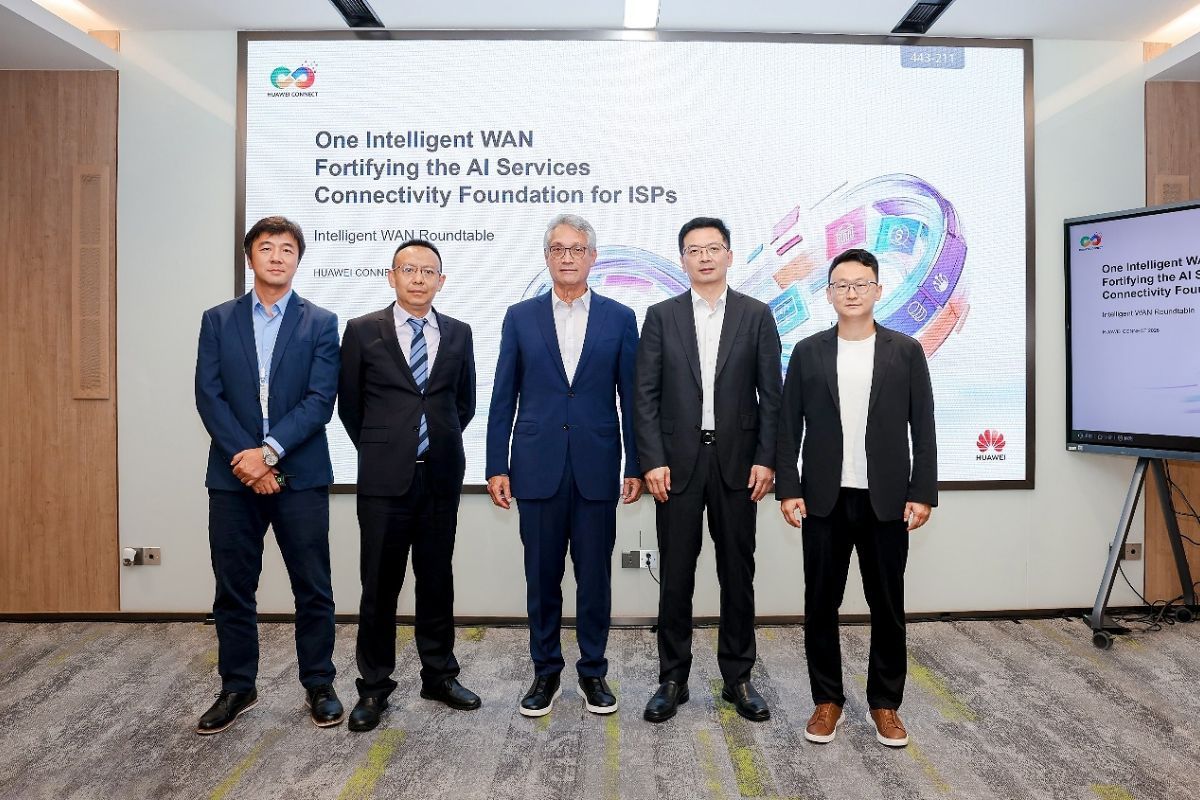
Shanghai, (ANTARA/PRNewswire) - Huawei has introduced the Intelligent WAN Target Architecture to support Internet Service Providers (IS/Ps) in harnessing the potential of AI and computing capacity in the era of intelligent technology. The architecture was presented during a discussion themed “Intelligent WAN, Fortifying the AI Services Connectivity Foundation for ISPs” at the HUAWEI CONNECT 2026 event in Shanghai on 17 September. The forum brought together experts and ISP partners from various countries to discuss industry trends, solutions, and best practices in network development.
According to Wayne Zhou, Vice President of ISP Computing and Network Infrastructure BU at Huawei, the accelerating commercialisation of AI presents new opportunities for companies with large assets and infrastructure to monetise capabilities through more flexible services. This shift is also altering the business models of the ISP industry. ISPs are no longer merely providing connectivity paths; they are beginning to utilise edge nodes and their advantages to integrate connectivity, computing, and APIs. This move encourages a shift from simply selling bandwidth to providing AI services. Simultaneously, ISPs are building integrated, intelligent WANs that understand service requirements to increase AI readiness and drive sustainable network development.
Ado, CEO of the Wide Area Network Domain at Huawei, introduced the Intelligent WAN Target Architecture. He explained that the development of agentic AI is driving three major changes in networking. First, connectivity is shifting from humans to AI agents. Second, traffic patterns are changing from downlink dominance to a surge in uplink traffic. Third, guaranteeing network experience is no longer limited to specific applications but encompasses the entire workflow of AI agents. To face these changes, ISPs must strengthen their network foundations and leverage them as new opportunities. Ado proposed three strategic pillars. First, building a hierarchical, modular, and standardised converged IP+Optical target architecture. This architecture helps ISPs expand coverage, deliver services, and increase network resilience more quickly, while accelerating the launch of AI services. Second, placing the overall user experience as the focus to transform network capabilities into differentiated services that are easy to define, measure, and deliver to customers. This approach opens monetisation opportunities for both network capabilities and AI services. Third, enhancing intelligence-based operations and maintenance (O&M). Through Network Digital Maps, fault-locating agents, and AI assistants, ISPs can reduce operational expenditure (OPEX) while increasing O&M efficiency. Ado also presented a WAN development roadmap to enable ISPs to capture new growth opportunities in the AI era.
During the discussion, Lintasarta from Indonesia, SiliconFlow from China, and Telconet from Ecuador shared their experiences regarding AI services and the implementation of intelligent networks. ISP experts in attendance also provided input on industry developments and practical recommendations for network planning and implementation in the AI era.
Looking ahead, Huawei will continue to strengthen innovation and investment in the ISP and computing network sectors. Huawei will also collaborate with customers to build an increasingly intelligent future.
Source: jawawa.id (https://jawawa.id/newsitem/huawei-introduces-intelligent-wan-architecture-targeting-isps-1790071372)
Originally published by Antara (Indonesian) (https://www.antaranews.com/berita/5752844/huawei-hadirkan-intelligent-wan-architecture-target-bagi-isp), translated from Indonesian