
Huawei Introduces Grid-Interactive AIDC, Bringing a New Paradigm to AI Infrastructure
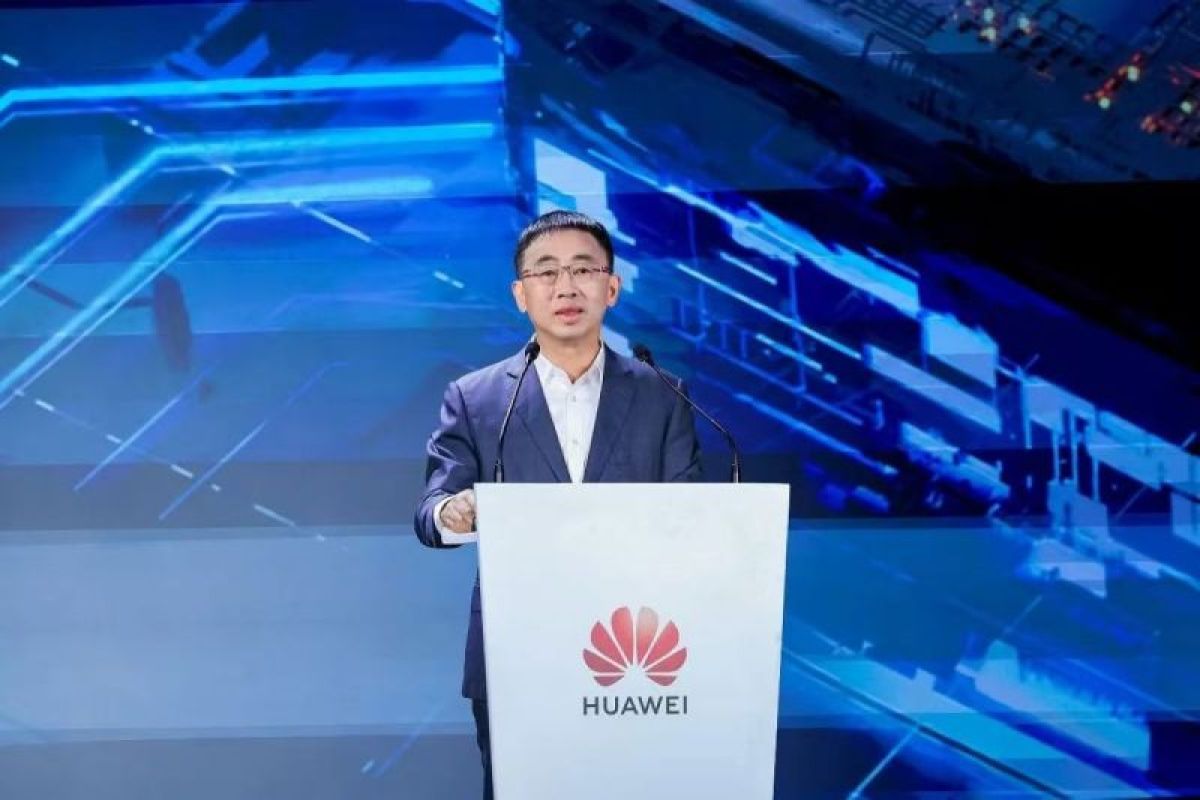
Shanghai, (ANTARA/PRNewswire) - HUAWEI CONNECT 2 and 026 has officially opened in Shanghai. As part of the event series, Huawei held the HUAWEI AIDC Facility Summit and introduced its grid-interactive AIDC solution, which adopts a new approach to AI infrastructure development to maximise token-per-watt efficiency.
Hou Jinlong, Director of the Board at Huawei and President of Huawei Digital Power, delivered an opening address at the event. He outlined four innovative approaches in architecture and system design to address various challenges in AIDC development, ranging from power supply and quality, electricity distribution to racks, and heat dissipation to construction processes.
First, an innovative electrical architecture combined with liquid cooling technology maintains a stable power supply and optimises heat dissipation to increase system reliability and efficiency. Second, a multi-layered hybrid energy storage system absorbs local power fluctuations to improve power quality in AIDC and reduce its impact on the electrical grid. Third, the synergy between electrical and computing systems, along with the interaction between energy supply and consumption, drives AIDC to transform from a rigid electrical load into an integral part of the next-generation power system. Fourth, innovations in construction methods and a modular, prefabricated, and product-based construction approach can significantly reduce implementation time.
Hou emphasised that the ability to maximise the number of tokens processed per watt while reducing the cost per token will be a crucial factor in determining the competitiveness of computing centres.
Introducing the Grid-Interactive AIDC Solution
According to Bob He, Vice President of Huawei Digital Power, the surge in renewable energy usage is making the power grid increasingly influenced by power electronics characteristics. Meanwhile, AI workloads can change rapidly and at an extreme scale. These conditions mean that energy and computing infrastructures can no longer operate in isolation but must be closely integrated. Through the ‘3+1’ innovation, Huawei presents a grid-interactive AIDC solution that combines high reliability, energy efficiency, rapid implementation, and grid adaptability to maximise the number of tokens processed per watt.
In the electrical system, Huawei proposes a MIMO power supply architecture that meets the needs of next-generation computing centres. To address these challenges, Huawei launched grid-interactive AIDC 1.0, which integrates UPS systems that support grid stability, smart lithium batteries, and grid-forming energy storage systems. With this approach, AIDC can adapt to grid conditions and help dampen AI workload fluctuations. Regarding cooling, Huawei also launched an AI-based liquid cooling system that can predict working fluid conditions and support predictive maintenance.
According He, Huawei’s advantage lies in its integrated capabilities in the energy sector and its full-stack AI capabilities.
Synergy of Computing and Electricity: Building a Solid Foundation for the AI Era
The rapid development of AI is driving a surge in token processing requirements and increasing the demands on AI infrastructure. According to Xia Qin, Chief Expert of Huawei Computing Strategy Planning, AIDC is moving towards an integrated architecture that unites computing, networking, and storage, with energy as the primary foundation. A reliable, efficient, and rapidly deployable energy system will help large-scale AI computing clusters operate stably and support large-scale training and inference processes in the era of agentic AI.
Unlike conventional data centres that have limited interaction with the power grid, AI workloads can change with high frequency and potentially cause various disruptions to the electrical system, including power outages and unstable wideband oscillations. Josh Chen, Founder & Chairman of VNET Group, stated that power sources, campuses, and buildings can be redesigned to be integrated and mutually supportive, ranging from coordination between power sources and energy scheduling within a campus to the provision of DC power for buildings. This approach will form a new electrical system directly connected to green energy sources and active microgrids, ensuring a reliable and stable power supply for AIDC with capacities up to the GW level.
Lin Hai, General Manager of the Intelligent Computing Center at SenseCore Business Group, SenseTime, presented the progress of SenseTime’s AI computing efficiency, moving from PUE to TPW, at the event. SenseCore is driving a change in efficiency management approaches in IDCs, moving from a focus on Power Usage Effectiveness (PUE) to an integrated efficiency measurement centred on tokens per watt. This approach directly links electricity consumption to the number of tokens generated, covering the entire chain from power generation and the electrical grid to IDC rack services, cloud computing, and model services. According to Lin, this metric reflects the core efficiency in the AI production process. Through integrated optimisation, SenseCore has successfully increased TPW by 80%.
At HUAWEI CONNECT 2026, Huawei showcased its grid-interactive AIDC solution and integrated AI inference solutions to build a reliable, energy-efficient, and rapidly deployable computing foundation for AI cluster infrastructure.