
Huawei Digital Power Unveils AI-Driven Grid Forming Solutions at IDEE 2026
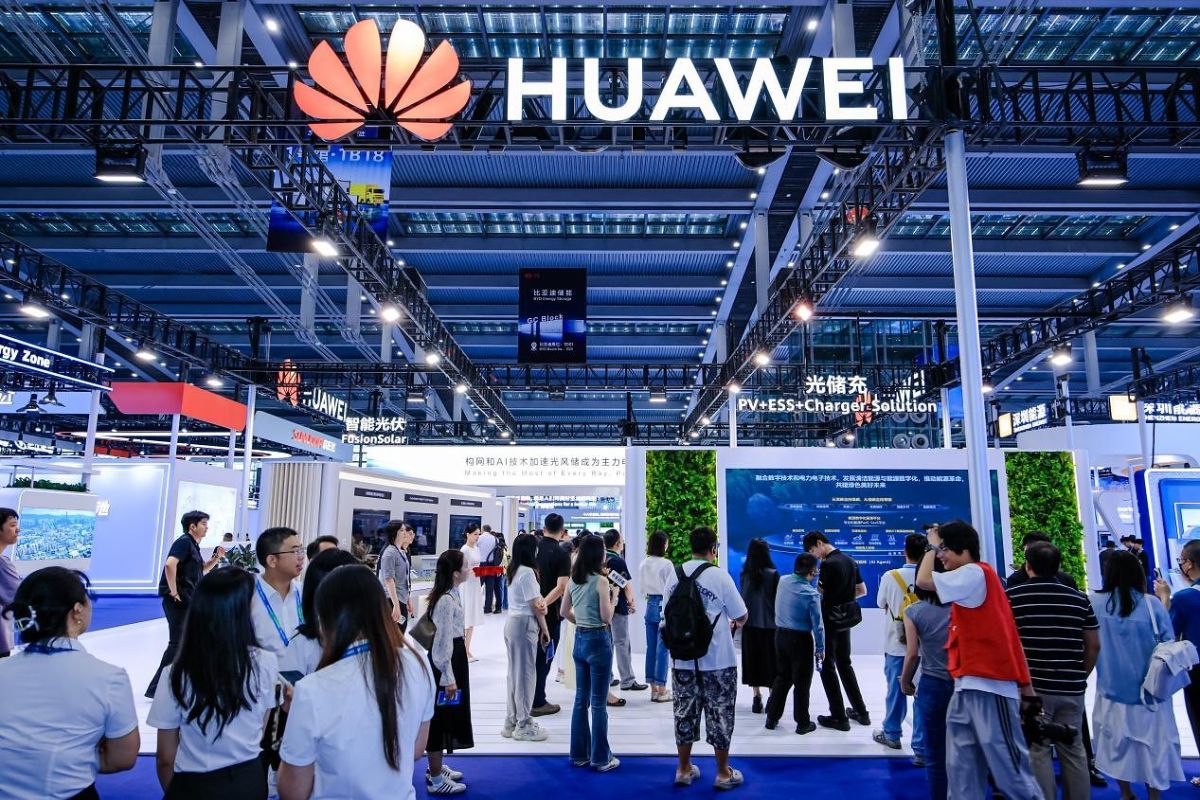
Shanghai, (ANTARA/PRNewswire) — The 4th International Digital Energy Expo (IDEE) 2026 was held from 15–17 September. During the event, Huawei Digital Power showcased its latest ‘grid forming + AI’ implementations for renewable energy under the theme ‘Making the Most of Every Ray, Powering the Unpowered’. The company presented solutions for utility-scale power generation, grid-forming-based energy storage systems (ESS), smart microgrids, green energy for the commercial and industrial (C&I) sectors, ultra-fast charging, and AI data centres (AIDC) integrated with the power grid.
Utility: AI-Powered Grid-Forming Stability Throughout the Operational Cycle
Huawei’s FusionSolar9.0 Utility PV solution serves as the industry’s first 1000 VAC solution, the first industry grid-forming string inverter, and the largest industry smart transformer station with an 11 MW capacity. This solution enhances the performance of large-scale power plants utilising renewable energy, ranging from performance ratios and grid adaptability to intelligent technology-based operation and maintenance (O&M).
The smart string inverter solution is equipped with the capability to detect grid conditions and dampen oscillations. Regarding AI, the FusionSolar Agent utilises collaboration between devices, edge, and cloud, allowing customers to overcome challenges in implementing electricity market mechanisms while optimising benefits. On 10 September 2026, Huawei’s Smart I-V Curve Diagnosis successfully passed the L5 testing, the highest certification level from the China General Certification Centre, making it the first solution in the industry to achieve this certification.
Grid-Forming ESS: Maintaining Grid Stability and Enhancing Intelligent Operations
Huawei has developed six grid-forming capabilities at the power plant level: short-circuit capacity support, inertia response, wideband oscillation damping, primary frequency regulation, black start, and seamless transition between on-grid and off-grid modes. These capabilities maintain grid-forming stability across power plants under various operational conditions.
Huawei also introduced its latest generation of Smart String Grid Forming ESS Solutions. This solution features the industry’s first smart string 1000 VAC architecture, a through-busbar architecture, and grid-forming technology at the power plant level. Supported by 1000 VAC voltage and a 12.5 MW/50 MWh array configuration—one of the most optimal capacities in the industry—this solution improves performance ratios and delivery efficiency while unlocking greater revenue potential throughout the operational cycle. Furthermore, the digital twin platform provides more accurate digital support for electricity trading activities and establishes a comprehensive safety system from the battery cell to the power grid throughout the operational cycle.
Smart Microgrid: Maintaining Supply Stability and Reducing Energy Costs
Huawei’s Smart Microgrid solution combines high quality and efficiency, grid-forming stability, and a lower levelised cost of electricity (LCOE). This solution has been implemented in various regions worldwide that lack or face limited electricity supplies.
The solution supports both strong and weak power grids, PQ/VSG mode transitions, and operation in full VSG mode. The on-grid/off-grid transition time at medium voltage was recorded at just 40 milliseconds. The system also supports a grid-forming state of charge (SOC) range of 5% to 98% and parallel operation of various voltage sources alongside ESS and generators. These capabilities make system configurations more flexible and efficient while maintaining the stability of the power supply.
C&I Green Energy: Grid Forming Optimises Synergy Between Power Plants, Grids, Loads, and Energy Storage
The C&I One-Fits-All solution is designed for various needs, ranging from PV-only, ESS-only, PV+ESS, charger+ESS, to virtual power plants (VPP). Huawei also shared experiences regarding the implementation of these solutions in various countries.
In the energy storage sector, Huawei introduced the C&I Hybrid Cooling Grid Forming ESS 241 kWh Series. This product replaces conventional single-cooling systems with an intelligent hybrid cooling system through a new thermal management architecture. Huawei also equipped the product with ‘pack-level optimization 2.0’ technology. As a result, the product achieves a round-trip efficiency (RTE) of 91.8% and a depth of discharge (DOD) of 100%, surpassing industry averages.
Huawei FusionCharge: AI-Based PV+ESS+Charger for Ultra-fast Charging Networks
Huawei FusionCharge integrates PV, ESS, and chargers into a smart microgrid for both passenger and commercial vehicles. Developed by Huawei, this system features dual protection between the power grid and devices, air-liquid cooling, and AI-based scheduling capable of increasing charging station revenue by more than 15%. Alongside partners in the logistics sector and across various urban and highway scenarios, Huawei is building an ultra-fast charging network that is efficient, grid-friendly, and convenient to use.
Grid-Interactive AIDC: ‘3+1’ Innovation Revolutionising Computing Infrastructure
Through ‘3+1’ innovation, Huawei has developed a grid-interactive AIDC that is reliable, energy-efficient, quick to deploy, and supports grid stability to maximise tokens per watt.
Huawei combines MIMO power architecture—comprising UPS and ESS that easily adapt to the power grid—with AI-based megawatt-scale liquid cooling systems to restructure AIDC power supply and thermal management. AI is also applied throughout the data centre’s operational cycle to provide comprehensive visibility, maintain reliability, and improve O&M efficiency.
Huawei Digital Power maintains quality across the entire industry value chain through R&D, supply, manufacturing, and…