
Huawei Collaborates with GCC to Launch the 'AIDC Ecosystem Co-construction' Initiative
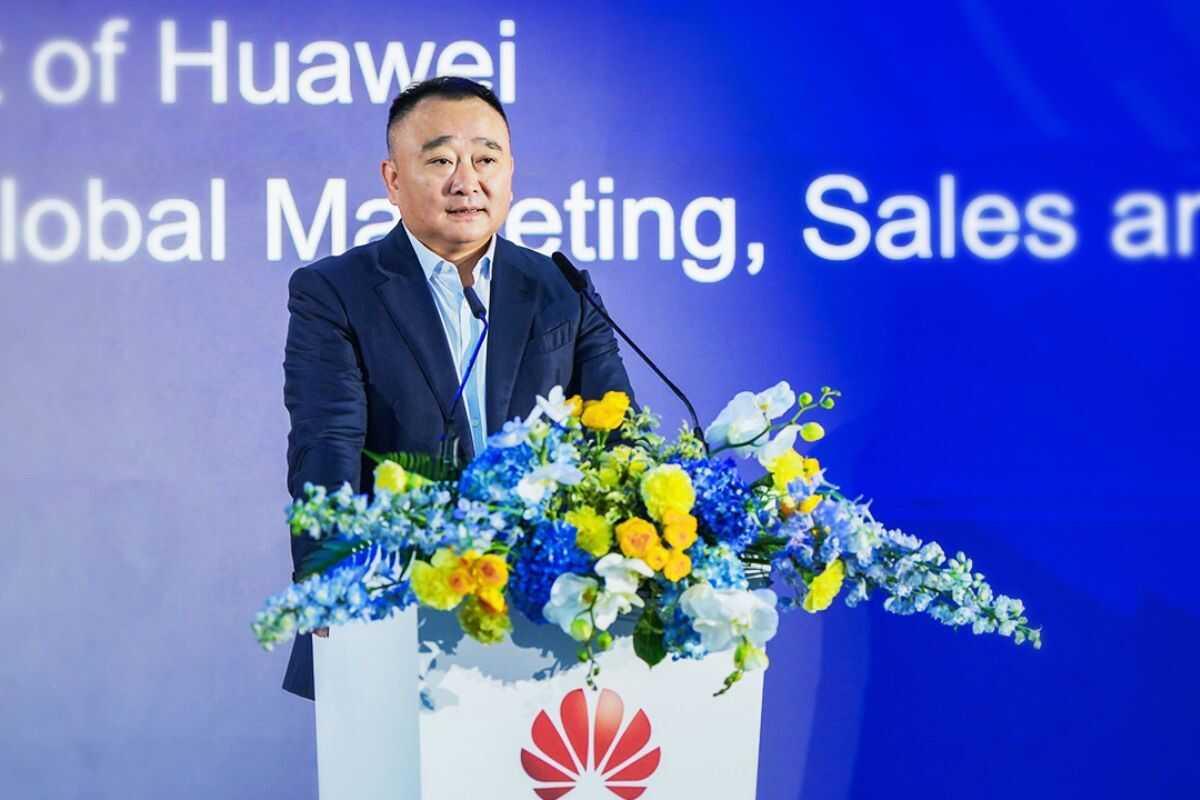
Barcelona, Spain — At the Global Digital Power Forum held during MWC Barcelona 2026, Huawei Digital Power launched the ‘AIDC Ecosystem Co-construction’ Initiative with the Global Computing Consortium (GCC), and introduced the New-Gen AI-Powered Green Site solution that supports the ICT industry in the AI era.
As intelligent technology advances rapidly, demand for AIDC (AI Data Centers) is surging. However, several challenges related to power supply, construction speed, security, and reliability are becoming more complex. Meanwhile, millions of telecom network locations face high energy consumption and limited electricity networks. Developments in energy technology, particularly solar power, now not only support low-carbon electricity production but also serve as the most effective energy source. The integration of green energy with AI is seen as an optimal solution to address energy consumption challenges in the AI era.
According to Zhou Jianjun, Vice President of Huawei and President of Global Marketing, Sales and Services at Huawei Digital Power, Huawei has long supported the digital transformation of the ICT industry through 5G, AI, and cloud. In the AI era, the ICT industry requires energy infrastructure that is more sustainable, robust, flexible, and reliable. Telecommunications operators can utilise facilities such as telecom network locations and data centres to improve energy efficiency of devices, as well as integrate solar and energy storage systems. In this way, operators can transform from being merely energy consumers to prosumers— consumers and producers of energy— for green and sustainable development. Huawei Digital Power will leverage strengths in computing, large AI models, solar energy, energy storage, and the power grid to help operators evolve towards Prosumer 2.0 and seize opportunities in the AI era.
Xia Hesheng, Chief Marketing Officer of Huawei Digital Power, added that the rapid adoption of AI applications is driving a surge in compute demand and rapid growth of the AIDC industry. With increasing power, servers, racks, and campus-scale data centres, the development of AIDC now faces four main challenges: reliability, energy efficiency, speed of deployment, and ease of evolution. Huawei focuses on technological innovation in power supply, cooling, energy storage, operational activities, and deployment models. Moreover, Huawei presents an AIDC solution that is highly reliable, energy-efficient, quickly deployable, and broadly compatible to maximise compute per watt.
At the event, Huawei Digital Power and GCC officially launched the ‘AIDC Ecosystem Co-construction’ Initiative. The initiative enhances regional alignment of standards and specifications while considering local policies, environmental conditions, and technical needs. It also encourages stakeholders to share practical experiences and build a global AIDC knowledge base through the alliance platform. With technical specifications acting as a collaboration bridge, the initiative is expected to build an open, mutually beneficial, and sustainably developing global AIDC ecosystem.
Jin Hai, Chairman of the Board, GCC, stated that every country and region has a different energy mix, policy, environmental regulations, and application scenarios. This presents challenges in refining standards but also opens significant opportunities for industry collaboration. Technical standards can drive global digital economy development if they are built on deep understanding of regional needs and aligned with industry practices.
Launch of the AI-Powered Green Site Solution
At the same event, Huawei Digital Power also launched the AI-Powered Green Site solution, delivering integrated intelligent synergy to support operators’ transformation from energy consumers to prosumers. The solution is designed with the concept of ‘one-time implementation, evolving over 10 years’ to simplify deployment and meet operator needs across scenarios such as 5G site construction, provision of green energy, and revenue enhancement from energy storage.
Gautham Gnanajothi, Senior Vice President at Frost & Sullivan, said telecommunications networks are built for resilience. However, the next decade’s development will be defined by intelligent technologies. The transformation of the network energy footprint, widely distributed geographically, into an orchestrated platform will not only protect uptime but also stabilise the power system, unlock new revenue sources, and position the telecommunications industry as a strategic force in a broader energy ecosystem.
As the intelligent technology era accelerates, AI offers enormous growth opportunities for the global ICT industry, while also presenting new challenges for ICT energy infrastructure. Huawei Digital Power will continue investing in innovation, leveraging green energy to support the AI era, and collaborating with global partners to build a new digital world.
Source: Huawei Digital Power