
HSI: KDMP and KNMP are strategic instruments for improving community welfare
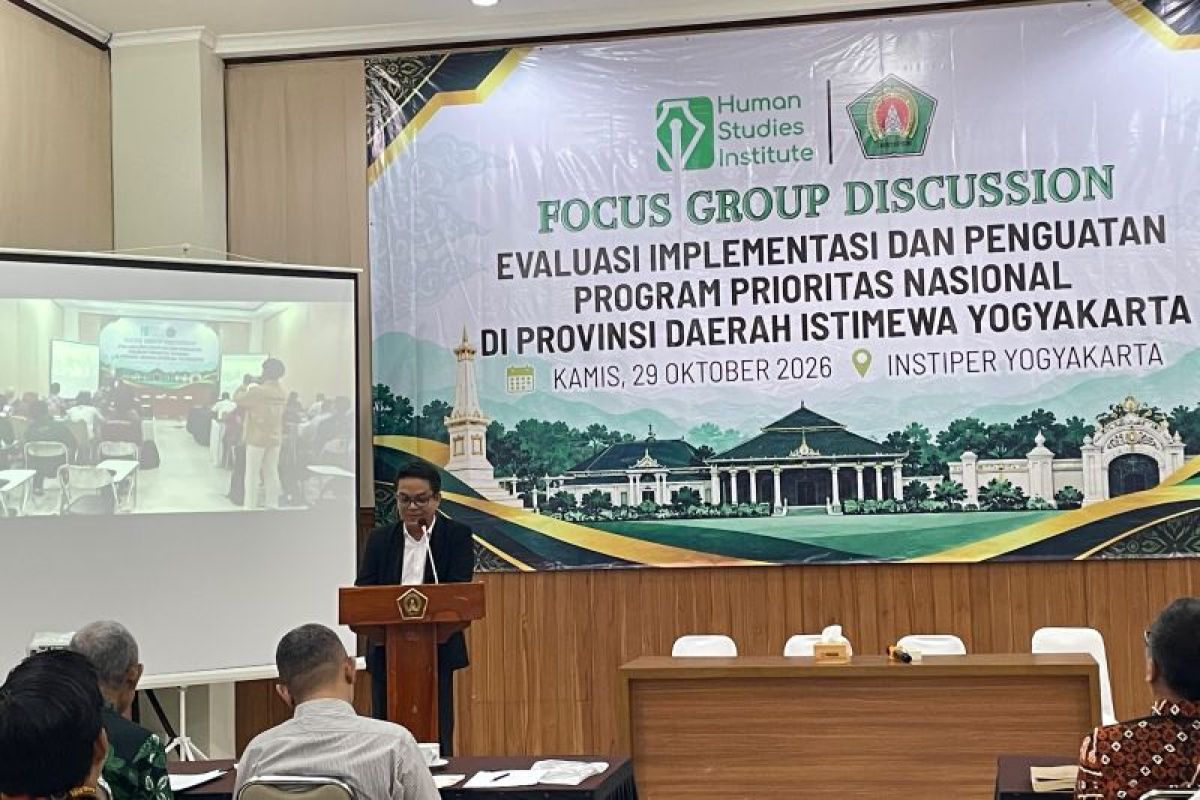
Jakarta (ANTARA) – Human Studies Institute (HSI) Executive Director Rasminto said the Red and White Village Cooperative (KDMP) and Red and White Fishing Village (KNMP) programmes could be strategic instruments for improving the welfare of rural and coastal communities.
He said the programmes had significant potential to strengthen the economy and expand business opportunities if they were managed well and tailored to needs on the ground.
“KDMP and KNMP have great potential to strengthen the community’s economy,” he said in a statement received in Jakarta on Thursday.
According to Rasminto, the success of national priority programmes depends not only on infrastructure development and the establishment of institutions, but also on their ability to generate productive economic activity and deliver lasting benefits to communities.
“Success must be judged by the tangible benefits produced, from the growth of business activity and increased economic added value to the community’s ability to manage local potential independently and sustainably,” he said.
Rasminto shared these views at a focus group discussion entitled “Evaluation of the Implementation of National Priority Programmes in the Special Region of Yogyakarta”, held by HSI at the INSTIPER Yogyakarta campus earlier that day.
He said KDMP had a strategic role because cooperatives could provide a platform for rural communities to develop joint businesses, strengthen the bargaining position of small-scale economic actors, and shorten the distribution chain for goods and services.
If managed professionally, he said, cooperatives could also provide wider access to financing, marketing and business networks.
“This potential can only be realised if cooperative management is based on the real needs of the community, supported by a viable business model, and guided by the principles of transparency and accountability,” he said.
“On the other hand, there are also cooperatives whose buildings are ready, but which have yet to begin operating and are still awaiting their launch or inauguration,” he added.
These differences, he said, underscored the importance of ensuring operational readiness, clear governance and business continuity in implementing the programme.
“Differences in readiness between villages should be a source of learning,” he said.
Villages already operating businesses could offer examples of good practice, while those not yet operating should receive support tailored to their specific obstacles, whether relating to management, capital, business models or coordination, he said.
“That way, the construction of facilities can be followed by economic activity that is genuinely up and running,” he said.
Rasminto said support for financing from banks was one factor that could help cooperatives develop their businesses.
“Even so, access to capital must be accompanied by realistic business planning, capable management and risk calculations, so that cooperatives do not merely have capital but can also generate income and sustain their operations,” he said.
He stressed that KDMP should remain grounded in the core values of cooperatives, particularly mutual cooperation, kinship, economic democracy and shared prosperity.
Cooperatives, he added, should not simply be institutions established to meet programme targets. Their essence lies in joint enterprises managed with members’ participation and delivering benefits to those members.
“Village governments can facilitate the process, but community participation, transparency and professional management must be the foundation,” he said.
KNMP, meanwhile, had significant potential to increase productivity in the fisheries sector, improve the quality of coastal residential environments and strengthen the welfare of fishing families, he said.
He said improvements to these areas, the provision of supporting facilities and the strengthening of fisheries-related economic activity were important steps.
“However, physical development needs to be linked to business development so that the programme’s benefits do not stop at changing the appearance of an area,” Rasminto said.