
HSBC Indonesia: Partner to Bridge Indonesia's Growth with Global Capability
Can’t find what you’re looking for?
View all search resultsCan’t find what you’re looking for?
View all search resultsndonesia is expanding infrastructure, strengthening industrial capacity and accelerating digital adoption while pursuing growth that is more resilient, inclusive and sustainable. In an increasingly uncertain world, where supply chains shift rapidly and capital responds instantly to global events, the role of an international bank has evolved. It is no longer merely a facilitator of cross-border transactions, but a strategic partner that helps businesses and institutions navigate complexity with confidence.
That role is reflected in HSBC Indonesia’s recognition at the Euromoney Awards of Excellence 2026 as Best International Bank in Indonesia, Best Bank in Sustainable Finance in Indonesia and Best Bank for Securities Services in Euromoney Awards of Excellence 2026. The awards highlight HSBC’s international capabilities and its commitment to supporting Indonesia’s long-term development.
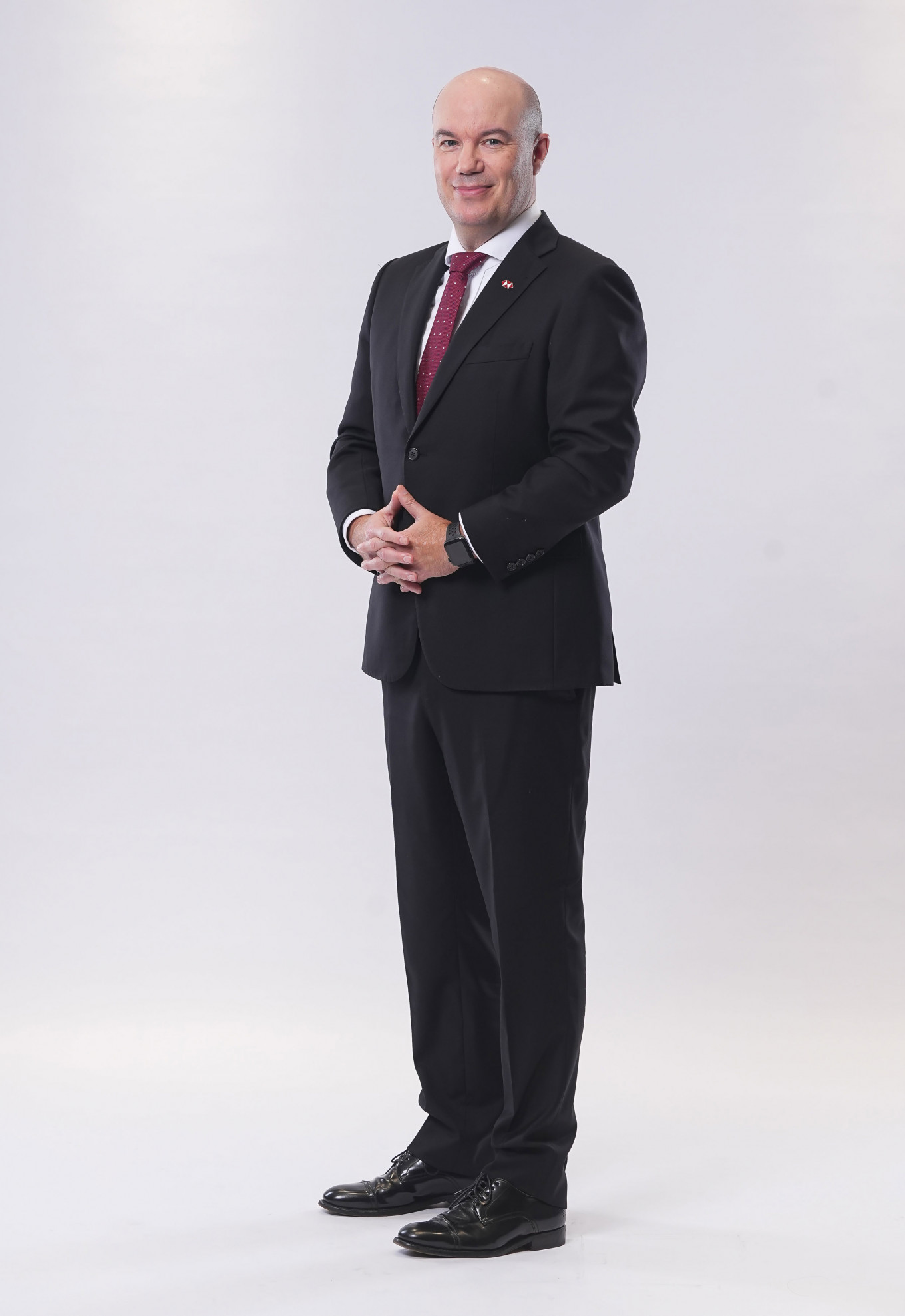
In an interview, HSBC Indonesia President Director Stuart Rogers discussed how the bank is helping connect Indonesia’s growth ambitions with global capital while strengthening its role as a trusted strategic partner.
Built on trust and a long-term commitment
HSBC has operated in Indonesia since 1884, originally facilitating trade between Batavia and global markets. More than 140 years later, that history represents more than longevity. It reflects deep institutional knowledge developed through changing political, economic and business environments.
“If there’s one theme that explains how a global bank stays relevant across eras, it’s this: trust and customers are the critical cornerstones of our existence,” Rogers said. “HSBC’s ambition is to be the most trusted bank globally, putting customers at the heart of everything we do.”
He emphasized that trust is built consistently through prudent risk management, strong capital, disciplined cost control and long-term relationships that enable HSBC to support customers throughout economic cycles.
Connecting Indonesia with global capital
Trust is particularly critical in sovereign and institutional finance, where execution standards and market scrutiny are exceptionally high.
To support Indonesia’s growth story, HSBC remains committed to helping Indonesia’s access international capital markets and act as a credible gateway to international investors.
HSBC recently acted as Joint Lead Manager and Bookrunner for Indonesia’s inaugural SEC-registered offshore Chinese yuan (CNH) sovereign bond issuance worth CNH6 billion in October 2025, followed by a dual-currency offering totaling CNH9.25 billion and €2.7 billion in March 2026.
“These are not routine funding exercises; they are credibility events. Issuing SEC-registered bonds signals a deliberate choice to meet one of the market’s highest disclosure and compliance standards. And choosing CNH and euros broadens the investor conversation beyond a single currency bloc, helping Indonesia diversify its funding base and reduce concentration risk over time,” Rogers said.
“Beyond the transaction, the real strategic value is the message to global markets that Indonesia is showing up as a key driver of Asia’s next chapter of growth, and HSBC is uniquely positioned to connect the country’s growth ambitions with international capital,” Rogers added.
As Southeast Asia’s largest economy, Indonesia requires sophisticated financial infrastructure alongside financing. HSBC leverages its presence in more than 60 markets to provide trade finance, liquidity management and cross-border transaction capabilities that support businesses operating in an increasingly integrated Asian economy.
Digital innovation for business growth
As businesses demand faster, safer and more efficient financial services, HSBC continues investing in digital transaction banking solutions.
One example is HSBC TradeCash, a digital trade finance solution that enables eligible customers to upload invoice data through HSBCnet and receive funding within minutes, significantly shortening the traditional payment cycle of more than 30 days.
The need for faster working capital has become increasingly important as geopolitical uncertainty, higher interest rates and longer payment cycles place greater pressure on corporate liquidity.
Despite global volatility, Indonesia’s trade remains strong. Statistics Indonesia (BPS) reported exports of US$25.30 billion in April 2026, up 21.98 percent year-on-year, while imports rose 22.49 percent to $25.21 billion.
Meanwhile, an HSBC survey of 3,000 business leaders and investors found that 88 percent had adjusted their capital allocation strategies due to rising volatility, while 89 percent planned to increase investment in high-growth markets.
Rogers explained that in today’s environment of higher volatility, longer payment cycles and rising operating costs, access to working capital is not only helpful, but a strategic necessity to protect liquidity and keep growth on track. “For Indonesian companies expanding into export markets, how quickly and easily they can secure working capital is increasingly a decisive factor in their competitiveness,” Rogers said.
Collections are another pressure point, particularly for fast-scaling businesses. “Not so long ago, ‘collections’ was a polite term for a blunt process: a phone call, a letter, and a visit to the buyers to collect the fund. It was slow, manual and resolutely reactive; we waited for arrears to happen, then scrambled to recover. That era is fading fast,” he said.
Across ASEAN, artificial intelligence, digital payments and advanced analytics are reshaping cash management by improving cash-flow forecasting, strengthening fraud detection and enabling real-time payments and automated reconciliation.
Rogers cited the example of a leading Indonesian hospital operator that manages more than 20 insurance partners and processes thousands of invoices daily. Manual reconciliatio