
HPV Immunisation for Boys in Yogyakarta to Begin August 2026
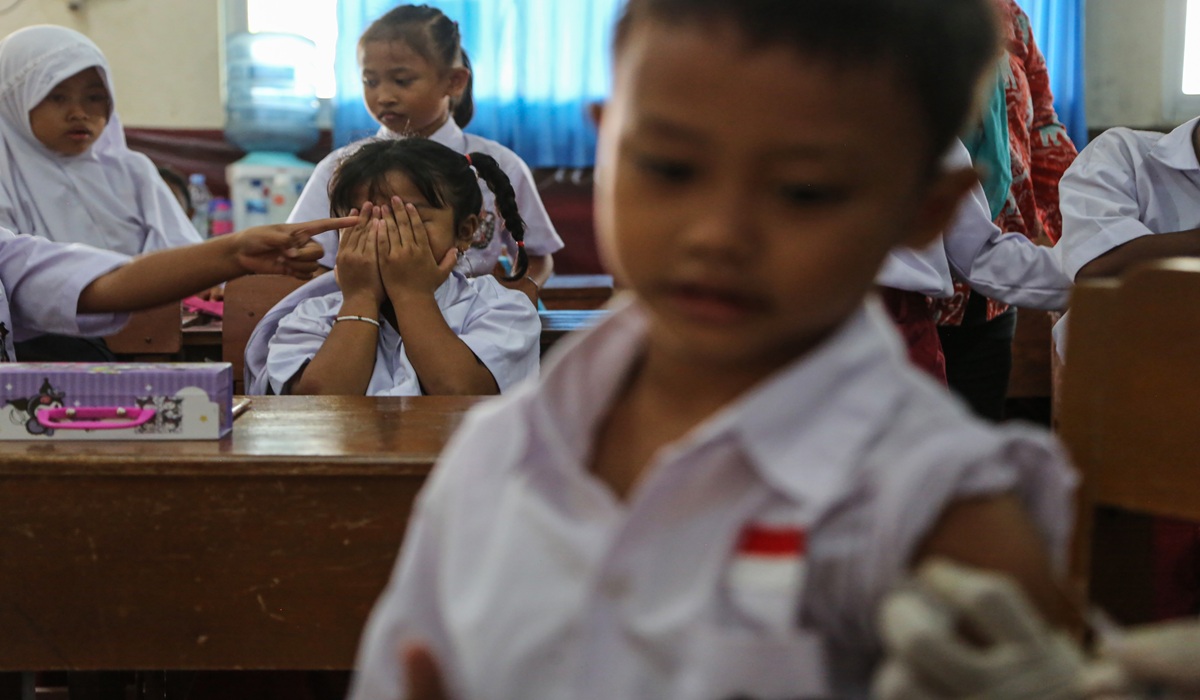
The scope of the Human Papillomavirus (HPV) immunisation programme in Yogyakarta City has been expanded, targeting not only girls but also boys of primary school age. The immunisation drive for boys will begin in August 2026.
Dr Endang Sri Rahayu, Head of the Communicable Disease Prevention, Control and Immunisation Section at the Yogyakarta City Health Office, said this strategic step reflects a real commitment to accelerating the elimination of cervical cancer and various malignant diseases caused by HPV infection in Indonesia.
The immunisation programme is grounded in the national commitment set out in the National Action Plan (RAN) for Cervical Cancer Elimination 2023–2030, pursuant to Decree of the Minister of Health No. HK/01.07/MENKES/2176/2023.
“This prevention programme was actually initiated several years ago, with doses and target groups continually refined,” Dr Endang explained.
In 2022, HPV immunisation began to be administered in Yogyakarta City in two doses, targeting girls in the fifth and sixth years of primary school. Then in 2025, the dosage was adjusted to a single dose for girls in year five of primary school, or aged 11, supplemented by catch-up immunisation for girls in year six of primary school, or aged 12, and year nine of junior secondary school, or aged 15, who had never previously received the HPV vaccine.
Entering 2026, the immunisation scheme has been significantly expanded, with boys included as primary beneficiaries. The targets comprise girls in year five of primary school or the equivalent (aged 11), as well as girls in year six of primary school (aged 12) and year nine of junior secondary school (aged 15) who have never been vaccinated.
“Meanwhile, for boys, immunisation will be given specifically to pupils in year five of primary school or the equivalent, aged 11, in three pioneer provinces: DKI Jakarta, DI Yogyakarta and Bali,” she said.
The immunisation will be carried out simultaneously as part of the School Child Immunisation Month (BIAS) in August 2026. To ensure equitable and inclusive coverage, the venues will not be limited to formal schools.
“The venues will include formal primary and junior secondary schools and their equivalents, Islamic boarding schools (pondok pesantren), Community Learning Activity Centres (PKBM), Learning Activity Studios (SKB), and Child Social Welfare Institutions (LKSA). We want to ensure that all target children, whether in formal, non-formal or informal education, are properly reached,” she said.
The choice of children as the target group is based on medical considerations and strong evidence of immune effectiveness. Compared with older adolescents and adults, younger adolescents develop a far more robust immune response.
Regarding the inclusion of boys in the national programme, she explained that HPV infection does not only cause cervical cancer in women. The virus can also potentially cause cancers of the vagina, as well as anal, penile and oropharyngeal cancers, which can occur in men.
“In addition, men can act as carriers who transmit the HPV virus to women,” she explained.
Vaccinating boys also aims to counter the stigma that this vaccination is “only for girls” and associated with promiscuity.
She further explained that HPV infection does not enter the bloodstream and does not cause inflammation, so it does not stimulate the body to produce antibodies. This means that natural HPV infection is not effective in controlling subsequent infections.
By contrast, the HPV vaccine provides good and lasting protection. She also stressed that the notion that the HPV vaccine causes infertility is untrue. HPV does not cause infertility, and numerous studies have proven there is no link between the HPV vaccine and infertility.
“On the contrary, the HPV vaccine can prevent HPV infections that have the potential to cause cancer and genital warts, which in turn can have a far greater impact on a person’s reproductive health and quality of life,” she said.