
How Xi Jinping Is Steering the Green Transition in Global Climate Action
Antalya, Türkiye (ANTARA) — Under President Xi Jinping’s leadership, China continues to strengthen its commitment to green development and environmental protection while promoting international cooperation to address climate change, a central item on the agenda of the 31st UN Climate Change Conference (COP31) in Antalya, Türkiye.
In 2026, the increasingly severe effects of global climate change — manifested in devastating floods, widespread wildfires and record-breaking heatwaves — have underscored the need for urgent, coordinated global action.
With the world approaching climate tipping points, COP31, which officially opened on Monday (9 November) in Antalya, offers the international community a fresh opportunity to build momentum for more effective global climate cooperation.
Under Xi’s leadership, China has for years consistently committed itself to advancing ecological protection and the country’s green transition, as well as promoting international climate cooperation. These efforts have made a significant contribution to the global struggle against a threat many regard as endangering humanity’s survival.
“We must protect the environment as we protect our eyes.” This compelling principle, expressed by Xi on numerous occasions, casts ecological conservation not merely as a policy choice but as an essential duty rooted directly in his own experience.
“More than four decades ago, I lived and worked for many years in a small village on China’s Loess Plateau in the west,” Xi recalled in a 2020 reply to a letter from student representatives of the Global Alliance of Universities on Climate.
At the time, excessive development had severely damaged the area’s ecology and environment, leaving local people trapped in poverty. The experience taught him that humanity and nature form a community of life, and that damage to nature ultimately harms humanity.
As a keen reader of classical Chinese works, Xi has also been strongly influenced by traditional Chinese philosophy, which regards people as an inseparable part of nature. “All things will flourish when they live in harmony and benefit from nature,” he said.
This conviction underpins a distinctive environmental doctrine: “lucid waters and lush mountains are invaluable assets”. Xi first introduced the idea in 2005, when he was Party secretary of Zhejiang Province in eastern China.
After becoming general secretary of the Communist Party of China (CPC) Central Committee in 2012, Xi made ecological conservation a national priority.
At Xi’s direction, environmental performance became one of the main criteria for evaluating officials, while environmental inspections strengthened local governments’ accountability for meeting their environmental responsibilities.
Together, these measures have helped steer China’s economic growth towards a more resource-efficient and sustainable path.
Balancing economic growth with green development remains a challenge for economies around the world, particularly emerging markets seeking to meet development needs while pursuing environmental sustainability.
Since 2012, China has maintained average annual economic growth of 6 per cent, while keeping the average increase in energy consumption to just 3.3 per cent. This structural decoupling has resulted in a cumulative 26.1 per cent reduction in energy intensity, marking one of the world’s most significant improvements in efficiency.
Xi has also led by example in promoting environmental protection and green development. Since becoming China’s top leader, he has personally taken part in tree-planting activities in Beijing for 14 consecutive years.
Xi has said forests help conserve water, generate economic benefits and increase grain production. They also now play an important role as carbon sinks.
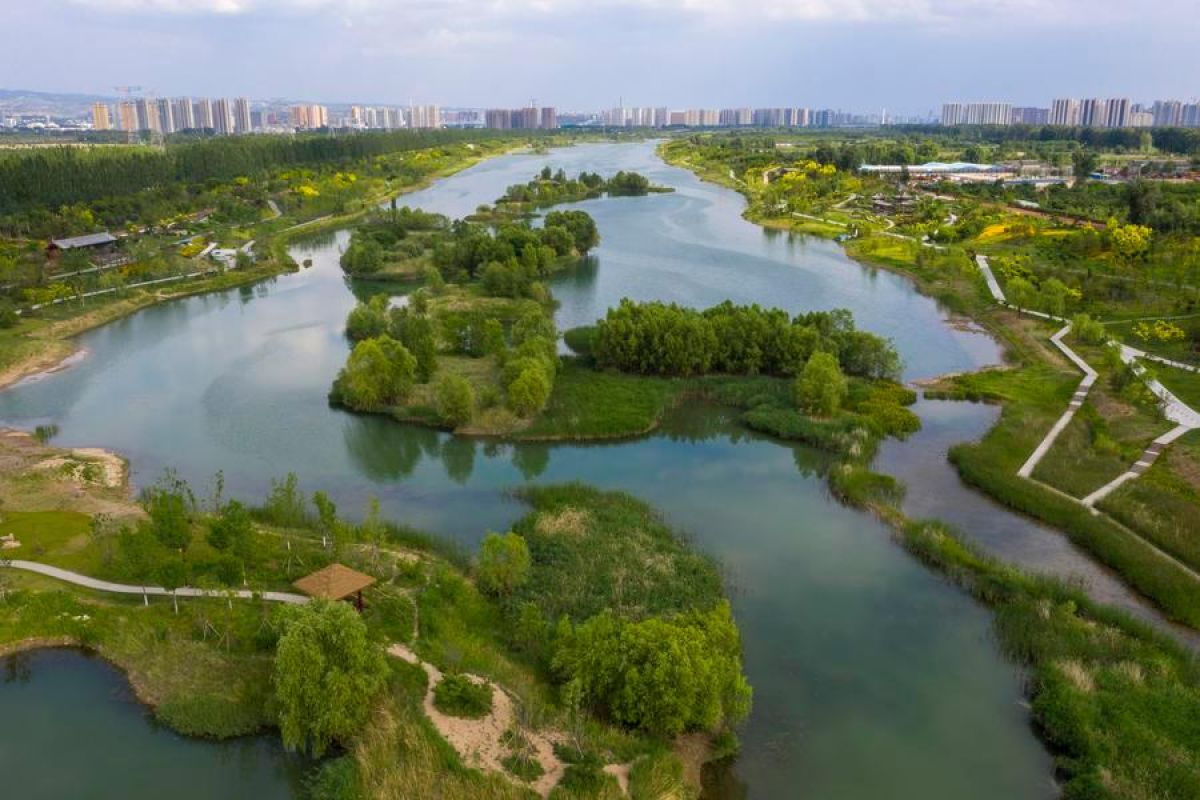
China has increased forest cover to more than 25 per cent of its land area, planting trees since 2012 across an area roughly 1.7 times the size of the US state of California. The annual carbon-sequestration capacity of China’s forests and grasslands has exceeded 1.2 billion tonnes of carbon dioxide equivalent.
Fuad Gani, deputy director of the University of Indonesia’s Graduate School of Sustainable Development, said China’s ecological conservation philosophy stood out for its ability to translate environmental goals into long-term policies and governance frameworks.
“This is one of China’s most valuable contributions to advancing the global green transition,” he said.
In Xi’s view, economic growth and the green transition are not mutually exclusive, but complementary goals. This philosophy is expressed in his central doctrine that “lucid waters and lush mountains are invaluable assets”.
Xi has stressed that meeting China’s targets for peaking carbon emissions and achieving carbon neutrality “is not something others have asked us to do, but something we must do ourselves”.
Under his leadership, China has aligned emissions reductions with technological innovation, industrial upgrading and energy security, making the green transition an increasingly important driver of high-quality development.
In 2014, when conventional petrol-powered vehicles still dominated China’s roads, Xi recognised the considerable potential of new energy vehicles (NEVs). During a visit to SAIC Motor, one of China’s major carmakers, he described NEV development as the only way for China to move from being a large automotive market to becoming an automotive powerhouse.
Over the following decade, Xi consistently backed electric vehicles, visiting carmakers and laboratories and showing keen interest in trying out new models developed in China. Since then, the country’s NEV industry has grown rapidly and become a mainstay of its technology-intensive manufacturing sector.
Beyond NEVs, China has built the world’s largest and most comprehensive clean-energy industrial supply chain. Green and low-carbon industries have emerged as important drivers of economic growth.
Rising exports of the “new three” products — photovoltaic products, lithium-ion batteries and electric vehicles — demonstrate China’s success in shifting towards innovation-driven manufacturing. China is now not only developing green innovation domestically, but also channeling that momentum into regional cooperation.
This year, China’s exports of solar panels, wind turbines, electric vehicles and batteries are expected to help prevent 450 million tonnes of potential carbon dioxide emissions worldwide, according to a recent analysis by the Finland-based Centre for Research on Energy and Clean Air.
These developments reflect China’s strategic effort to foster “new quality productive forces”, a policy concept Xi first introduced in 2023 to promote high-tech innovation and sustainable economic modernisation. “Green development,” Xi has said, “is a hallmark of high-quality development, and new quality productive forces are inherently green.”
China has turned the challenges of tackling climate change into opportunities for technological innovation, industrial upgrading and high-quality economic development, said Wang Lei, a professor at the School of Government at Beijing Normal University.
“Guided by the goals of reducing carbon emissions and strengthening climate resilience, China has used policy direction, market incentives and open innovation to drive transformation in the energy, industrial, transport and construction sectors,” he added.
With a deep commitment to joining countries around the world in building a community with a shared future for humanity, Xi has repeatedly called on the international community to strengthen cooperation on climate change and actively promote a fair and equitable global climate-governance system based on mutually beneficial cooperation.
“Great resources are born of great resolve,” Xi said, quoting a line from French author Victor Hugo’s novel Les Misérables in his speech at the landmark 2015 Paris climate conference.
At the conference, Xi advanced important ideas and proposals and worked actively to build consensus among the parties, making an indispensable contribution to the eventual adoption of the Paris Agreement.
At a special ceremony on 3 September 2016, Xi formally handed China’s instrument of accession to the Paris Agreement to then UN Secretary-General Ban Ki-moon.
“Without President Xi Jinping’s initiative, we would not have the Paris Agreement on climate change today,” Ban said in a 2021 interview with Xinhua.
In responding to the serious challenge of climate change, China has fulfilled its international responsibilities with what Xi has described as “great resolve”. At a virtual UN meeting in 2020, Xi announced that China would strive to peak its carbon dioxide emissions before 2030 and achieve carbon neutrality before 2060. In 2021, he pledged that China would not build new coal-fired power projects abroad.
In recent years, several developed countries, particularly in the West, have stepped back from their climate commitments, weakening global climate governance. Against this backdrop, Xi announced China’s 2035 Nationally Determined Contributions (NDCs) in 2025. They include a commitment to cut net greenhouse gas emissions across the entire economy by 7–10 per cent from their peak and raise the share of non-fossil fuels in total energy consumption to more than 30 per cent by 2035.
For the first time, China has committed to an absolute emissions-reduction target covering all economic sectors and all greenhouse gases, providing much-needed certainty and stability for global climate governance.
Xi has also stressed the need to uphold fairness and equity and fully respect developing countries’ right to development as the world pursues a green transition.
“This transition should serve to narrow, rather than widen, the North-South divide,” he said, urging developed countries to take the lead in meeting their emissions-reduction obligations and provide greater financial and technological support to developing countries.
Under Xi’s leadership, China is seeking to strengthen South-South cooperation on climate change. Xi has proposed establishing the Belt and Road Initiative International Green Development Coalition and promoted a green BRICS partnership.
Through these goal-oriented initiatives, China aims to deepen cooperation in clean energy, green technology and green industrial development, while helping developing countries strengthen their capacity to address climate change.
“Earth is our one and only shared home,” Xi said. “Stepping up efforts to address climate change and promote sustainable development has a profound bearing on humanity’s future.”
Source: jawawa.id (https://jawawa.id/newsitem/how-xi-jinping-is-steering-the-green-transition-in-global-climate-action-1794293510)
Originally published by Antara (Indonesian) (https://www.antaranews.com/berita/5843659/cara-xi-jinping-mengarahkan-transformasi-hijau-dalam-aksi-iklim-global), translated from Indonesian