
How weather modification works: can it really make it rain?
Jakarta (ANTARA) - The eruption of Mount Anak Krakatau in the Sunda Strait has spread volcanic ash across a number of regions, including Jakarta, Banten and Lampung. The situation has also disrupted aviation, as volcanic ash can endanger aircraft safety, and has affected the activities of residents in surrounding areas due to ash fall that poses health risks in affected areas.
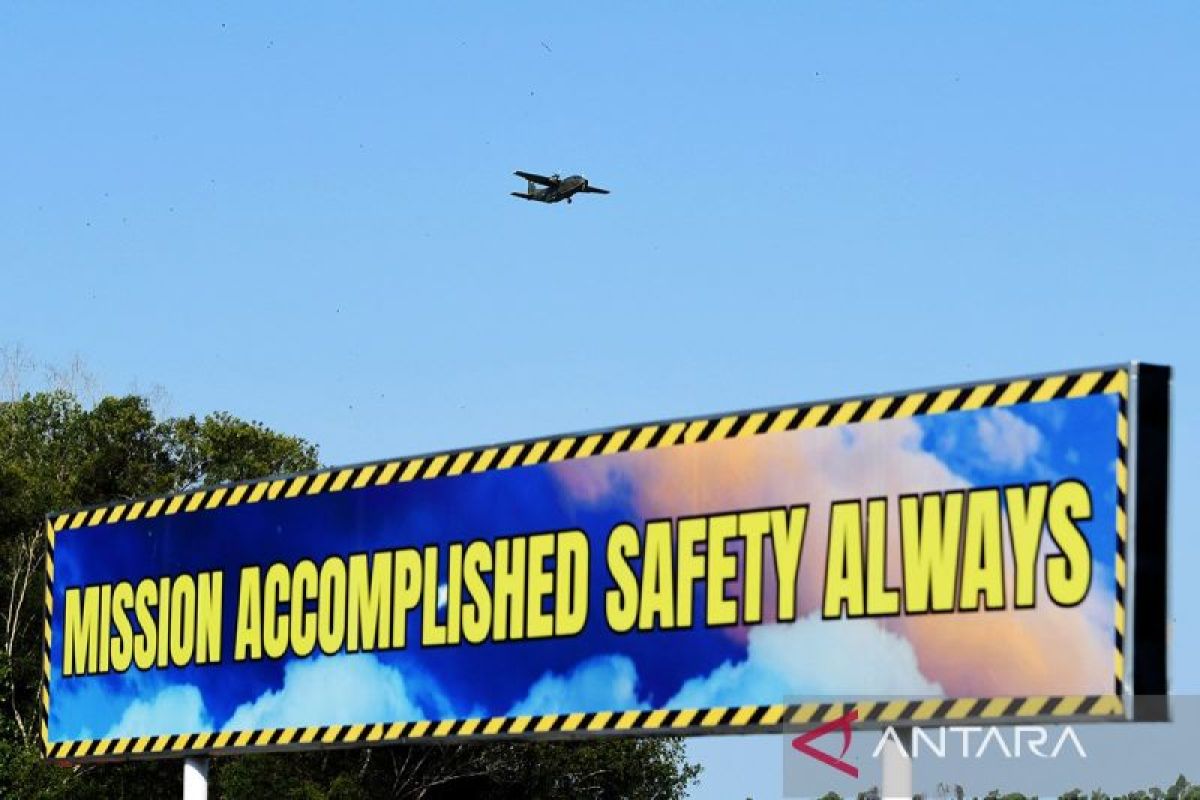
To help reduce the spread of ash in the atmosphere, the National Disaster Management Agency (BNPB) has prepared a Weather Modification Operation (OMC). BNPB Chief Suharyanto said the OMC will be carried out when weather conditions and flight safety permit. Aircraft for the operation have also been prepared at Pondok Cabe.
In its implementation, the OMC is intended to help bring volcanic ash material down from the atmosphere through the formation or seeding of rain. But how does weather modification actually work? Can humans truly make rain fall at will?
Weather modification is an effort to influence processes occurring in the atmosphere by making use of existing cloud conditions. In Indonesia, this activity is known as Operasi Modifikasi Cuaca, or OMC.
Put simply, the OMC does not mean humans can create rain from a completely clear sky. The technique is mostly carried out by utilising clouds that have the potential to produce rain.
Certain materials are scattered into clouds to assist the process of forming or growing water droplets, so that the chance of rain can increase.
Therefore, the presence of clouds and atmospheric conditions are important factors. If weather conditions are unfavourable, weather modification cannot automatically produce rain.
How is rain made to fall?
One method commonly used in the OMC is cloud seeding.
In this process, aircraft carry particular seeding materials towards areas with potentially rain-bearing clouds. These materials are then scattered into the clouds to assist condensation and the formation of water droplets.
The increasingly large water droplets can then fall to the surface as rain when atmospheric conditions support it.
So it is not the aircraft that directly “makes” rain. The aircraft acts as a means of delivering seeding materials to cloud locations that already meet the criteria.
The answer is no.
The OMC depends heavily on atmospheric conditions. The implementing team needs to examine various meteorological information, including the presence of clouds, wind direction, humidity and other atmospheric conditions.
The Meteorology, Climatology and Geophysics Agency (BMKG) has also affirmed that the OMC is a mitigation technology whose implementation must adapt to weather conditions. In previous operations, for instance, the OMC could not be carried out when the required convective clouds had not yet formed.
For this reason, there are times when the government has prepared aircraft and personnel, but the operation cannot yet be carried out because atmospheric conditions are unfavourable.
In the case of the Mount Anak Krakatau eruption, the OMC has been prepared to help dissipate the volcanic ash still present in the atmosphere.
Rain falling over targeted areas is expected to help bring ash particles down to the surface, so that the concentration of volcanic material in the air can be reduced.
This step forms part of post-eruption mitigation efforts, particularly as the ash fall has affected a number of regions and aviation activities. BNPB said the OMC will be carried out while continuing to observe flight safety and security factors.
Beyond volcanic ash, what else is the OMC used for?
Weather modification has in fact been used in various situations in Indonesia. One of these is supporting the handling of forest and land fires (karhutla).
When there are clouds with the potential to produce rain, the OMC can be carried out to increase the chance of rainfall in areas that need it. Such rain is expected to help moisten the land and reduce the dry conditions that support the spread of fire.
In September 2026, BMKG also reported the implementation of the OMC in West Kalimantan to optimise rain potential as part of efforts to handle forest and land fires.
In addition, the OMC can be used in the management of certain hydrometeorological disasters, such as reducing the potential for rain in particular regions when atmospheric conditions allow and the operational objective supports it.
Not always.
Weather modification is not a technology that can fully control the weather. Its results depend heavily on atmospheric conditions at the time of the operation.
This means that when suitable clouds are unavailable or atmospheric conditions are unfavourable, seeding will not automatically produce rain.
BMKG has also emphasised that the OMC forms part of disaster mitigation efforts and is not a means of controlling the weather at will.
For this reason, the success of an operation is usually assessed based on conditions and the objectives to be achieved, not simply on whether rain falls or not.
So, can humans control the weather?
Not to that extent.
Weather modification technology essentially works by harnessing natural processes already under way in the atmosphere. Humans can make certain interventions to assist those processes, but they cannot dictate the weather as they please.
In the case of the Mount Anak Krakatau eruption, for example, the government prepared the OMC as one step to help bring volcanic ash down from the atmosphere. However, its implementation still awaits safe and suitable conditions.
In other words, weather modification is not a “rain-making machine”, but rather a technology that attempts to optimise the atmospheric conditions already available.
The development of this technology shows that weather information, atmospheric observation and meteorological modelling are increasingly important in disaster management. Amid threats such as volcanic eruptions and forest fires, the OMC serves as one of the tools the government can use to reduce disaster impacts, while still depending on the natural conditions at hand.