
How We Treat Children Determines the Nation's Future
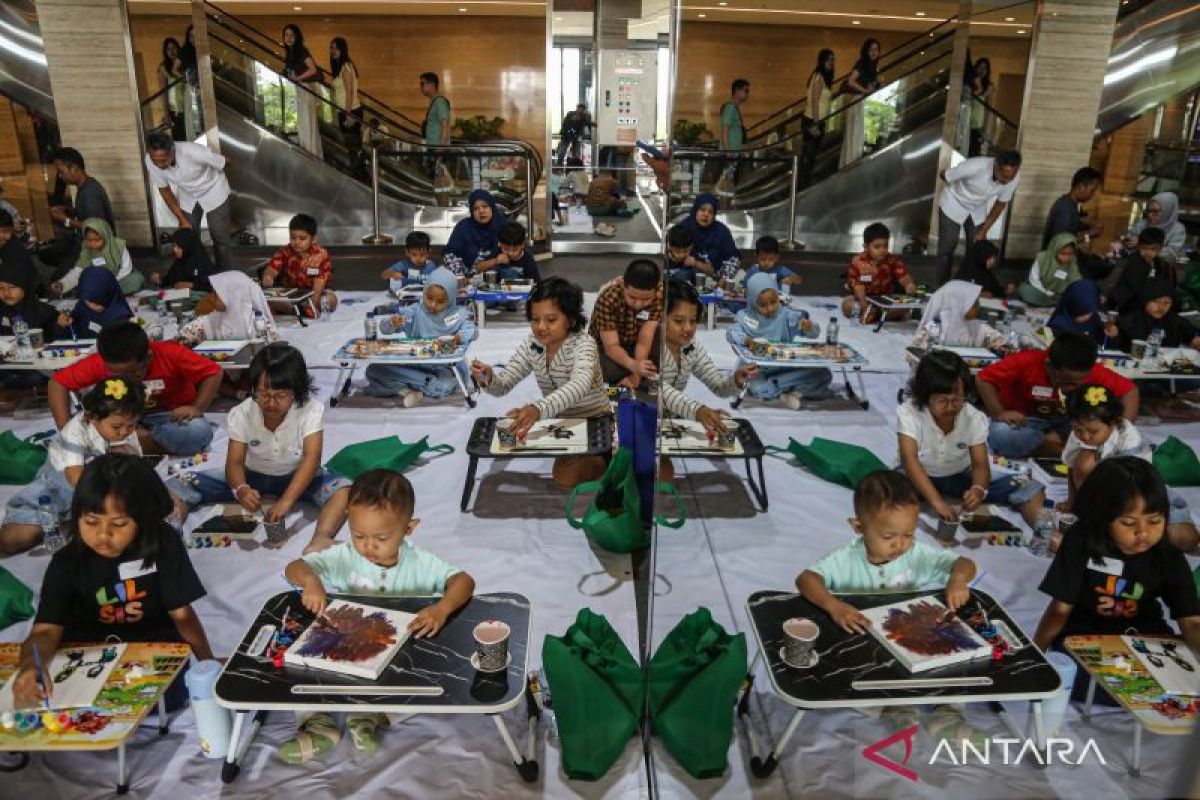
Ultimately, the nation’s future is not waiting in 2045. That future is growing in classrooms, in modest homes, on playgrounds, and in every corner of the country where Indonesian children are learning about life.
Jakarta (ANTARA) — Twenty years from now, the children sitting in primary school today will fill the important spaces of national life. They will become teachers, doctors, farmers, scientists, law enforcement officers, auditors, entrepreneurs, and even leaders of the republic. They are not merely the next generation; they are the face of Indonesia in 2045.
Therefore, the most important question is not whether Indonesia is capable of becoming a developed nation. The far more fundamental question is whether we are truly preparing the generation that will lead Indonesia to become one.
That question finds its relevance in the commemoration of the 42nd National Children’s Day (HAN) in 2026, which carries the theme ‘Love Children, Protect and Build the Future’. The theme contains three interconnected messages: affection, protection, and investment in the nation’s future. All three are not merely slogans, but development agendas that must be realised in concrete terms.
A great nation is not remembered solely for its economic progress or the grandeur of the infrastructure it builds. A great nation is one that can ensure every child grows up healthy, safe, respected, and with equal opportunity to develop their potential.
The best investment
Indonesia is looking towards Golden Indonesia 2045 with optimism. Various development efforts are under way to strengthen national competitiveness, from economic transformation to human resource development. Yet there is one investment whose value surpasses all physical development: investment in children.
Toll roads can be built within a matter of years. Buildings can rise within months. Technology can be purchased or learned. Building human beings, however, takes an entire generation.
A child who receives good nutrition today will grow into a healthy generation. A child who receives a quality education will become a source of innovation. A child raised in a loving environment will grow up with character, empathy, and self-confidence.
Conversely, every child who loses their rights is, in truth, lost potential for the nation. Loving children is therefore not merely a matter of affection; it is a strategic choice in national development.
This year’s National Children’s Day theme also reminds us that affection without protection is not enough.
Amid rapid technological development, children face increasingly complex challenges. Violence, bullying, exploitation, child marriage, and threats in the digital sphere remain serious problems requiring attention. For this reason, the HAN 2026 theme also promotes the strengthening of the National Movement #RamahAmanNyamanAnak (Gernas #RANA) as a collaborative effort to create safe, inclusive living spaces free from violence.
Child protection must not be understood merely as a response when violence occurs. Protection must begin far earlier, through warm families, safe schools, inclusive public spaces, good digital literacy, and policies that always place children’s best interests as the primary consideration.
From this perspective, the quality of child protection truly reflects the quality of a nation.