
How volcanic eruptions change the landscape: The facts
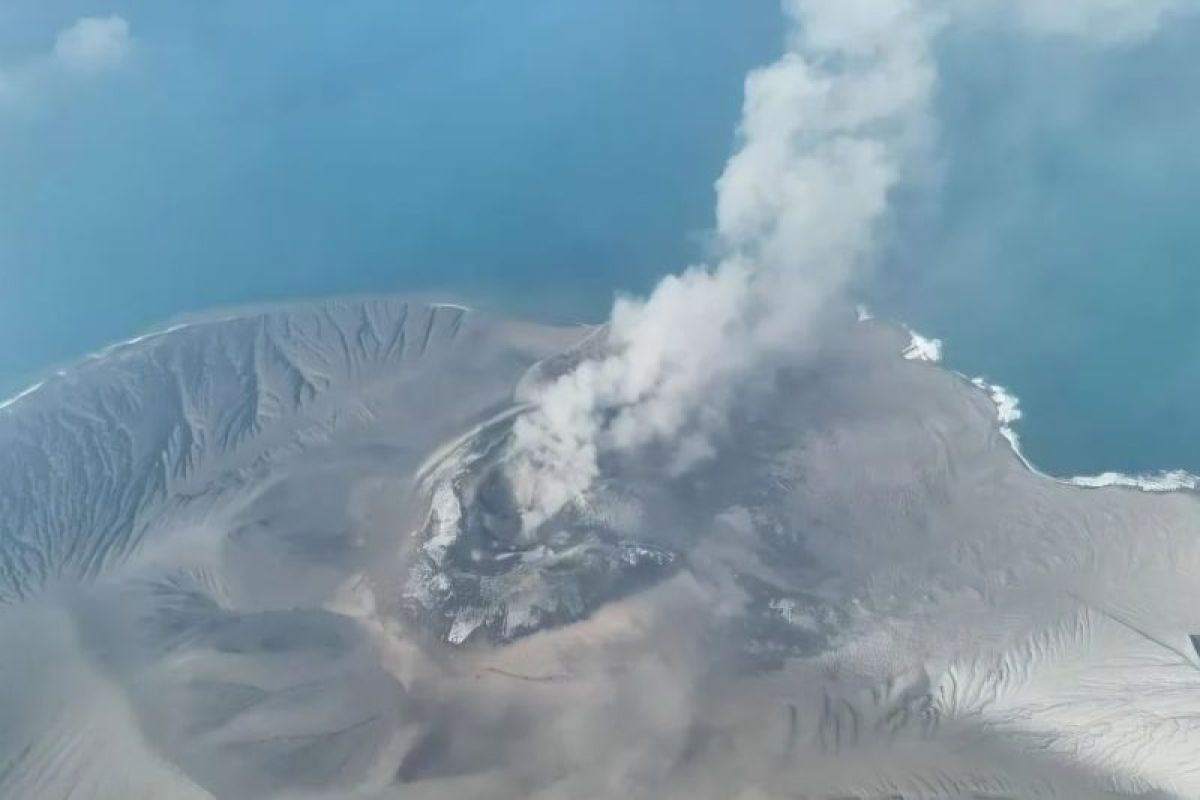
Jakarta (ANTARA) - The eruption of Mount Anak Krakatau in the Sunda Strait in early September 2026 has once again demonstrated the immense power of volcanic activity in altering the surrounding environment. The Geological Agency noted a series of Strombolian eruptions leading to continuous eruptions on 5 September 2026. This activity produced volcanic ash and ejected materials, while monitoring of the volcano remains ongoing.
Changes caused by eruptions do not always cease once the eruption ends. Materials emerging from within the earth can accumulate, forming new surfaces, burying valleys, altering river flows, and even expanding landmasses.
Over longer timescales, volcanic activity serves as one of the natural processes that form mountains, highlands, islands, and various other landscapes. The US Geological Survey (USGS) notes that over millions of years, volcanic eruptions have produced mountains, plateaus, and plains that subsequently undergo weathering and erosion.
So, how can volcanic eruptions permanently change the landscape?
One of the easiest ways to observe landscape changes due to eruptions is through lava flows.
When magma reaches the surface, the material is referred to as lava. As lava cools, it hardens into rock and can cover surfaces that were previously soil, vegetation, or even buildings.
If lava flows reach the sea, the material can also increase the area of land. The USGS notes that volcanic activity in the Hawaiian Islands, for example, has added hundreds of hectares of new land through lava flows over several decades.
This means an eruption can not only destroy existing surfaces but also create new ones.
Explosive eruptions can eject ash, pumice, lapilli, and various other volcanic materials around the volcano. These materials then settle and form new layers on the ground surface. If eruptions occur repeatedly, these layers can become thicker, gradually altering the shape of slopes and valleys.
In the long term, the accumulation of eruption materials can become part of the volcano’s body itself. Therefore, the shape of the mountain you see today is actually the result of various long-term processes, including the accumulation of materials from previous eruptions.
If volcanic material continues to emerge and accumulate in one location, new surfaces can grow to form larger structures. An example can be seen in the history of Anak Krakatau. Following the massive Krakatau eruption in 1883, volcanic activity resumed in the area. The 1927 eruption marked the beginning of the emergence of a new island, eventually known as Anak Krakatau.
Such phenomena demonstrate that volcanic activity can truly redraw the map of a region. However, newly formed land is not always immediately stable. Sea waves, landslides, erosion, and subsequent volcanic activity can reshape it once again.
Eruptions can also destroy parts of a volcano.
Landscape changes due to volcanoes do not always mean an increase in landmass. Large eruptions can also destroy or alter parts of a mountain. Pressure and the discharge of large amounts of material can lead to the formation of vast craters or calderas.
In some cases, parts of the mountain body may experience collapses or massive landslides. Material that was previously part of the mountain is then transported to other areas. In other words, eruptions can act as a process of both ‘building and dismantling’ the landscape.
Changes can also occur after an eruption has concluded.
Volcanic material accumulating on slopes can be carried by rainwater and transform into lahars. Materials such as ash, sand, gravel, and stones can move along valleys and riverbeds. These deposits can fill riverbeds, alter valley shapes, or even change water flow paths. Such processes can recur as long as loose volcanic material remains around the volcano.
Interestingly, landscape changes do not stop once volcanic material has settled. Wind, rain, rivers, sea waves, and biological activity will slowly erode and alter the newly formed surfaces. Hardened lava rock can undergo weathering. Ash and other volcanic materials can mix with organic matter to eventually form soil.
Over very long periods, surfaces resulting from eruptions can transform into new ecosystems. Therefore, landscapes formed by eruptions are not truly static. The term ‘permanent’ is more accurately understood as a major change that persists much longer than a human lifespan, even though nature will continue to modify it.
Indonesia is located in a region with high volcanic activity. Consequently, landscape changes due to volcanoes are not merely geological phenomena occurring far from daily life. These changes can affect agricultural land, rivers, coastlines, transport routes, and residential areas.
The eruption of Mount Anak Krakatau serves as an example of how volcanic activity can affect surrounding regions, from the dispersal of ash to changes in the volcano’s structure and the surrounding environment. The Geological Agency continues to monitor the volcano’s activity and set activity levels based on the development of its volcanic parameters.