
How Trump’s immigration crackdown is putting pressure on Indonesians in the US
How Trump’s immigration crackdown is putting pressure on Indonesians in the US
US President Donald Trump’s immigration crackdown has struck fear into undocumented Indonesians living there, prompting some to seek asylum despite slim chances of success.
JAKARTA: When their tourist visas expired in August 2024, Balinese couple Ida Bagus Bimantara and Wulan Widyastini turned to asylum, believing it was their only realistic way to stay in the United States.
They had arrived in the US a day after their wedding in December 2023, hoping to build a new life and pursue the American dream.
But months after they filed their asylum claim, Donald Trump returned to the White House in January 2025.
His sweeping immigration crackdown launched since has upended life for the couple – and millions of other undocumented immigrants across the US – replacing hope with uncertainty.
Even though they were finally called for their asylum interview in January this year, the approval has not yet been made, leaving them in limbo, though they know they are luckier than others. According to the couple, some Indonesians have waited as long as five years without being called for an interview.
“Those without legal status who haven’t applied for asylum are extremely cautious. They’re afraid of being arrested by ICE (Immigration and Customs Enforcement),” Ida Bagus told CNA.
According to US Department of Homeland Security (DHS) figures released in May, more than 3 million undocumented immigrants - referring to those residing there without legal authorisation - have been deported since Trump returned to office, with the number continuing to climb.
Although Indonesians make up a relatively small immigrant community compared with those from Latin American countries, immigration lawyers and community leaders said they have not been spared from the tougher enforcement.
ICE’s last nationality breakdown, released in 2024, showed 4,276 Indonesians were subject to final orders of removal – court orders requiring them to leave the US – the third-highest number among Southeast Asian nationalities after Vietnam (8,675) and Laos (4,850).
“Indonesians may not be targeted the way Latino communities are, but the fear is still there, especially because of how aggressively ICE carries out its operations,” said Shinta Penyami Storm, founder of Gapura Philadelphia, a cultural and advocacy group for the Indonesian diaspora in the city.
For many immigrants, including Indonesians, asylum has increasingly become a last resort for staying in the US, say immigration lawyers, adding that many of the claims are weak and have little chance of succeeding.
CAUTION AMID TOUGHER ENFORCEMENT
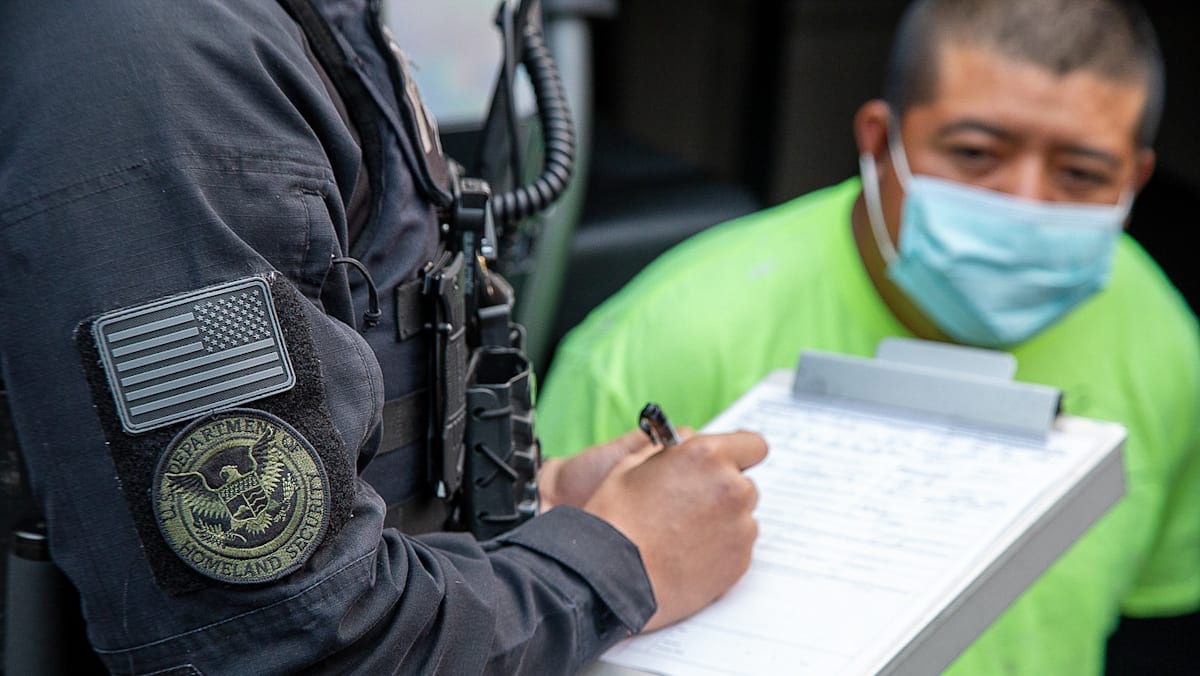
Under Trump’s administration, ICE has been given broader enforcement powers. Officers, often wearing body armour and carrying firearms, can now conduct raids almost anywhere, including workplaces and places of worship.
Indah Nurita Sari, a member of the Indonesian diaspora in Philadelphia who has lived in the US for 25 years as a permanent resident, said the tougher enforcement has made many Indonesians more cautious.
“I know one Indonesian who was arrested by ICE and later released. But now he has to wear an electronic ankle monitor and report regularly,” said Indah, a writer and founder of Indonesian-language community media outlet Indonesian Lantern in the US.
Some Indonesians said many compatriots now rarely leave home without proof of their legal status.
“When you’re out, you’re advised to carry proof of your immigration status, such as a Green Card or a document showing you’re legally seeking asylum or other protection,” said Ida Ayu Sabrina, an Indonesian Green Card holder who has lived in Los Angeles, California, for the past 10 years.
Husin Siregar, another member of the Indonesian diaspora in California, said he also worries about running into ICE officers despite holding a Green Card.
“That’s why I leave home wearing my nurse’s uniform and hospital ID badge,” said Husin, 56, who has lived in the US since 1986.
Having arrived in the US a year before power shifted from Joe Biden to Donald Trump, Ida Bagus soon noticed a dramatic change for undocumented immigrants like himself.
“People without legal documents are extremely cautious. They’re afraid they’ll take a wrong turn and run into an ICE raid,” he said.
The crackdown has extended beyond undocumented immigrants. Green Card holders can also face detention or deportation if they are convicted of certain crimes or found to have supported designated groups.
“I know several Indonesians who had lived here for decades but were eventually arrested and deported,” Husin said.
Shamsi Ali, 58, a prominent Indonesian community leader who has held legal status in the US since 1997, said the fear of being detained or deported has taken a psychological toll on many.
“Many of them have lived and worked here for years,” said Shamsi, who now serves as imam and director of the Jamaica Muslim Center in New York City.
Those detained by ICE are typically held while their cases are reviewed before being deported or released. The Indonesian Embassy in Washington said ICE does not notify it when Indonesians are detained or face deportation, making it harder to provide consular assistance.
The embassy said ICE only contacts Indonesian officials when it requires supporting documents for specific cases, while many Indonesians dealing with ICE also choose not to report their situation.
ICE provides only aggregate figures, the embassy said. Between January 2025 and Jun 3, 2026, 230 Indonesians had dealings with the agency, including cases that were still pending and those that ended in deportation.
“As of Jun 3, 2026, 38 Indonesian nationals remained in ICE custody, most of them in Philadelphia and San Antonio,” the embassy said in a statement to CNA.
The number of Indonesians living in the US remains unclear. The Indonesian embassy estimates there are about 53,700 Indonesian nationals, while aggregate data from Indonesia’s 2024 general e