
How to Use AI Safely for Mental Health Support
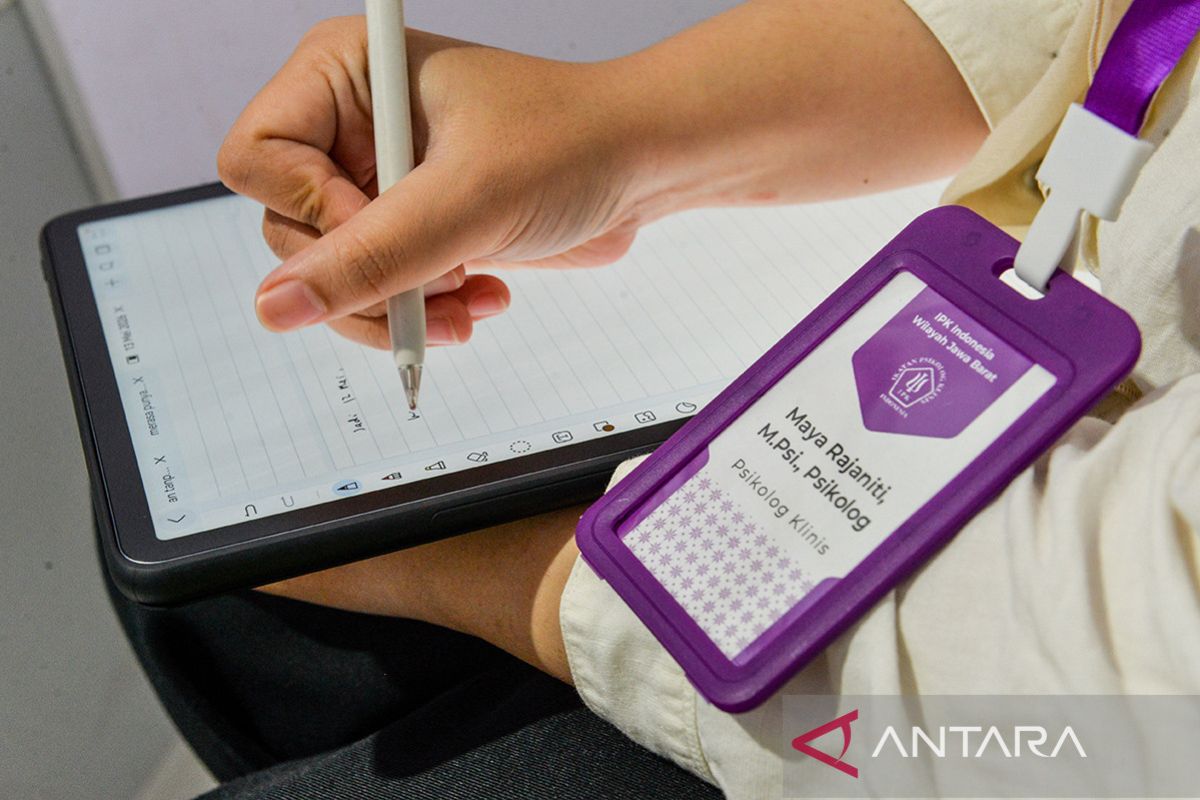
Jakarta (ANTARA) - Artificial intelligence (AI) is now being used for a range of purposes, including seeking advice on how to address mental health problems.
Geoffrey Gold, a clinical psychologist at Therapists of New York, said some patients even use AI to discuss their thoughts between therapy sessions.
“It gives them another outlet to think, ‘Let’s see what ChatGPT would say about this situation, feeling or whatever I’m experiencing’,” he said, as quoted in a Real Simple broadcast on Thursday (5 November).
Adia Gooden, a clinical psychologist based in Chicago, said AI chatbots are available at any time and free of charge, allowing people to seek information or talk about their feelings when they feel anxious.
“AI can be very useful for practising specific strategies that support your mental health,” Gooden said.
For example, people can ask an AI tool to guide them through a five-minute breathing exercise when they feel anxious, or suggest journal prompts to help them practise gratitude.
However, AI tools have limitations. They cannot replicate real human relationships.
“There isn’t a human being on the other side with an emotional life for you to interact with,” Gold said.
AI can simulate empathy or give answers that sound “right”, but only a real therapist can build a human connection and pick up on nuances that are not expressed in words, from body language to tone of voice.
“When they say, ‘Oh, I’m fine’, I can hear it in their tone of voice. I can see it in their facial expression,” Gooden said.
By contrast, an AI tool such as ChatGPT may not be able to distinguish between someone who merely says “I’m fine” and someone who genuinely is fine.
Gooden also said that one benefit of consulting a therapist is that they know how and when to challenge thoughts, beliefs, ideas or behaviours that are unsafe or unhealthy, and do so compassionately.
Psychologists and therapists can help identify the underlying factors behind problems and offer more constructive ways to address and manage them.
It is also important to remember that licensed mental health professionals have ethical and legal obligations to protect their clients’ confidentiality and privacy, whereas AI does not.
Gold recommends setting a time limit of 45 to 50 minutes for each session to prevent discussions from wandering off track.
Users should also focus on strategies rather than emotional support. AI can be useful for learning and practising particular skills, but should not be the main way to process difficult emotions.
Rather than expecting comfort, reassurance or problem-solving, Gooden said AI can be used to help identify patterns of catastrophic thinking or develop a guide to changing negative self-talk.
AI users are also advised to check whether its responses are accurate. AI can provide inaccurate or inappropriate advice, and it is not an all-knowing authority on a user’s mental health.
Responses should be treated with a reasonable degree of scepticism. Users are advised to ask AI to cite its sources and verify the information against reliable sources.
AI may seem like an easy option when people feel overwhelmed, want to express their feelings or simply need another perspective on something troubling them.
However, Gooden stressed that AI cannot replace therapy. Improving one’s wellbeing takes time and effort, not merely a series of well-written answers generated by AI.
Source: jawawa.id (https://jawawa.id/newsitem/how-to-use-ai-safely-for-mental-health-support-1794027075)
Originally published by Antara (Indonesian) (https://www.antaranews.com/berita/5838007/cara-aman-menggunakan-ai-untuk-dukungan-kesehatan-mental), translated from Indonesian