
How to Store Eid al-Adha Sacrificial Meat for Months: Expert Tips
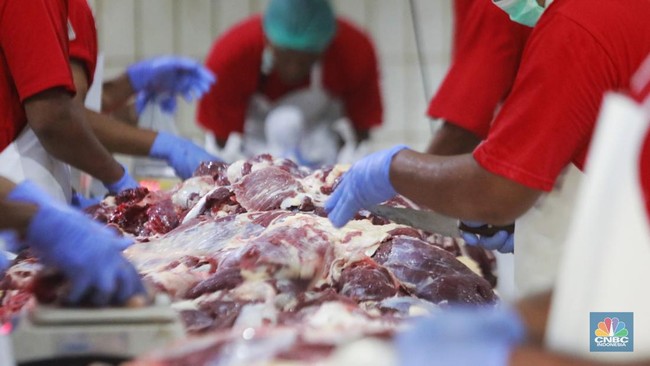
Jakarta, CNBC Indonesia - Eid al-Adha is a time to enjoy various dishes made from meat. Often, meat is immediately cooked, but some is stored as a reserve. However, proper storage of Qurbani meat must be considered. Mhd Aldrian, a nutrition graduate from Andalas University, provides safe storage tips.
According to detikhealth, properly handled Qurbani meat not only maintains quality and freshness but also reduces the risk of bacterial growth causing food poisoning.
A Aldrian outlined eight steps to safely store Qurbani meat to ensure it remains safe and durable. Here’s the explanation, as cited from detikhealth:
- Do not Leave at Room Temperature Too Long
After receiving Qurbani meat, many people leave it on the kitchen table for too long. Some are busy portioning, others delay storage while they shop for spices or wait to cook. However, the longer meat stays at room temperature, the higher the risk of bacteria multiplying. Ideally, Qurbani meat should be handled immediately and not left at room temperature for more than two hours after receipt.
- Separate meat and organs
Distribution methods affect hygiene and safety. Meat and organs should be separated to avoid cross-contamination. Red organs ( like liver) and green organs ( intestines and tripe) should be stored in different containers. Green organs, such as intestines and tripe, have higher contamination risks as they contact the animal’s digestive system directly. Ira Firgorita, head of the Animal Product Safety Subgroup at the Ministry of Agriculture’s Veterinary Public Health Directorate, recommended in a BPOM webinar on 21 May 2026 that green organs be boiled before distribution.
- Only dry with kitchen tissue
many people wash meat immediately upon arrival. However, not all meat needs washing. According to Dr Ira, meat received clean and dry does not need washing before storage. If dirt, grass, animal hair, or organ contents are present, it should be rinsed under running water. After cleaning, meat should be air-dried and then blot dry with kitchen tissue to reduce moisture, which accelerates bacterial growth during storage.
- Wash hands before and after handling meat
hand hygiene is often overlooked when processing Qurbani meat. hands easily transfer bacteria to other foods, utensils, and surfaces. hands should be washed with soap and running water for at least 20 seconds before and after handling raw meat. this simple habit reduces cross-contamination risks, especially when raw meat is handled near cooked food or fresh vegetables. Additionally, cutting boards and knives for raw meat should be separate from those used for cooked food.
- Use clean, food-grade containers
storage containers affect meat quality in the fridge or freezer. meat should be stored in clean, airtight containers to reduce bacterial contamination from other foods. choose food-grade containers designed for direct food contact, as they are less likely to leach harmful chemicals during storage. Airtight containers also prevent meat juices from dripping and contaminating other items in the fridge.
- Portion meat for single meals
BPOM’s Senior Expert on Pharmaceuticals and Food Safety, Retno Anggrina Khalistha Dewi, advised Qurbani meat should be portioned into small servings before freezing. many people store meat as a large block, which requires thawing or cutting when cooking, increasing contamination risk. “When storing, portion it for single meals according to need. Don’t store it as a large block; when you want to cook, you have to thaw or cut it. This actually creates new contamination risks,” she said. Storing in single- meal portions is safer and more convenient.
- Label containers to track storage order
a full freezer often leads to forgetting which meat is older. this can cause earlier-stored meat to remain in the back. each container or plastic should be-labelled with the storage date to apply the FIFO ( first in, first out) principle, ensuring older stock is used first. this maintains meat quality and prevents food from being stored too long unnoticed.
- Monitor storage temperature
storage temperature is crucial to slow bacterial growth. for consumption within one to two days, store in the chiller at around 4°C. for longer storage, a freezer at -18°C is safer and maintains meat quality for several months.