
How to Mitigate Glacier Disasters in Mountainous Regions?
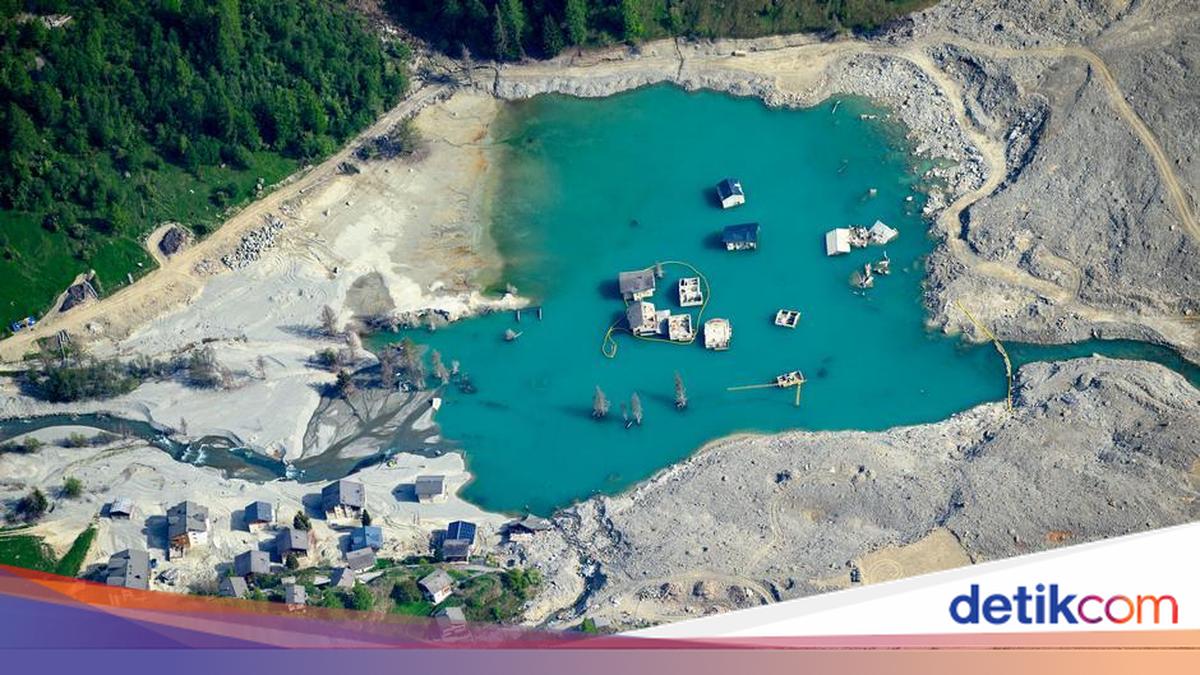
Glaciers in high mountains, formed since the ice ages, are now shrinking and becoming increasingly unstable. The excessive use of fossil fuels is warming the climate and triggering the collapse of Earth’s natural weather cycles.
Temperature instability facilitates the release of large chunks of glaciers in high mountains. Masses of ice and rock can slide into landslides, which momentarily dam valleys before breaking and releasing water with devastating force.
Following the collapse of glaciers that triggered what is known as mountain tsunamis in Nepal and Tibet on 26 August, thousands remain missing and there are fears of fatalities. Unlike the 2025 glacier landslide that destroyed the town of Blatten in Switzerland, where almost the entire population was successfully evacuated, the lack of early warning systems in the Himalayas has left residents and tourists defenseless against flash floods.
Climate change behind glacier collapse
Scientists state that the cause of glacier collapse is part of a complex network of interconnected changes in high mountain landscapes, partially triggered by rising global temperatures.
Levan Tielidze, a researcher in glacial geomorphology at Monash University, Australia, says the Himalayas are not, as often imagined, a “frozen and relatively stable environment,” but rather a “dynamic system where glaciers, snow, permafrost, rocky slopes, rivers, and monsoon processes interact.”
“As the climate warms, these components change simultaneously, meaning hazards can cascade from one process to another,” he told DW. When rocks, ice, and water interact in increasingly unpredictable ways at the world’s highest peaks, the resulting debris flows “can turn into catastrophic floods far downstream.”
Nearly 25 years ago, one glacier collided with another in the Caucasus Mountains, North Ossetia, Russia, in what was recorded at the time as the largest glacier collapse in history. The event triggered an ice and debris landslide that travelled more than 24 kilometres and killed approximately 125 people.
“The Kolka Glacier disaster was one of the early warnings of the increasing frequency and potential severity of such glacier-related hazards,” said Tielidze.
Meanwhile, the UN states that glaciers in the mountains of Nepal have shrunk by one-third in 30 years, adding to their instability.
Some research shows that even if emissions from burning fossil fuels are low enough to prevent the planet from warming more than 2 degrees Celsius above pre-industrial levels, the broader Hindu Kush Himalaya region could lose up to half of its glacier cover compared to 2020 levels by the end of this century.
For Dipesh Chapagain, a senior scientist at the UN University Institute for Environment and Human Security, there is “strong scientific evidence linking greenhouse gas emissions to global climate change, which in turn drives glacier shrinkage, permafrost melting, and ice landslides.”
“These changes increase both the frequency and intensity of climate-related disasters in mountain regions,” he added.
Chapagain has studied hundreds of Glacial Lake Outburst Floods (GLOF) in the Hindu Kush Himalaya region, which occur when meltwater from glaciers and snow forms lakes that eventually burst, sending extreme flash floods downstream. The number of these occurrences per decade has increased fivefold since the 1950s.
The glacier collapses in Nepal and Tibet share similarities with GLOF events. However, what occurred was significantly different because it “entirely bypassed the intermediate lake formation stage and directly triggered flash floods,” said Chapagain.
The landslide also generated seismic activity equivalent to approximately Magnitude 5.2 before the momentum of the water-rich debris flow entered the river system, travelling about 100 kilometres, noted Tielidze.
“These hazards are becoming increasingly difficult to classify,” he said, referring to the way mountain rocks, ice, and water interact in increasingly unpredictable ways due to climate change.
Can we adapt to the impacts of more extreme glacier collapses?
The 2025 glacier collapse in the Swiss Alps that destroyed the entire village of Blatten killed only one person. Detailed monitoring of glacier deformation and the surrounding terrain allowed authorities to evacuate residents before the catastrophic collapse occurred.
However, this is much harder to achieve in the Hindu Kush Himalaya, which contains more than 63,700 glaciers, said Tielidze.
“In the Himalayas, we need to go beyond merely monitoring individual dangerous lakes,” he said. “We need an integrated system that combines satellite observation, seismic detection, glacier and slope monitoring, river gauges, weather forecasting, and automated warnings.”
For rapidly developing events like the Nepal disaster, detecting seismic movement could provide downstream communities with “valuable minutes of warning,” he added.
Chapagain stated that the transboundary nature of glacial hazards in the Himalayas makes “transboundary and regional cooperation in disaster preparedness” just as urgent as early warning systems.
However, the technology and adaptive capacity currently available may not be sufficient to “respond to disasters on the scale we have just witnessed in the Bhotekoshi River, Nepal.”
“What we are learning from this is that we can adapt to climate change, but not to climate apocalypse,” said Shreya K.C., coordinator of the Kathmandu-based advocacy working group from the Loss and Damage Youth Coalition, in a statement.
A rapid reduction in emissions driving the warming of the planet, which fuels glacier melting and instability, must accompany every step of adaptation.
“We cannot engineer our way out of infinite warming,” said Tielidze.