
How to Identify Locally Made Products in Shopping Malls
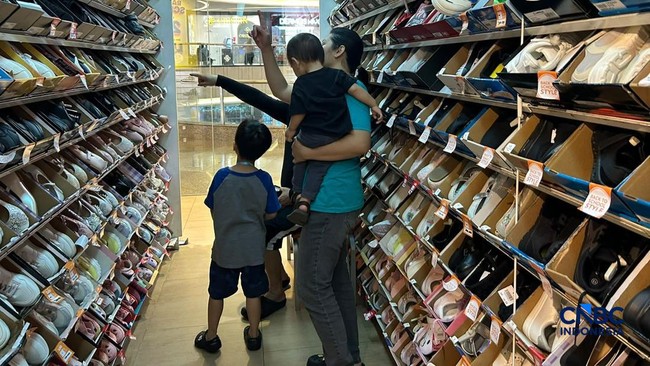
Jakarta, CNBC Indonesia — The Ministry of Industry (Kemenperin) and the Indonesian Association of Shopping Centre Retailers and Tenants (Hippindo) are supporting efforts to improve the competitiveness of, and widen market access for, products made by local small and medium-sized industries (IKM) and micro, small and medium-sized enterprises (MSMEs) in shopping centres and modern retail chains.
The two organisations have also pledged to strengthen their collaboration so Indonesian IKM and MSME products can compete more effectively on the global stage.
Industry Minister Muhammad Sarmuji said local IKM products had considerable potential and were of high quality, from their packaging and taste to their distinctive features. However, one of the main challenges facing small and medium-sized businesses is the process of getting their products accepted and securing space in modern retail outlets.
“We hope Hippindo can help small and medium-sized industries place their products in modern retail chains,” Sarmuji said at the launch of Heroes’ Day Shopping for Indonesian-Made Products on Tuesday (10 November 2026).
Sarmuji added that domestic industrial capacity utilisation currently stood at around 66 per cent. The government aims to lift it to 80 per cent, with retail marketing of IKM products expected to help drive the increase.
He said the trade and retail sectors could provide a tangible stimulus for domestic industry, boost the national economy and create new jobs.
“Of course, the industrial sector’s performance must also be reflected in more tangible sectors downstream, such as trade,” Sarmuji said.
Hippindo chairman Budihardjo Iduansjah, speaking at the same event, reaffirmed the modern retail sector’s commitment to supporting the digitalisation of IKM products and their integration into the modern market ecosystem.
One practical step is the provision of dedicated product barcodes for local MSMEs.
He said modern retailers had so far prepared about 4,100 dedicated barcodes for domestic MSME products. The number is expected to rise, with a target of 10,000.
“Hippindo is committed to reaching perhaps 10,000 in total. We have 4,100 as of 10 November, and the target is 10,000. Minister, we can prepare 10,000 barcode numbers from the retail sector for this Heroes’ Day initiative if needed,” Budihardjo said.
In addition to providing barcodes, Hippindo continues to promote the ‘Buy Indonesian-Made’ and ‘Shop in Indonesia’ campaigns.
The campaigns cover not only in-person sales at shopping centres but also online marketplace channels, to broaden the reach of local products.
Source: jawawa.id (https://jawawa.id/newsitem/how-to-identify-locally-made-products-in-shopping-malls-1794318627)
Originally published by CNBC Indonesia (https://www.cnbcindonesia.com/news/20261110190809-4-784038/ternyata-ini-cara-membedakan-produk-buatan-dalam-negeri-di-mal), translated from Indonesian