
How to Identify Clean and Safe Refillable Water Depots
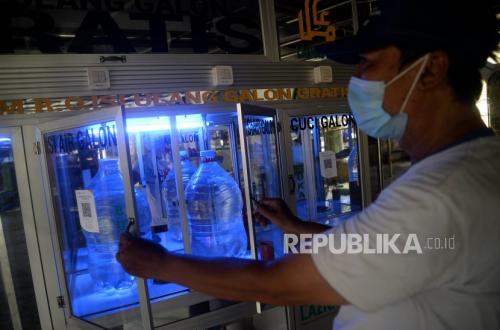
Refillable water depots have become a popular choice for Indonesians to meet their consumption needs. Besides being easy to find, refillable water offers a more economical price compared to various bottled water options.
The Indonesian Central Statistics Agency (BPS), in its 2024 Housing and Environmental Health Indicators, noted that 34.49 per cent of households in Indonesia use refillable water as their primary drinking source. This figure is the highest among all other drinking water sources.
The question remains: how safe is refillable drinking water? Professor Etty Riani, an expert in pollution and ecotoxicology at IPB University, stated that the level of safety depends heavily on the quality of the water source, the processing method, the condition of the facilities, the cleanliness of the operators, and the handling after refilling.
“The risks can vary from low to high. The magnitude of the risk depends on the quality of the water source, the effectiveness of its processing, the condition of the facilities, the hygiene of the operators, and how it is handled after refilling,” Professor Etty said in a written statement on Monday (14/09/2026).
According to her, the quality of the raw water is one of the main factors that must be considered. Water sources contaminated by domestic waste, septic tanks, agricultural activities, industrial waste, and mining can carry various types of pollutants that may not all be eliminated through filtration technology.
“We must ensure that the water source is not contaminated by domestic waste and septic tanks, agricultural activities such as fertilisers and pesticides, industrial waste, mining, and so on. Filtration technology is not necessarily able to remove all types of these pollutants due to varying capabilities and limitations,” she said.
Professor Etty explained that contaminants in refillable water can be microbiological, such as bacteria, viruses, and protozoa, or chemical, such as arsenic, lead, cadmium, chromium, nitrate, nitrite, iron, manganese, aluminium, pesticides, and hydrocarbons. Even water that meets all requirements can become re-contaminated after processing; hoses, taps, tanks, filters, gallons, and the hands of the operators can all become sources of contamination if cleanliness is not maintained.