
How to Find Out If You're Eligible for Social Assistance? Here's How to Check and Register!
Social assistance (bansos) from the government is a beneficial programme for its recipients, particularly those living below the welfare line. The provision of bansos helps meet daily primary needs.
Until now, some members of the public are still confused about how to determine whether they are included as recipients of bansos or not. The confusion of information in the online world often obscures certainty. Therefore, it is no wonder that the public wonders about how to find out.
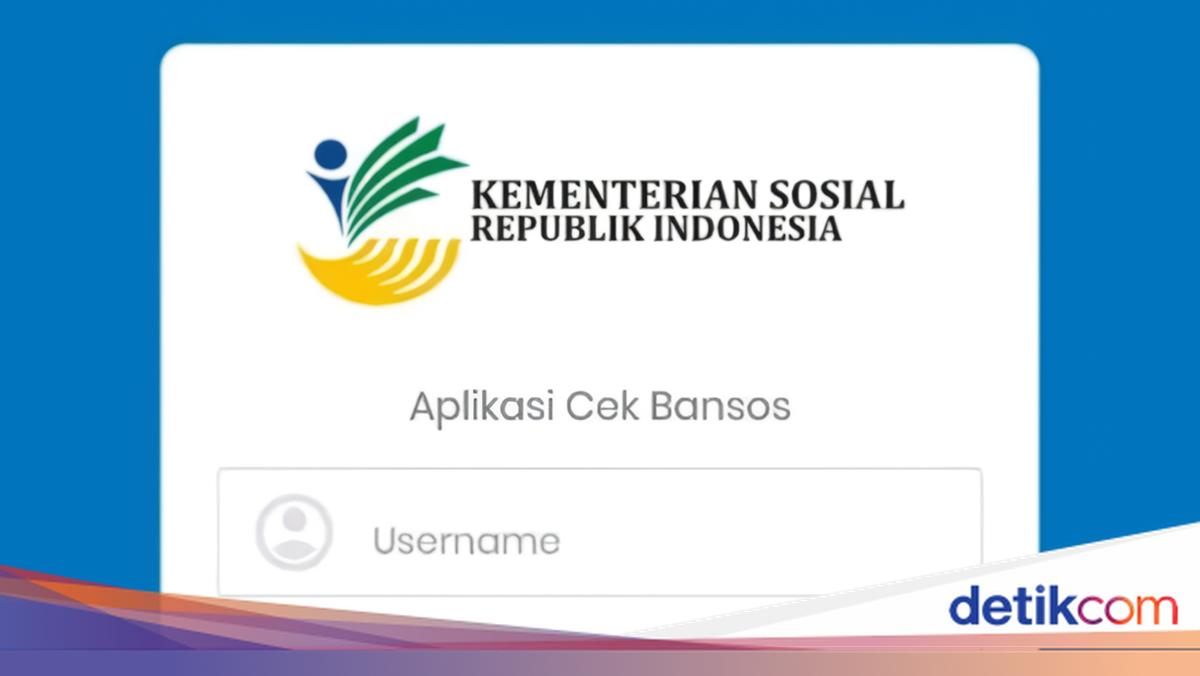
If previously the public had to visit the village or sub-district office to check, now everything can be done more practically via mobile phone (HP). This is because the government has provided an application that makes it easier for the public to check, register, and monitor the status of bansos receipt independently.
So how do you do it? To find out the answer, read the article and explanation compiled by detikJogja from the official page of the Ministry of Social Affairs (Kemensos) of the Republic of Indonesia as follows.
How to Find Out If You’re Eligible for Bansos or Not
For those who want to confirm whether they are registered as bansos recipients, both for PKH and BPNT/Sembako Programme, they can check via the Cek Bansos service through the app or website. Here are the complete steps:
Through the Cek Bansos App
Download the Cek Bansos App via Play Store or App Store on your HP.
Log in if you already have an account.
If not, register an account by preparing data such as ID card, NIK, and family card.
If registration is successful, log in to the app using the previously created account.
Go to the “Cek Bansos” menu.
Fill in regional data such as province, regency/city, district, and sub-district/village, as well as full name according to the ID card and verification answer.
Click “Search Data” to see the results.
If registered, the system will display complete information such as recipient’s name, age, type of assistance, disbursement status, and disbursement period.
Conversely, if the entered name does not appear, it means the name’s owner is not registered as a beneficiary. This can happen because bansos has specific criteria that are not met, or the desil value does not match the recipient criteria.
Through the Official Cek Bansos Website
Visit the official Cek Bansos Kemensos page at https://cekbansos.kemensos.go.id
Enter the 16-digit Population Registration Number (NIK).
Ensure the NIK matches the one on the ID card.
Type the code letters or captcha displayed in the box, consisting of a combination of letters and numbers.
If the code letters are unclear, click refresh.
Click the “SEARCH DATA” button.
The system will display whether you are registered as a recipient or not.
If registered, details of the bansos receipt status will appear.
However, if no details appear, it means you are not registered as a beneficiary because the welfare desil value does not meet the criteria.
In bansos applications, desil is an important reference that determines recipient eligibility. Therefore, ensuring that the recorded data matches the actual conditions is an important step in applying for bansos.
What is Desil?
Quoted from the National Social and Economic Single Data (DTSEN) page, desil is the grouping of family welfare levels measured based on various socio-economic variables, such as individual conditions (employment and education), living conditions (house quality and electricity capacity), and asset ownership.
Desil is dynamic so it can be updated if the existing data does not match the actual conditions. Updates can be done through the village or sub-district government, social services, or through the Cek Bansos app by submitting data that matches the real conditions. Subsequently, the desil will be recalculated periodically by BPS.
Desil Order 1-10
Desil has been officially set through the Minister of Social Affairs RI Decree Number 79/HUK/2025 on the Determination of Family Welfare Ranking as the basis for distributing social assistance and social welfare programmes under the Ministry of Social Affairs.
Referring to the publication titled Coordination Between Ministries/Agencies in Facing Climate Shocks: Implementation of Social Security, Social Assistance, Public Works, and Other Labour Market Measures published by the Coordinating Ministry for Economic Affairs RI, here is the definition of desils 1 to 10:
Desil 1: households in the lowest 10% group (very poor).
Desil 2: households in the 10-20% lowest group (poor).
Desil 3: households in the 20-30% lowest group (nearly poor).
Desil 4: households in the 30-40% lowest group (vulnerable poor).
Desil 5-6: households in the 40-60% lowest group.
Desil 7-10: households in the highest 30% group.
List of Desils Eligible for Bansos
Quoted from the Krandengan village page, the desil status that can be checked will show the type of assistance that can potentially be received. Here is the assistance that bansos recipients can obtain according to their respective desil groups. Here is the list:
Desil 1-4: Family Hope Programme (PKH)
Desil 1-4: Sembako Programme/Non-Cash Food Assistance (BPNT)
Desil 1-5: Health Insurance Premium Assistance (PBI-JK) (or through assessment)
Desil 1-5: Social Rehabilitation Assistance (ATENSI) (or through assessment)
How to Check Desil on Cek Bansos Kemensos
To find out the welfare desil status, checking can be done online, so the displayed data can be directly used for various purposes, especially social assistance. Here are the complete steps:
- Visit the link https://cekbansos.kemensos.go.id