
How to Check Your Welfare Decile for Social Assistance Online
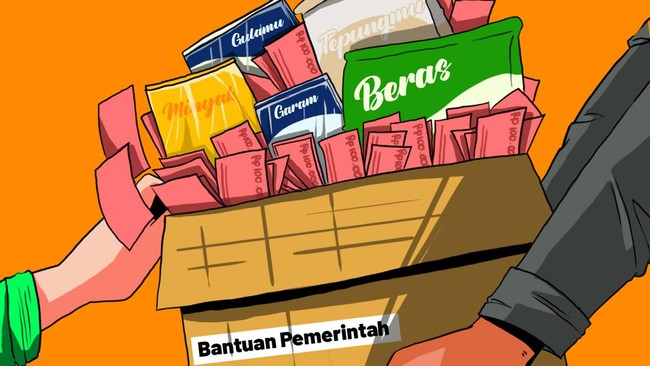
The Ministry of Social Affairs (Kemensos) is making it easier for the public to check their family welfare ranking (desil) and social assistance (bansos) status starting in 2026. Citizens can now independently verify their bansos status and desil.
Using only the Population Identification Number (NIK) listed on their Identity Card (KTP), people can find out their desil and whether they fall into Desil 1-4, the group eligible to receive the Family Hope Programme (PKH) and Non-Cash Food Assistance (BPNT).
Desil is a family welfare ranking group in Indonesia found in the National Single Social and Economic Data (DTSEN). DTSEN is a single socio-economic data system used for targeting social assistance recipients. It is the result of merging three poverty handling data sources: the Integrated Social Welfare Data (DTKS), the Socio-Economic Registration (Regsosek), and the Extreme Poverty Eradication Acceleration Targeting (P3KE), which are then matched with population data by the Central Statistics Agency (BPS).
A community’s desil in DTSEN is dynamic and periodically updated by BPS through various sources, including ground checks by the Ministry of Social Affairs, updates by local governments, and other sources. The Ministry uses the latest desil to determine targets eligible for social assistance based on proposals from local governments and the public.
Here are the easy steps to check your desil and bansos status:
Via the Official Website
Visit the Ministry of Social Affairs’ Cek Bansos site.
Fill in your complete regional data (Province, Regency/City, District, and Village/Sub-district).
Enter your full name as it appears on your e-KTP.
Type the captcha code (unique letters) shown in the box.
Click the ‘Cari Data’ (Search Data) button. The system will display your name, desil group (welfare category), and bansos recipient status.
Via the Mobile Application
Download the Cek Bansos application from the Google Play Store or Apple App Store.
Open the application and select the ‘Cek Bansos’ menu.
Enter your Population Identification Number (NIK) and domicile data.
Click ‘Cari’ (Search) to view your desil status and bansos eligibility directly.
The Ministry of Social Affairs stresses that grouping desil based on expenditure is incorrect. Desil is a family welfare grouping measured by socio-economic variables including individual information (employment, education), housing conditions (house condition, electricity capacity), and asset ownership.
There are ten desil groups, each containing 10% of families in Indonesia. Desil 1 represents families with the lowest 10% welfare level, and so on up to Desil 10, which represents families with the highest 10% welfare level.
Desil Details:
Desil 1 (Very Poor): This group has the lowest economic conditions. They lack stable employment, have uncertain income, struggle to meet basic needs, and are the top priority for all social assistance programmes.
Desil 2 (Poor): People in this category have low incomes and are highly vulnerable to economic changes. For example, they are easily affected by price increases and lack savings or economic reserves.
Desil 3 (Near Poor): This group is not in extreme poverty but is at risk of falling into it. Their risk increases when facing layoffs, staple food price hikes, and other economic disruptions.
Desil 4 (Vulnerable Poor): Their economic condition is relatively stable but vulnerable to disasters, serious illness, or sudden income drops. They are still considered eligible for social assistance under certain conditions.
Desil 5 (Just Getting By): This group is at the borderline of economic safety but not yet fully prosperous. Characteristics include having a steady job and sufficient income, but finances are tight. They still have the opportunity to receive certain types of assistance.
Desil 6-10 (Middle to Upper): This group is considered sufficiently prosperous. Their characteristics include stable income and being relatively safe from the risk of poverty. They are not prioritised for regular social assistance.