
How to Check Your Decile for PKH-BPNT Social Assistance Recipients in 2026 Using Your ID Card Number: It's Easy and Practical!
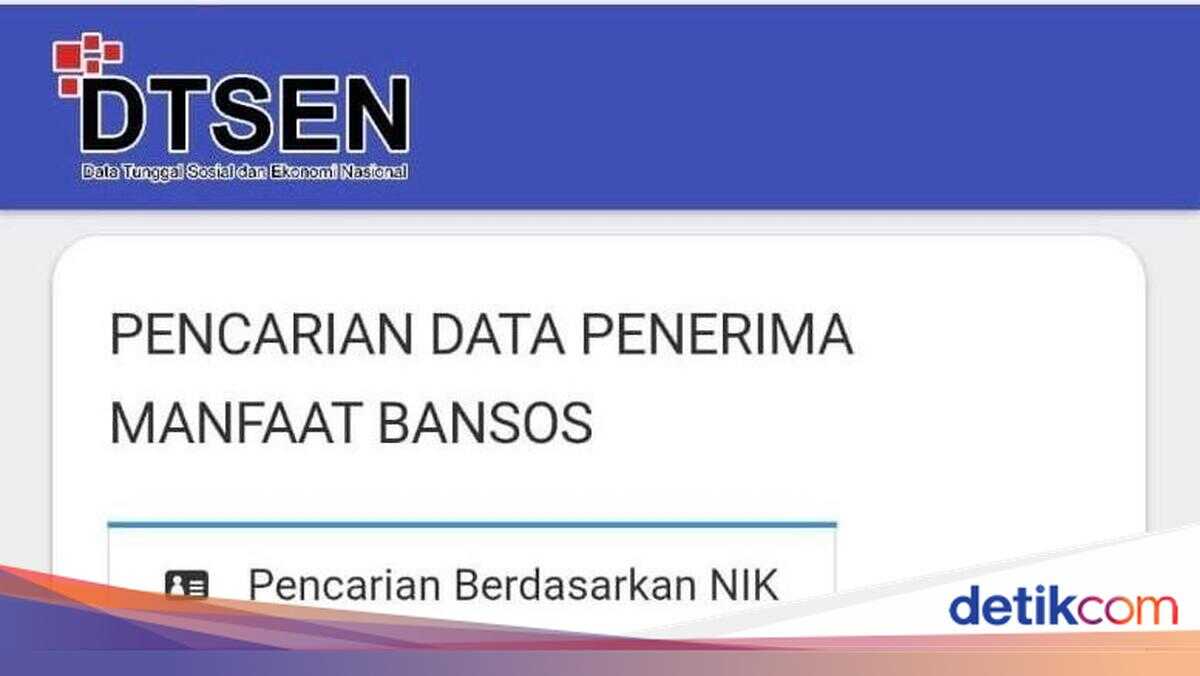
The government continues to update the social assistance distribution system to ensure it reaches those who truly need it. One of the key indicators for determining eligibility is the welfare ranking, which can be checked by following the steps to check the decile of PKH-BPNT social assistance recipients in 2026. Understanding a family’s economic position through this figure is crucial to ensure the opportunity to receive regular assistance from the government.
Now, people no longer need to be confused about visiting the relevant office just to ask about their welfare status. The process of checking the decile ranking can be done independently and quickly through their respective mobile devices. By simply preparing an ID card number, all information related to priority assistance will be presented transparently in the palm of their hand.
Want to know how a family’s economic position is in the national data system in 2026? Make sure to follow the step-by-step guide to verify data through the official channel. Let’s look at the explanation below, friends!
The main points:
The system divides society into 10 levels (1-10), where Decile 1 is the lowest economic group and Decile 10 is the highest.
Families in Deciles 1 to 4 are the primary recipients of PKH and BPNT, while Decile 5 usually receives PBI-JK assistance.
The decile status can be monitored through the official cekbansos.kemensos.go.id website or via the Profile menu in the Cek Bansos Kemensos application.
How to Check the Decile of PKH-BPNT Social Assistance Recipients in 2026 Using Your ID Card Number
For those who want to check their decile status, there is now an easy way to do it independently using only an ID card number. Here is a complete guide on how to check the decile and social assistance status.
A. Cek Bansos Kemensos Website
This method is the most practical and fast because it does not require installing additional applications. However, it should be noted that the data that appears on this website is usually censored data for information security.
Open the official website at https://cekbansos.kemensos.go.id/ via a browser on your mobile phone or computer.
Enter your ID card number (NIK).
Type in the unique code that appears in the verification box on the screen.
Click the search or ‘Search Data’ button.
The system will display information such as the recipient’s name, decile ranking, and the types of assistance received, such as PKH or BPNT.
B. Cek Bansos Application
If you want to see more detailed and accurate data for yourself or family members in one Family Card (KK), it is recommended to use the Cek Bansos application installed on your smartphone. Here are the steps:
Download and Install the Application
Search for the application called ‘Cek Bansos Kemensos’ on the Play Store (for Android users) or App Store (for iPhone users), then download and install it on your phone.
Create a New Account
New users must register first:
Open the application and select the ‘Register’ menu.
Fill in the data fields completely, starting from NIK, KK number, full name, email address, to mobile number.
Prepare your ID card, then take a photo of the ID card and a selfie while holding the ID card clearly so that the system can verify your identity.
Make sure all the data is correct, then press ‘Create Account’.
Complete the Verification Process
Open the incoming message in the registered email, then click the verification link from Kemensos to activate the account. After activation, please log in again to the application using the username and password that you created.
Go to the Family Profile Section
After successfully logging in to the main page, select the ‘Profile’ menu. In this section, the system will display complete family data recorded in the DTKS (Integrated Social Welfare Data), including all household members.
View the Welfare Decile Status
Pay attention to the column that says ‘Family Welfare Ranking’. There will be a decile status, ranging from Decile 1 (the lowest economic group) to Decile 10 (the highest economic group). This decile number is the main indicator of whether your family is included in the priority recipients of PKH, BPNT, or other assistance programs.
Understanding Deciles and Their Function in Social Assistance Distribution
There may be questions about the actual meaning of the decile number displayed on the screen. Understanding this indicator is crucial because this number determines whether a family is eligible to be included in the list of government assistance recipients. Here is a complete explanation of the mechanism and function of deciles in the distribution of social assistance to make it easier to understand.
Quoted from the official Cek Bansos Kemensos website, all the data presented comes from the National Socio-Economic Data (DTSEN). In this system, people are grouped into levels of welfare called deciles.
The determination of the decile number is not done arbitrarily, but measured based on various socio-economic variables that include individual information such as education level and occupation, housing conditions ranging from building area to electricity capacity, and household asset ownership.
Technically, there are 10 levels of deciles, each representing 10 percent of the family group in Indonesia. Decile 1 is the family group with the lowest 10 percent welfare level (in dire need). Meanwhile, decile 10 is the family with the highest 10 percent welfare level.
The government uses this division as a compass to determine the target of assistance.