
How TikTok Has Made Gen Z Fall in Love with Fish
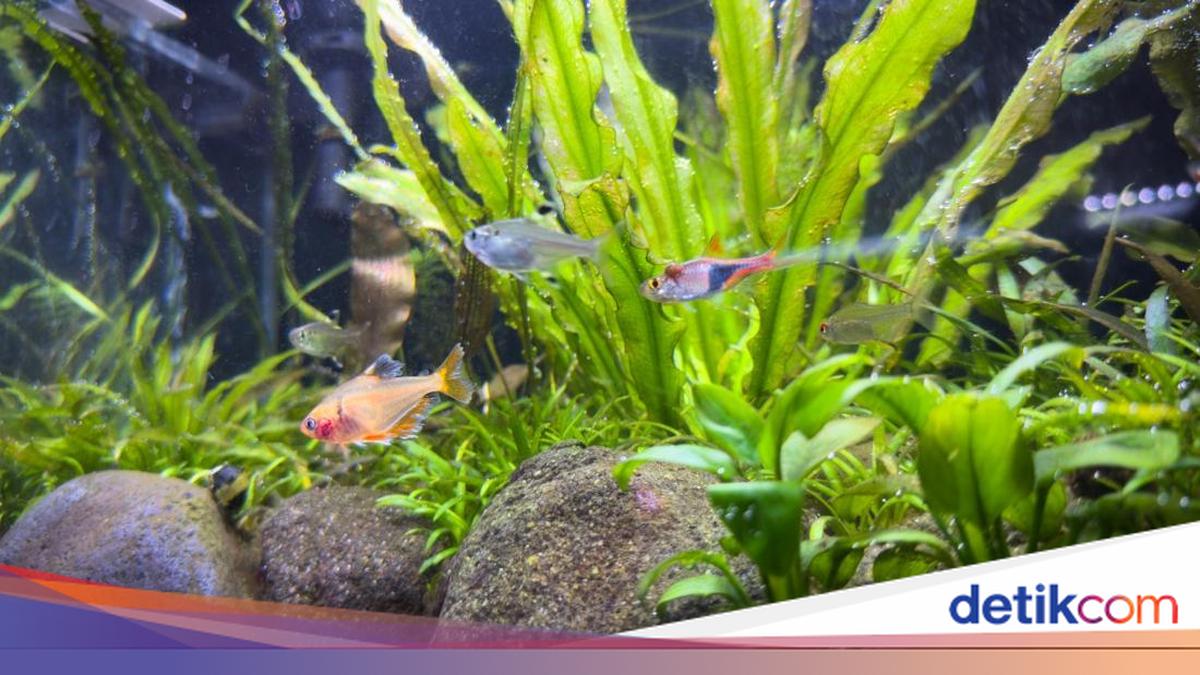
“Bro, are you selling the fish?”
That question has appeared repeatedly in the comments on Muhammad Satria Daffa’s TikTok account. The 22-year-old from Jakarta initially posted content about ornamental fish and aquascaping on his @sweetzdemon account. But viewers’ curiosity about the fish he featured gradually opened up a business opportunity he had never planned to pursue.
Daffa’s interest in ornamental fish began in childhood, influenced by his parents, who also kept fish. In 2017, while he was still at junior high school, he began trying to create his own aquascape. The hobby involves turning an aquarium into an underwater landscape using a combination of plants, rocks, wood and fish. As well as arranging the scenery, owners need to maintain water conditions so its inhabitants can thrive.
Daffa learned how to arrange and care for aquariums through YouTube tutorials. Last year, he began making TikTok content about fish and aquascaping. At first, he had no intention of turning it into a source of income. But viewers began asking whether they could buy the fish he featured.
“Because so many people asked, I became interested in selling fish. At first it was just for fun; I wasn’t particularly serious about it. But it wasn’t just one or two people asking. Whenever I went live on TikTok, lots of people asked, then became interested and bought some. A lot of people bought through my TikTok, so I decided to take ornamental fish sales on the platform seriously,” Daffa told detikX.
The @sweetzdemon account now has 36,900 followers and 4.5 million likes. Daffa does not always offer fish for sale directly in his videos. Most of his content features interesting facts and memes about fish, while his live streams are where he sells them and answers viewers’ questions.
“When I’m live on TikTok, I’m completely different. During a live stream, I’m not focusing on my face; I’m selling and showing my fish and aquascapes. So people are very welcome to ask questions about fish—it doesn’t have to be about buying,” he said.
In some live streams, the audience has risen from its usual 100–200 viewers to as many as 1,200. One fish that has attracted attention is the Serpae Tetra Slayer, which Daffa describes as aggressive and prone to fighting with its own kind. He also keeps Killifish Guentheri, which he considers beautiful but says has a relatively short lifespan of about nine months.
Daffa does not feel he needs the most expensive aquarium or rarest fish to follow social media trends. Instead, he wants to introduce viewers to species they may not know. He shares information about each fish’s character and care requirements.
What began as a hobby now earns Daffa money through fish sales and content creation. He estimates that the two bring in about Rp6 million a month, although he did not specify how much of that is net profit. He reinvests the sales revenue in additional stock, while endorsement offers have also helped him develop the business.
That choice has made Daffa’s path after university different from those of his contemporaries. The Japanese Literature graduate has not applied for formal jobs, having received endorsement offers and earned income from ornamental fish. Still, he had doubts when he saw his friends starting work.
“I did have doubts for a while. When I graduated, lots of my friends had already found jobs, while I hadn’t. Naturally, I felt pressure from people around me and my parents, who would say, ‘When are you going to look for a job? Stop playing with fish all the time,’” Daffa said, mimicking his parents.
His doubts gradually eased after his family saw the results of his business. Even so, Daffa is now also interested in finding a formal job to build up capital. He believes the ornamental-fish business he started through TikTok can continue to grow while he considers his next steps.
The business also carries risks. Daffa once lost a number of fish in transit because he did not yet know how to pack and prepare them properly.
“At first, the fish did survive the journey, because I used oxygen and the fish were hardy. But after a few shipments, many failed and the fish died, because I didn’t know the proper way to send them,” he said.
After those setbacks, Daffa bought his own oxygen cylinder and began setting aside aquariums where the fish could fast before being sent. He also has to keep producing content consistently. His target of uploading a video every day sometimes leaves him short of ideas and burnt out, particularly when his topics start to become repetitive.
Daffa believes social media is helping to spark young people’s interest in keeping fish. But an attraction based only on the beautiful appearance of fish and aquariums can lead beginners to buy too quickly without learning how to care for them. He says prospective owners should first find out what the fish need to avoid ending up with dead fish.
From TikTok to a Small Aquarium
Unlike Daffa, who has turned ornamental fish into a business, 22-year-old Ridho Agam Saputra keeps aquascaping as a hobby. The mechanical engineering student from Bandung first discovered ornamental fish through TikTok, then grew more interested after seeing a friend make an aquarium.
Ridho started spontaneously with an aquarium measuring 30 × 30 × 30 centimetres. It housed betta fish and neon tetras, alongside sand, rocks and a filter. His initial outlay was about Rp100,000–Rp200,000, which he considers affordable for a hobby.
His regular costs are also relatively low. A Rp15,000 packet of fish food that he bought at the beginning lasted several months, while the aquarium equipment uses little electricity. Ridho does not feel he needs to spend much to enjoy the hobby.
But affordability does not mean the fish are free from risk. Ridho once lost three fish because the aquarium was poorly maintained and the water was dirty. He estimates the loss at around Rp20,000–Rp30,000, but chose to carry on with the hobby.
“I think the worst was when three fish died because I hadn’t looked after them properly. The tank was dirty, and maybe that was why they died,” Ridho said.
The experience taught him how important it is to maintain water quality. He advises beginners to start with a simple set-up of sand and rocks, provide suitable food and change the water regularly. Based on his experience of keeping them for several months, he also recommends neon tetras as a good option.
For Ridho, an aquarium’s value lies in more than its fish or attractive arrangement. He enjoys watching the fish swim, especially when he has nothing else to do.
“It can be a way to escape stress, because it’s calming to watch. Looking at fish can help you get away from stress,” he said.
Source: jawawa.id (https://jawawa.id/newsitem/how-tiktok-has-made-gen-z-fall-in-love-with-fish-1792317055)
Originally published by detikcom (https://news.detik.com/intermeso/d-8712637/dari-tiktok-gen-z-jatuh-hati-pada-ikan), translated from Indonesian