
How the State Views the Platform Economy
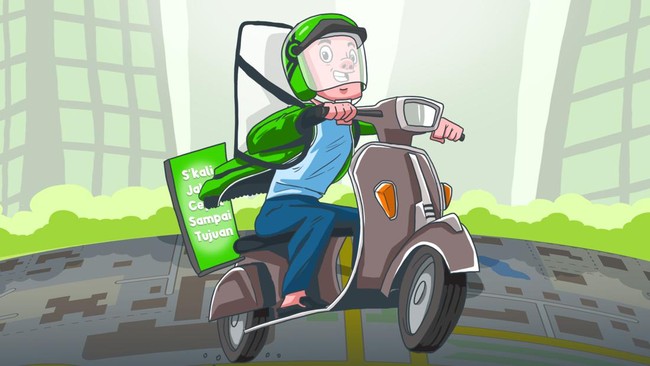
The public is accustomed to naming things to make them easier to understand. Naming becomes more important because a category carries consequences. When someone is called a worker, an entrepreneur, or an MSME actor, a set of rights, obligations, protections, and responsibilities attaches to them. The problem is that economic life does not always move according to the categories that are available. The platform economy demonstrates this problem quite clearly.
For years, the debate about app-based drivers has almost always returned to the same question: worker or partner? The question is important. However, perhaps we have been too quick to make it the first question. Because before determining a category, the state needs to understand first the economic reality it is regulating.
Drivers can determine when they are active, use their own vehicles and bear their operational costs. At the same time, access to orders, incentives, ratings, and account continuity is heavily influenced by the platform’s system. They have room to make economic decisions, but do not fully control the environment in which those decisions are made.
At this point the issue becomes interesting. The economic reality does not fully fit with any single available category. When old categories repeatedly have to be stretched and adjusted to explain new realities, we need to examine not only the rules, but also the way we categorise.
The platform economy reveals what can be called a category crisis: economic reality develops faster than the institutional categories the state uses to read it.
Categories such as worker, entrepreneur, MSME, and business entity are not merely administrative terms. Each carries consequences for rights, obligations, protection, risk, and responsibility. Therefore, the issue is not choosing which category is easiest to use, but ensuring that the chosen category is able to capture the actual character of the economy.
Digital platforms do not merely connect people who need services with people who provide them. They provide transaction infrastructure, payments, matching of demand and supply, reputation, information, security, and various technology-based governance mechanisms.
On one side there are individuals who provide services with their own resources and operational risks. On the other side there are consumers who need services. Between the two there is a platform that provides access to the market and the digital infrastructure that enables transactions to take place.
This character is important because drivers do not only carry out activities to fulfil demand that comes through the platform. They use their own assets, bear part of the operational costs, determine when and how long they are active, and in many cases have room to carry out other economic activities.
This character does not automatically determine their legal status. However, it shows that drivers have a dimension as economic actors that cannot be adequately read only from the perspective of an employment relationship.
However, that autonomy does not mean that drivers have full control over the market in which they operate. The platform determines or influences how demand is matched, reputation is built, incentives are given, and how access to accounts is maintained. Thus, drivers have their own assets and decision-making space, but operate within an economic environment whose governance largely rests with the platform.
This kind of configuration gives rise to a form of economic relationship that is more complex than conventional transaction patterns. Therefore, before determining how the state should regulate it, we need to understand first the character of the economic relationship that actually occurs.
The experience of other countries shows that this issue indeed has no single universal answer. The United States, particularly California, through Proposition 22 maintains platform drivers as independent contractors, but still provides a number of protections, including those related to income and workplace accidents.
Conversely, the European Union through Directive 2024/2831 opens a presumption of an employment relationship when there are facts showing direction and control by the platform. This difference shows that the issue is not simply choosing worker or independent partner status, but designing protections and responsibilities that fit the character of the working relationship, the legal system, and the economic conditions of each country.
The difference shows that the debate is not between ‘protection’ and ‘no protection’. Even an approach that maintains independent status still requires protection mechanisms. Indonesia does not have to copy either one. What needs to be learned is how to choose a design that fits our own goals and reality.
The debate has become lengthy because each party actually comes with a different question. Labour activists speak about protection. Platform companies speak about efficiency and the sustainability of innovation. Development planners look at productivity and economic transformation. The ministry responsible for MSMEs sees opportunities for empowering business actors. Meanwhile, the legal perspective seeks to determine the classification of the relationship that occurs.
All of these questions are legitimate. The problem arises when one way of seeing is considered sufficient to explain the whole issue. The mistake occurs when a single category is forced to answer all of those questions.
From a public administration perspective, policy choices should begin with the problem to be solved, not from an answer that has already been decided.