
How the Plan to Import Used Japanese Commuter Trains Began and Was Eventually Scrapped
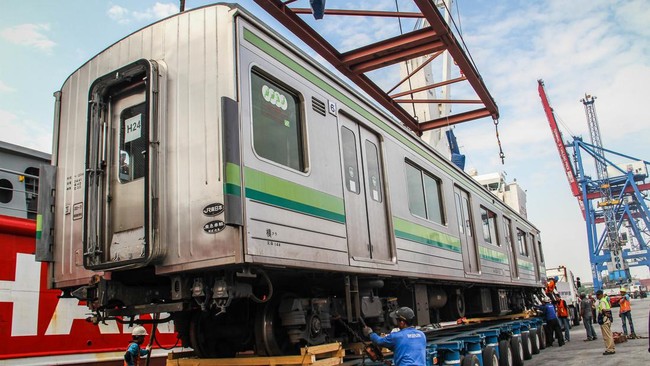
Jakarta — A proposal by state railway operator PT Kereta Api Indonesia (Persero), or KAI, to import used electric multiple-unit trains (KRL) from Japan has ultimately been scrapped. After the proposal was submitted and reviewed by the Ministry of Transport, KAI decided to prioritise the procurement of new trains to support domestic industry.
The import proposal first emerged as the number of Commuter Line passengers in Greater Jakarta grew, while some of the trains in service were ageing. Before the proposal gained traction, however, domestically produced KRL trains also underwent a comprehensive inspection.
INKA-built trains undergo maintenance
In early September 2026, a new KRL train built by state-owned PT Industri Kereta Api (Persero), or INKA—the EA-207 CLI-225 iE305 series—was temporarily taken out of service. Seven train sets underwent a comprehensive general check-up with KAI Commuter and INKA from 7 to 30 September 2026.
KAI Commuter (KCI) vice-president for corporate secretary Karina Amanda said the inspection was intended to check the condition of the INKA-built trains.
“KCI and INKA are carrying out a general check-up of the iE305 series, manufactured by INKA, starting from yesterday, 7 September,” Karina told CNBC Indonesia when contacted on Tuesday, 8 September 2026.
The CLI-225 is among the new trains ordered by KCI from INKA and manufactured in Madiun, East Java. INKA also drew on Japanese technology from J-TREC and engaged Toyo Denki to supply several key components.
Passenger numbers surge, prompting KAI to propose used-train imports
As demand for trains continued to rise, KAI began proposing imports of used Japanese KRL trains as a temporary solution. KAI president director Bobby Rasyidin said passenger numbers in the first half of 2026 were up 11.5% on the same period a year earlier. This was far above the initial forecast of just 3% to 4%.
“This is an anomaly when we compare 2025 with 2026: it is 11.5%. In the first half compared with the first half, it is 11.5%. Average daily passenger numbers, which used to be below one million, are now at 1.1 million,” Bobby told a hearing with the House of Representatives’ Commission VI on Wednesday, 23 September 2026.
At the same time, KAI reported that around 92 train sets were 40 years old and would need to be phased out. The situation was expected to become more serious in 2029, when a number of trains would reach 45 years of age and face parts shortages and material deterioration.
“The peak is in 2029, when these train sets are 45 years old. At that age, we are no longer in a good position: first, spare parts are no longer available; second, the metal is beginning to fatigue,” he said.
KAI therefore viewed imports of used trains as a transitional measure while domestic manufacturers increased their production capacity. Procuring second-hand trains was considered faster than buying new ones, and the trains were intended to be used for around 10 years.
“If we import new trains, domestic train production will be disrupted. The used ones would only be for the transition,” he said.
Proposal submitted to the Ministry of Transport
After setting out the proposal, KAI submitted it to the Ministry of Transport. The government did not immediately approve it, as it still needed to assess the technical specifications of the trains to be brought in.
The ministry’s director-general of railways, Allan Tandiono, said KAI’s proposal had been received and was under review.
“They [KAI] have submitted their proposal. We are studying it and evaluating it, particularly the technical specifications,” Allan told journalists at a Forwahub discussion in Jakarta on Monday, 26 October 2026.
Allan said the assessment included the seating configuration and the presence of toilets on the Japanese trains. These details needed to be checked to determine whether the design could be adjusted to maximise passenger capacity.
“We need to know the details of the seats or benches, including which way they face. Japanese trains have toilets. Would the toilets be removed so that more passengers could be carried? We are still waiting for the final details from KAI,” he said.
The import decision therefore remained uncertain while the ministry awaited and assessed KAI’s final technical specifications.
“The technical specifications need to be evaluated first,” he said.
KAI ultimately scraps used-train imports
Although the government had begun processing the proposal, KAI ultimately decided not to proceed with importing used trains from Japan.
KAI president director Bobby Rasyidin confirmed that the company would prioritise new trains to meet fleet requirements and support domestic industry.
“No, we will not import used trains. The people should get new ones,” Bobby said at the State Palace on Thursday, 5 November 2026.
Bobby said KAI needed a total of 23 new KRL train sets. Some of the demand would be met through domestic production by INKA.
“Some of them will be made by INKA. We must support domestic industry,” he said.
KAI has not ruled out working with foreign partners to meet domestic demand for trains, but any such collaboration must involve national industry.
“Foreign companies must work with domestic industry,” he said.
Of the 23 train sets required, eight were considered urgently needed. KAI aims to accelerate procurement of all the new KRL trains over the next two to three years.
“There is a substantial need: eight are urgent, and the total is 23 train sets. We will accelerate this over two to three years: 23 new train sets,” Bobby said.
Source: jawawa.id (https://jawawa.id/newsitem/how-the-plan-to-import-used-japanese-commuter-trains-began-and-was-eventually-scrapped-1793937044)
Originally published by CNBC Indonesia (https://www.cnbcindonesia.com/news/20261106100710-4-782878/kronologi-awal-rencana-impor-krl-bekas-jepang-sampai-akhirnya-batal), translated from Indonesian