
How the New Ride-Hailing Tariffs Are Calculated, According to the Workers' Union
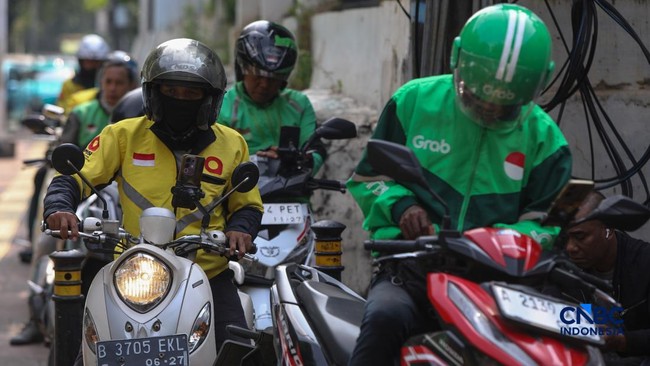
The Indonesian Transport Workers Union (SPAI) has calculated that deductions for online motorcycle taxi (ojol) drivers do not align with the promises made in Presidential Regulation No. 27/2026 regarding the Protection of Online Transportation Workers. The regulation mandates that application deductions be reduced to 8% from the previous 20%, effective from 1 July 2026, specifically for two-wheeled passenger transport.
According to SPAI’s calculations, the deductions received by drivers are actually higher, reaching between 16% and 24%. This includes the addition of other components such as application fees and travel insurance costs.
Lily Pujiati from SPAI provided an example where, if a consumer pays Rp 34,000, the platform deducts an application fee of Rp 5,000 and a travel insurance fee of Rp 1,000. The 8% platform fee is then applied to the remaining amount. Based on this calculation, the driver receives Rp 25,760, which represents a total deduction of 24% from the consumer’s payment.
She added that SPAI also rejects the implementation of the 8% deduction limit solely for two-wheeled vehicles. This is because the Presidential Regulation refers to ‘Online Transportation Workers’, which encompasses all types of services, including online taxis, motorcycle taxis, and delivery couriers.
“Applying the application deduction limit only to motorcycle taxis is a discriminatory practice, as it differentiates between one online transportation worker and another,” explained Lily, as quoted on Wednesday (1/7/2026).
According to her, the working conditions experienced by all drivers are the same: below the legal labour standards and inhumane. This is due to wage uncertainty, with daily earnings reaching only Rp 100,000, which is below the minimum wage standard.
Furthermore, this situation leads to long working hours of 12 to 18 hours per day and increases the risk of workplace accidents.
“Additionally, online transportation workers do not receive labour rights such as fair wages, an 8-hour workday, menstrual and maternity leave, support for disabled workers, social security, the right to form unions, and collective bargaining,” she added.
SPAI is urging the government to ratify ILO Convention 193 regarding Platform Workers. Furthermore, the union is requesting that regulations for the protection of online taxi-bike drivers be included in the discussions for the revision of the Labour Law.
“Along with this, the government, specifically the Ministry of Manpower, must immediately include protection rules for online taxi-bike and cargo courier drivers within the scope of employment relationships in the discussions for the new Labour Law revision,” she stated.