
How the Miniature Rice Paddies in Used Water Jugs First Came About
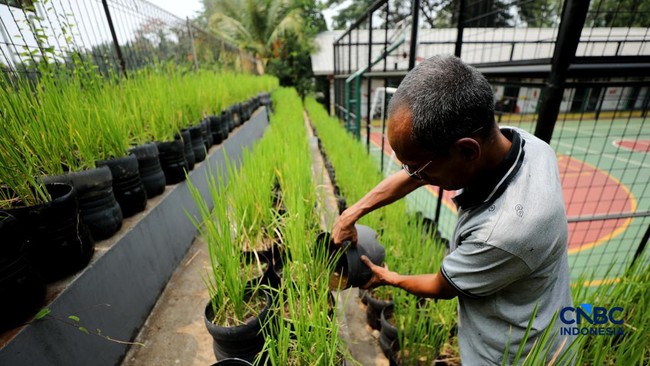
Residents of Pasar Minggu, Jakarta, are growing rice in used water jugs to support food security while putting plastic waste to use in line with the waste-sorting policy.
An RPTRA manager tends rice planted in used water jugs at RPTRA Belimbing in Pasar Minggu, Jakarta, on Tuesday (20 October 2026). The initiative uses discarded plastic as a valuable resource while supporting food security. The harvest will be distributed to a cooperative run by local residents. (CNBC Indonesia/Tri Susilo)
In Jakarta’s densely populated neighbourhoods, where land for cultivation is limited, residents of Pasar Minggu, South Jakarta, have found a simple way to create a rice paddy in an unexpected place: inside used water jugs. (CNBC Indonesia/Tri Susilo)
At RPTRA Belimbing, an integrated child-friendly public space equipped with green space, play and educational facilities, and a gathering area for residents, hundreds of used jugs have been planted with rice. (CNBC Indonesia/Tri Susilo)
The jugs have been transformed into containers for growing rice. They are cut and painted, filled with planting medium and then planted with rice seedlings. (CNBC Indonesia/Tri Susilo)
The initiative was conceived by Posyantek Kreya Loka Pasar Minggu, a local Appropriate Technology Service Post.
The idea of growing rice in jugs emerged during a regular meeting of South Jakarta’s Posyantek groups, which discussed food security, a subject of growing global concern.
Jakarta Governor’s Instruction No. 5 of 2026 on waste sorting was subsequently introduced. The DKI Jakarta provincial government’s policy, known as the Movement for Sorting and Processing Waste at Source, requires residents, offices and businesses to separate waste at their homes or premises.
Source: jawawa.id (https://jawawa.id/newsitem/how-the-miniature-rice-paddies-in-used-water-jugs-first-came-about-1792486249)
Originally published by CNBC Indonesia (https://www.cnbcindonesia.com/news/20261020125353-7-777821/penampakan-sawah-mini-galon-bekas-begini-kronologi-awal-kemunculannya), translated from Indonesian